Dog training tricks are more than just flashy commands—they’re key to a well-behaved, mentally stimulated, and bonded pet. Whether you’re working with a brand-new puppy or a seasoned senior, tricks to teach your dog can elevate your training sessions from basic obedience to interactive fun.
This guide will walk you through easy dog tricks for beginners, intermediate and advanced tricks, unique ideas, and essential training strategies. Let’s turn everyday moments into learning opportunities and build that tail-wagging bond.
Table of Contents
Why Teaching Dog Tricks Matters

Dog training tricks do much more than entertain. They improve behaviour, create stronger communication between you and your pup, and give your dog the mental stimulation they crave. Dogs are intelligent and curious animals, and without challenges, they can become bored, anxious, or even destructive.
Benefits of teaching tricks include:
- Mental enrichment and reduced anxiety
- Improved impulse control and focus
- Stronger human-dog relationship
- Healthier habits and routines
- Better behavior in social situations
Training also increases your dog’s confidence. When dogs succeed at a trick and earn a reward, they feel good, just like humans.
When to Start Training Your Dog

You can start training your dog as early as 8 weeks old. Puppies are eager to learn and respond well to structure. The earlier you begin with tricks to teach your puppy, the better their lifelong behavior will be. That said, older dogs can absolutely learn tricks, too. You can check more about how the Environment Shapes Your Dog’s Behaviour.
Essentials before training:
- Tasty, high-reward treats (chicken, cheese, liver)
- A quiet, distraction-free space
- A clicker (optional, but great for precise timing)
- Patience and a positive attitude
Keep sessions short (5–10 minutes) and fun. Your goal is to make training something your dog looks forward to, not something they dread.
Basic Principles of Dog Training

Positive Reinforcement
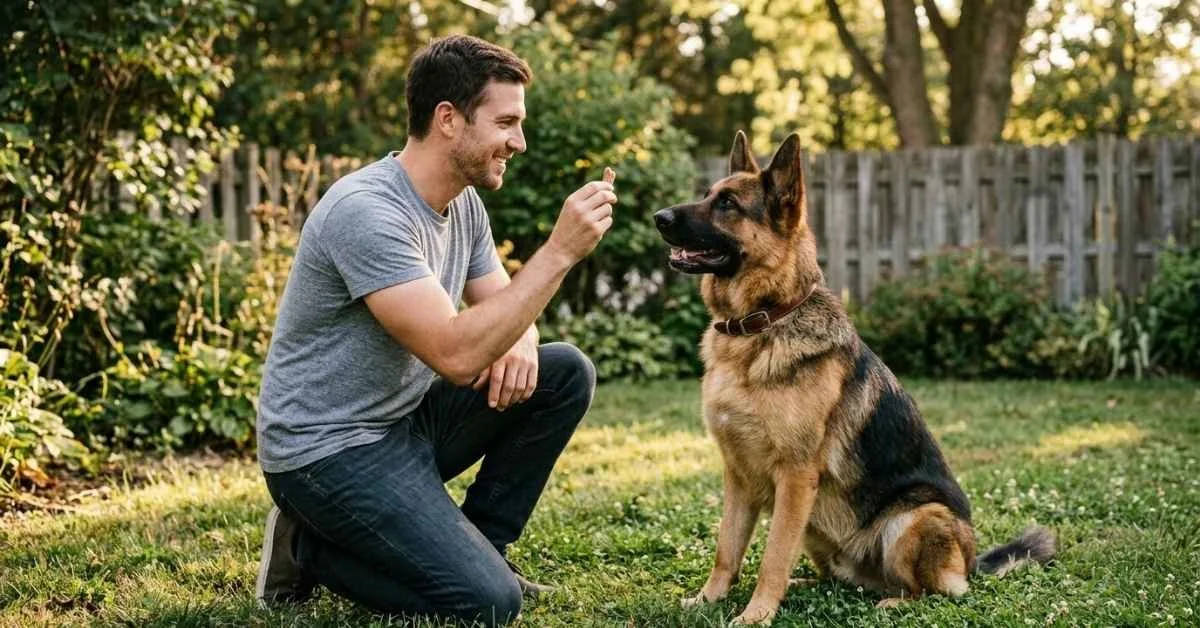
The most effective way to train dogs is by rewarding desired behaviors. When your dog performs a trick correctly, immediately reward them with a treat, praise, or toy. Positive reinforcement encourages a dog to repeat the desired behavior (Humane Society).
Timing is Everything
Reward within 1–2 seconds of the correct action. If you wait too long, your dog won’t connect the reward with the behavior.
Consistency
Use the same word and gesture for each trick every time. Everyone in your household should use the same commands to avoid confusing your dog.
Tools That Help:
- Clicker for precision
- Soft treats for quick eating
- Toys for motivation
- Leash for early-stage control
Easy Dog Training Tricks for Beginners

1. Sit
One of the first tricks your dog should learn. Hold a treat over their head and move it back slowly. As they look up, their bottom will naturally lower. Say “Sit” and reward.
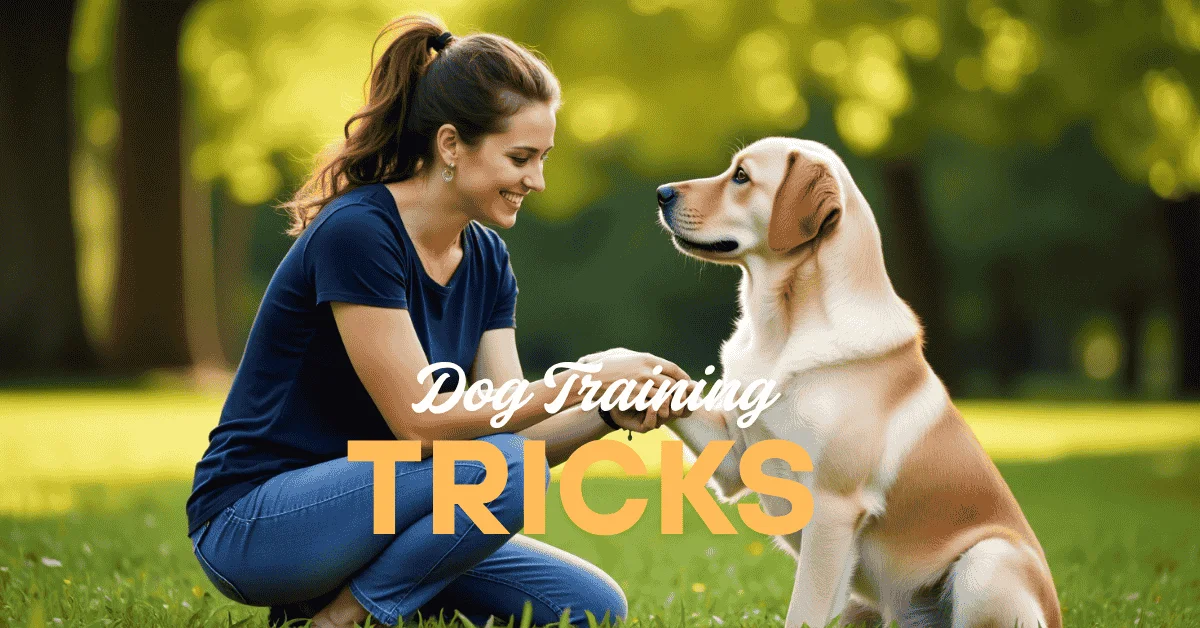
2. Shake Hands
Ask your dog to sit. Gently lift their paw while saying “Shake.” Praise and reward immediately. With repetition, your dog will offer the paw on command.
3. Stay
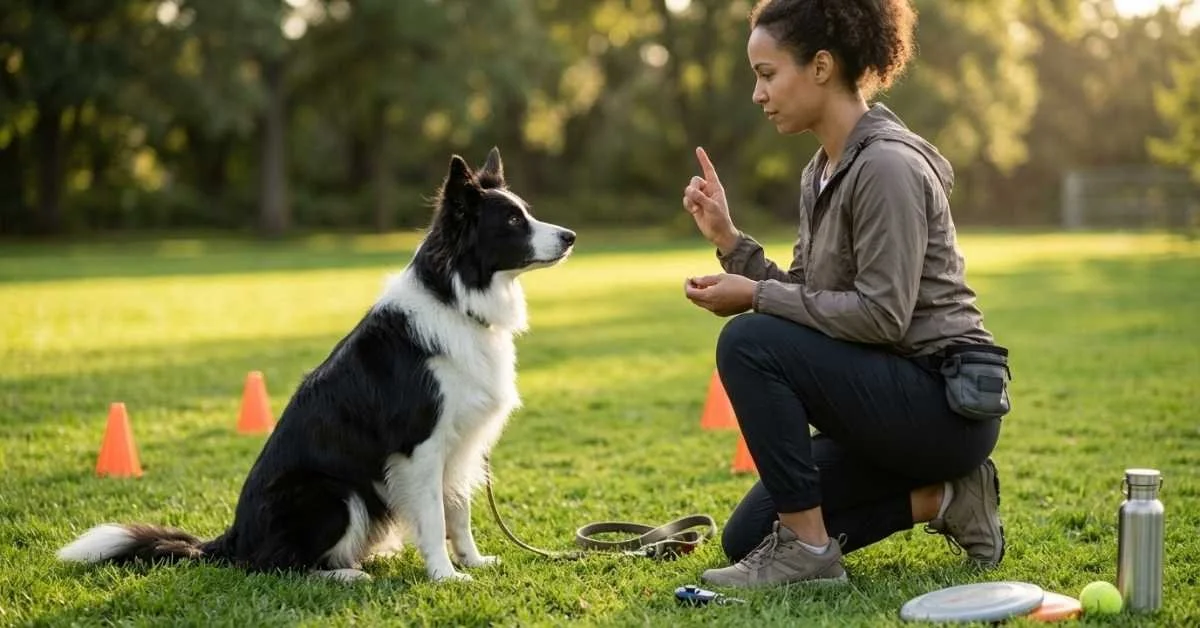
From a sitting position, raise your hand as if signaling a “stop” sign and say “Stay.” Then, step back and return quickly to reward your dog. As your dog becomes more skilled, gradually increase the distance and duration of the stay.
4. Come
Call your dog by name, followed by “Come!” Use a cheerful tone. Once your dog reaches you, reward them generously. This command is crucial for both safety and obedience.
These simple dog training tricks lay the foundation for more complex behaviors and strengthen focus.
Intermediate Tricks to Teach Your Dog

5. Spin
Hold a treat near your dog’s nose and slowly guide it in a circle. Say “Spin” as the dog follows it around. Once they complete the spin, reward them. Teach in both directions using different words like “Twirl.”
6. Roll Over
Start with your dog in a down position. Move a treat toward their shoulder and guide them to roll onto their back. As they roll fully, say “Roll Over” and reward.
7. Fetch
Use a toy your dog loves. Throw it a short distance. When your dog picks it up, call them back and exchange the toy for a treat. Use “Drop it” as a cue for release.
These tricks engage your dog physically and mentally while reinforcing listening and movement control.
Advanced Dog Training Tricks

8. Play Dead
Teach from a “down” position. Lure your dog onto their side with a treat. Say “Bang!” or “Play Dead” and reward when they stay still. Add a finger gun gesture for fun.
9. Backup
Stand facing your dog and take a step forward while saying “Back up.” They will instinctively take a few steps backward. Reward quickly. This trick teaches spatial awareness and control.
10. Clean Up Toys
Train your dog to pick up toys and drop them in a basket. First, teach “Pick it up.” Then, guide them to the basket and use “Drop.” Reward every successful drop-in and gradually build the sequence.
These dog tricks to teach your dog show off intelligence and can even help around the house. For more, you can read Fun Dog Training Tricks to Teach Your Dog.
Unique Tricks to Teach Your Dog
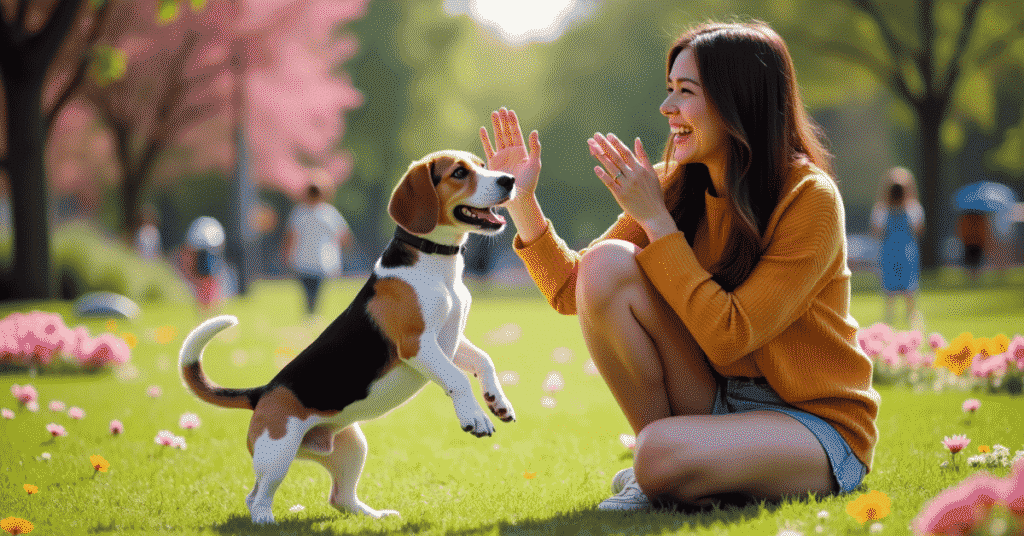
Looking to go beyond the usual? Try these fun, out-of-the-box tricks:
11. Say “I Love You”
Some dogs can be taught to howl or vocalize on command. Encourage barking, say “Speak,” and shape it into rhythm or syllables. Over time, many dogs mimic “I love you.”
12. Peekaboo
Call your dog to stand between your legs from behind. Say “Peekaboo” as they step forward and reward when they’re centered. Great for shy dogs or as a fun photo pose.
These unique tricks to teach your dog bring variety and entertainment to your sessions.
Tricks to Teach Your Puppy Early
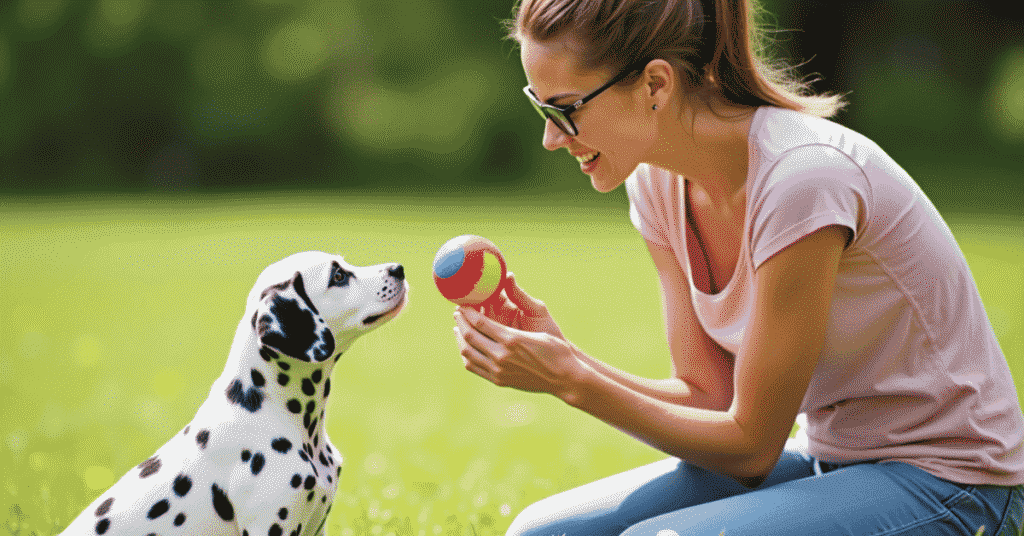
13. Bite Inhibition
Redirect biting behaviors using commands like “Leave it” or offering toys. Reward gentle mouth behavior.
14. Name Recall
Say your dog’s name and reward them immediately when they look at you. Add “Look” or “Touch” for advanced focus-building.
Early puppy tricks are more about building attention and impulse control than performing stunts. These lay the groundwork for everything else.
How Long Does It Take to Train a Trick?
It depends on:
- Age and focus level
- Breed
- Trick complexity
- Training consistency
Simple tricks like “Sit” may take a few sessions. Advanced behaviors like “Play Dead” might need a few weeks of repetition. Keep sessions short, positive, and focused on progress, not perfection.
Best Dog Breeds for Trick Training
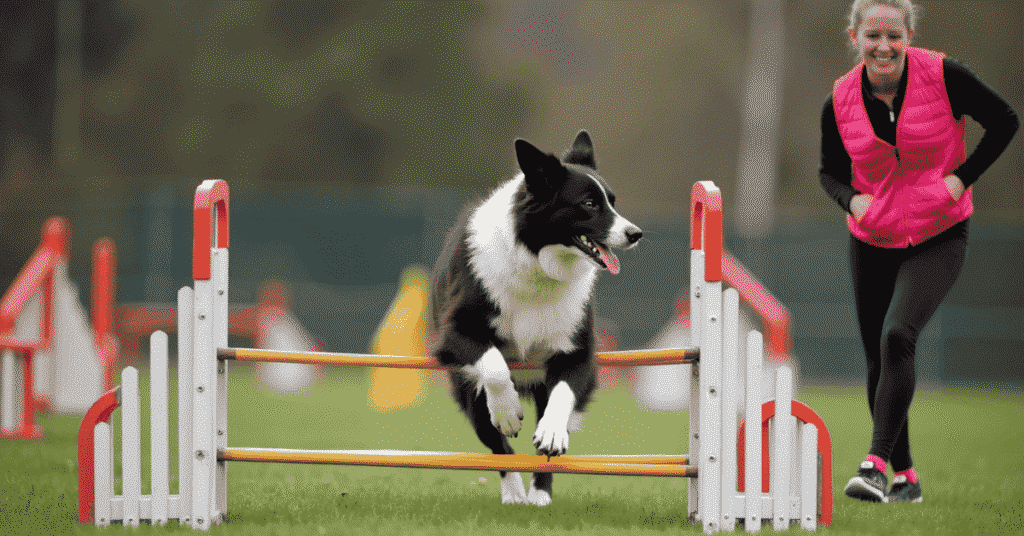
Some breeds pick up tricks faster due to high intelligence and eagerness to please:
- Border Collies (American Kennel Club)
- Poodles (American Kennel Club)
- Golden Retrievers (American Kennel Club)
- Papillons (American Kennel Club)
- Australian Shepherds (American Kennel Club)
But breed isn’t everything. With motivation and praise, any dog can learn.
Match tricks to temperament:
- Calm breeds: focus on stillness and eye contact
- Energetic breeds: active tricks like “Jump” or “Spin”
- Independent breeds: confidence-building tricks like “Peekaboo”
Common Training Mistakes
Overtraining
Too long = burnout. Watch for signs like yawning, looking away, or walking off.
Inconsistent Commands
Switching phrases or gestures confuses dogs. Stick to one cue per trick.
Late Rewards
Timing matters. Reward immediately to reinforce the correct behavior.
Correcting these mistakes will help you teach tricks faster and with less frustration.
Training Tricks with Multiple Dogs
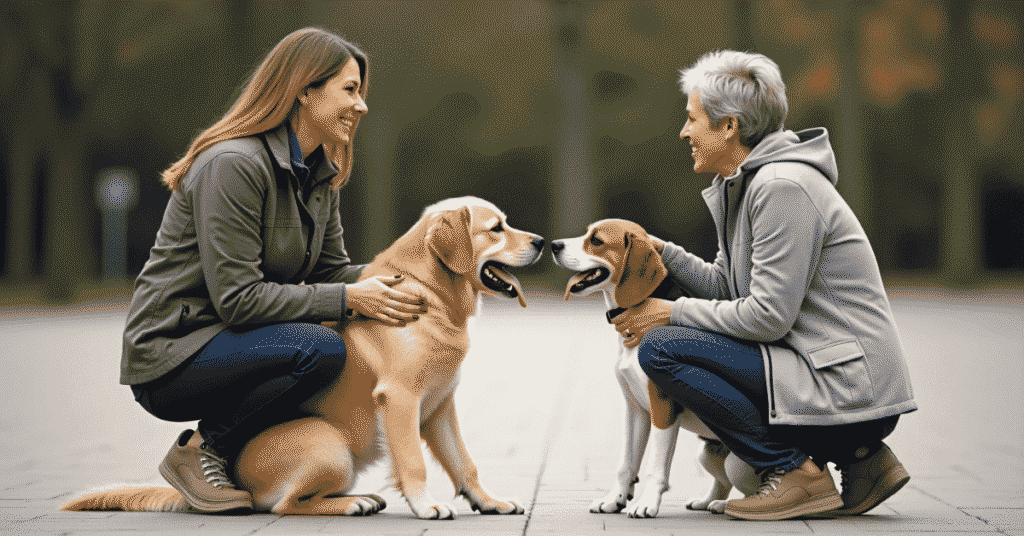
Synchronized Tricks
Once both dogs know a trick individually, teach them to perform it together using names and clear turn-taking.
Group Management
Use “place” commands or crates for resting between turns. Keep group sessions shorter to maintain focus.
Training multiple dogs builds leadership and creates fun, shared moments.
Clicker Training for Dog Tricks
Clicker training is highly effective for teaching dog tricks. The click marks the exact moment of success, followed by a treat.
How to Use It:
- Charge the clicker (click, treat)
- Lure or shape the behavior
- Click the moment your dog gets it right
- Follow immediately with a reward
This method is excellent for advanced behaviors like sequencing or shaping complex actions.
Making Tricks Part of Daily Life

Integrate Tricks Naturally:
- Before meals: Ask for “Sit” or “Stay”
- During walks: Practice “Spin” at each stop
- Bedtime: Calm tricks like “Lay Down”
Training should feel like play. The more it blends into everyday life, the more your dog will enjoy and remember.
Fun Ideas:
- Combine tricks into a performance
- Share tricks at dog parks or online
- Create DIY agility courses at home
Keep it light, playful, and rewarding—and your dog will stay excited to learn.
Conclusion
Dog training tricks are more than commands—they’re tools for communication, mental health, fun, and bonding. From easy dog tricks like “Sit” and “Shake” to advanced ones like “Back Up” or “Clean Up Toys,” each lesson adds a layer of trust and understanding.
Stick to:
- Short sessions
- Clear commands
- Positive energy
- Realistic expectations
And always remember: Every dog learns at their own pace. The trick is enjoying the journey—treat in one hand, leash in the other, and your best friend by your side.
FAQs
1. What are five easy tricks to teach your dog?
Sit, Shake, Stay, Spin, and Come are great for beginners.
2. How long does it take to teach a dog a trick?
Basic tricks can be learned in a few sessions, while complex ones may take weeks.
3. Can older dogs learn new tricks?
Yes! Age doesn’t matter as long as you use positive reinforcement and patience.
4. What are some unique tricks?
Peekaboo, Say “I Love You,” and Put Away Toys are fun, less common ideas.
5. Is it okay to train puppies under 3 months?
Absolutely. Just keep it short and fun—early habits make lifelong learners.
Looking for more dog inspiration? Click here to explore more pawsome content.