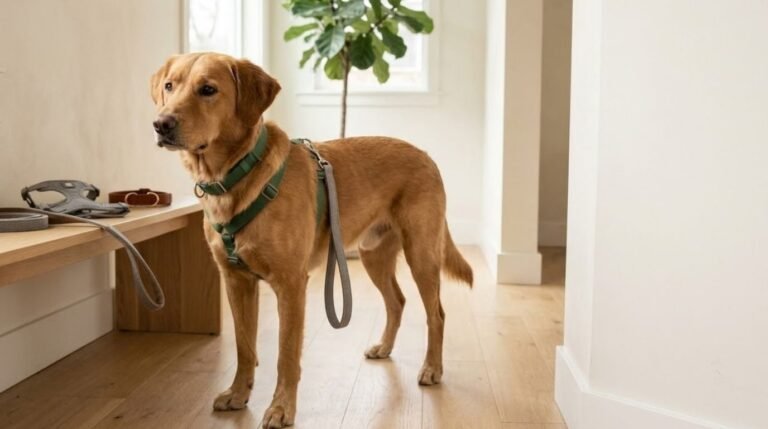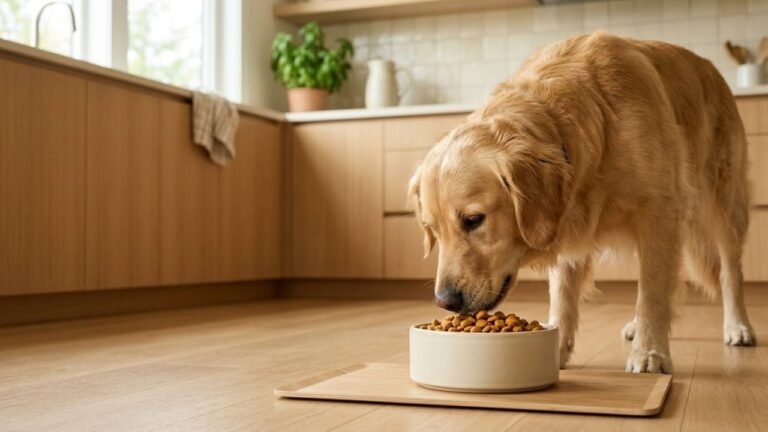
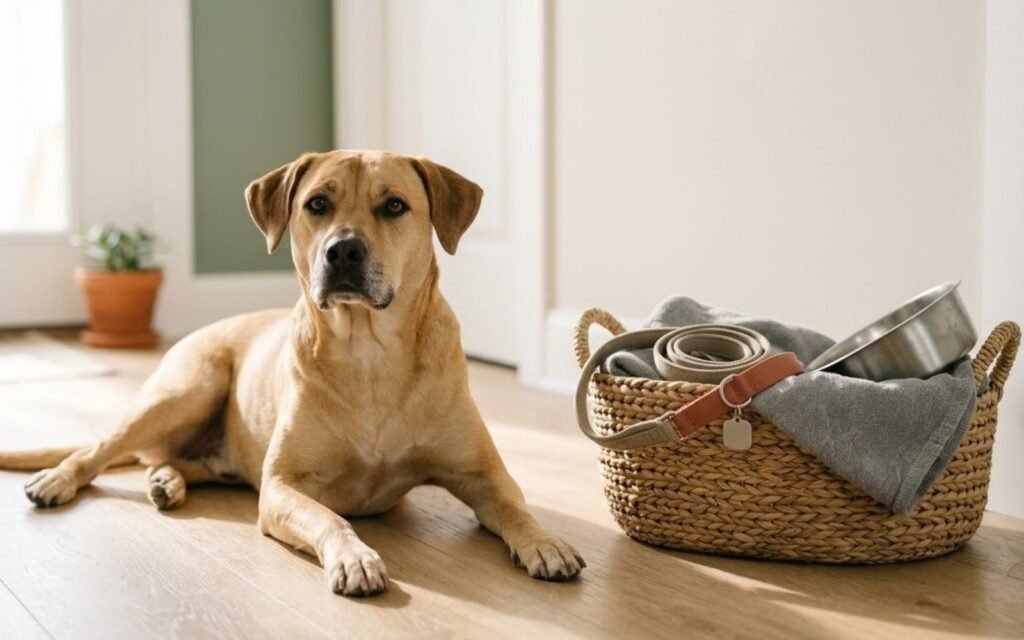
Pet store aisles make everything look necessary. A new dog needs far less on the first day than the shelves suggest, and a few items matter more than all the rest combined.
The short answer: On day one a dog needs identification (a collar tag plus a registered microchip), a safe way to be walked, food and water bowls, somewhere comfortable to sleep, waste bags, and the food it was already eating. Crates, grooming tools, toys and travel gear matter too, but they can follow once you see how your dog actually lives.
[AFFILIATE DISCLOSURE: INSERT PAWSNPUP APPROVED WORDING]
This checklist sorts dog supplies into three groups: what to have ready on arrival, what to buy in the first few weeks, and what is pleasant but optional. It also covers what to look for in each item and where the usual mistakes happen.
The dog supplies checklist at a glance
| Tier | What it includes | Why it sits here |
| Need now | ID tag on a collar or harness, a registered microchip, a leash and a collar or harness, food and water bowls, the food your dog is already eating, waste bags, a bed or washable blanket, enzymatic cleaner for accidents, a gate or pen to set up one small safe area | Safety, identification and daily care |
| Need soon | A crate if you plan to crate train, chew toys, a brush and nail tool, dog toothbrush and dog toothpaste, dog shampoo, a car restraint, a local veterinarian | Depends on age, coat and routine |
| Nice to have | Water fountain, puzzle feeders, cooling mat, raincoat, boots, reflective gear, ramps | Useful for some dogs and climates, unnecessary for many |
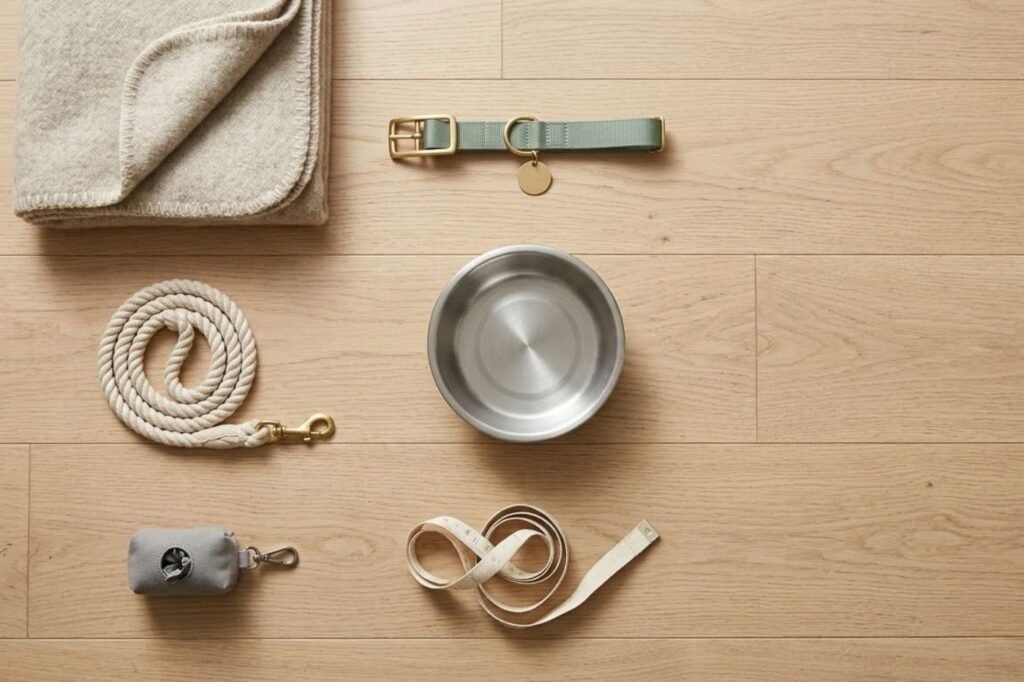
Anything in the first row is worth sorting out before the dog walks through the door. Everything else is easier to choose once you have watched your dog for a week or two.
Identification comes before everything else
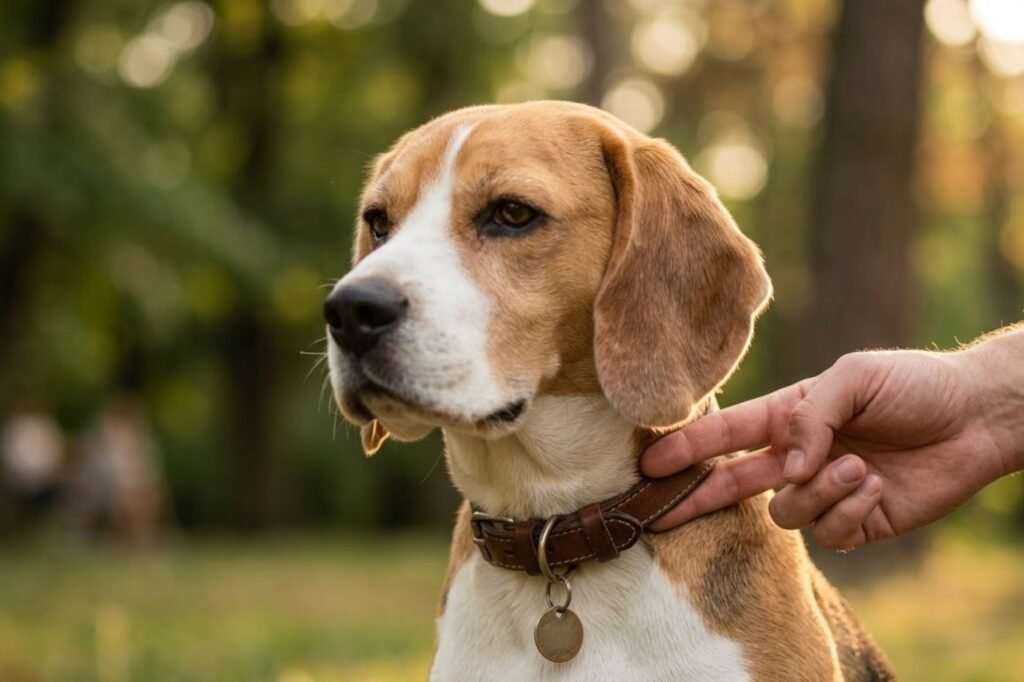
Does a dog need both an ID tag and a microchip? The American Veterinary Medical Association recommends both. A tag on the collar lets a neighbor call you within minutes. A microchip is the backup if the collar slips off, because shelters and clinics can scan it.
Two details matter more than the hardware. A chip only helps when it is registered with a current phone number and address, so update the record whenever either changes. And the tag should carry a number you will answer. Animal services guidance from Wake County, North Carolina, suggests the dog’s name, your address and a phone number, preferably a mobile.
The collar itself should fit properly. VCA Animal Hospitals gives a simple check for puppies: you should be able to fit two fingers under it. Puppies outgrow collars quickly, so recheck the fit often.
Walking gear: collar, harness and leash
A dog needs something to clip a leash to. Whether that should be a collar or a harness depends on size, build and how much your dog pulls, and it has its own guide. See [INTERNAL LINK: INSERT RELEVANT PAWSNPUP URL] for whether a collar or harness suits your dog.
For the leash, a standard fixed length leash is the simplest first choice. VCA Animal Hospitals advises against retractable leashes for puppies, and the trade offs of each leash type are laid out in [INTERNAL LINK: INSERT RELEVANT PAWSNPUP URL] leash types and what they are for.
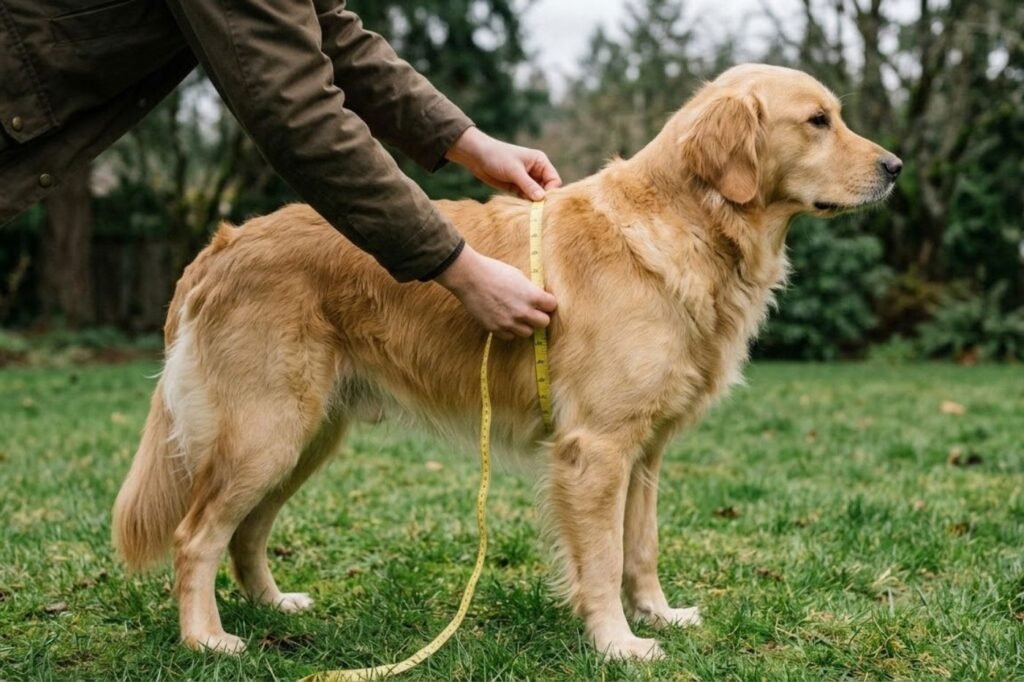
Measure before you buy anything that is worn. A soft tape gives you neck and chest numbers that manufacturers’ size charts actually use. The sizing guide at [INTERNAL LINK: INSERT RELEVANT PAWSNPUP URL] how to check size, material and safety walks through it.
Product category example: A soft measuring tape is a cheap tool that prevents returns. It suits anyone buying a collar, harness or coat. It is not a substitute for the manufacturer’s own size chart, which varies by brand. [AMAZON AFFILIATE LINK: INSERT VERIFIED URL] Check the current Amazon listing.
Food and water
Keep your dog on its current food for the first days, and ask the shelter, breeder or your veterinarian what it has been eating. Sudden food changes can upset digestion in many dogs, and the right long term diet depends on age, size and health, which is a conversation for your vet rather than a shopping list.
For bowls, stainless steel and ceramic are common choices. Whatever the material, pick one that does not tip easily and wash it often, because a film builds up on bowls that sit for days. Slow feeders, raised bowls and fountains are worth a closer look only for specific dogs. They are covered in [INTERNAL LINK: INSERT RELEVANT PAWSNPUP URL] choosing bowls and feeders.
Sleep, rest and containment
Does a dog need a bed? Not a particular one, but a dog needs a spot that is clearly its own, and a washable one is easiest to live with. The sleep style, size and age questions are in [INTERNAL LINK: INSERT RELEVANT PAWSNPUP URL] how to pick a dog bed.
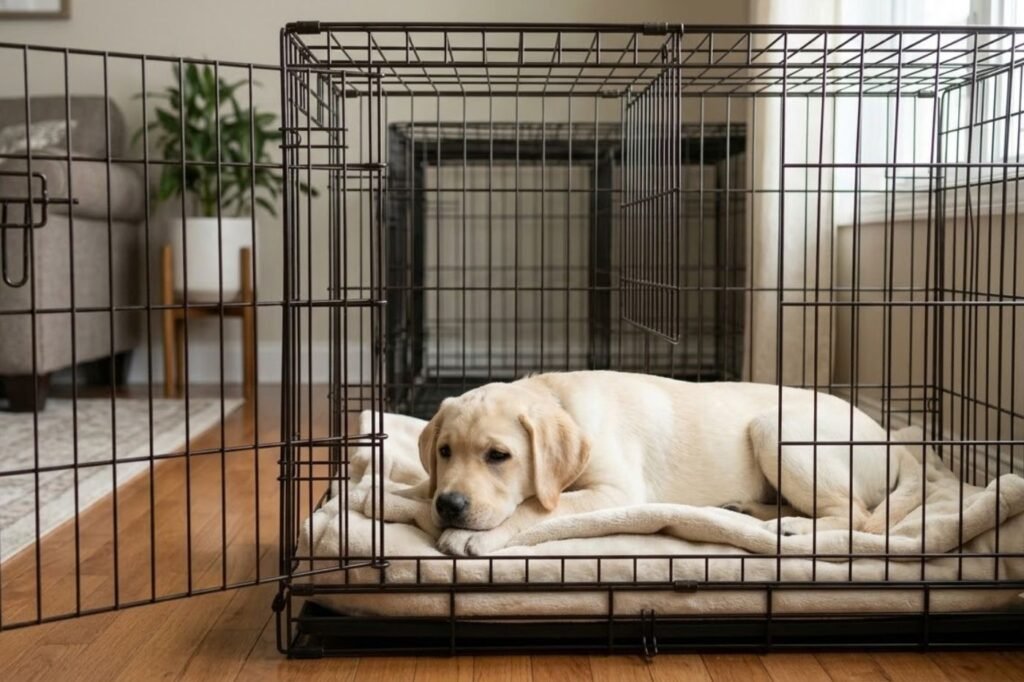
Does a dog need a crate? Not every dog does. A crate is a management and training tool, and a pen or baby gate can do some of the same jobs. If you choose a crate, the size rule is consistent across sources: your dog should be able to stand, turn around and lie down comfortably, and no more space than that. Too much room can slow house training. For a growing puppy, many crates come with a divider panel so you can buy the adult size and shrink the space for now. Crate types and sizing are in [INTERNAL LINK: INSERT RELEVANT PAWSNPUP URL] crate types and sizing.
Cleaning up
Waste bags are needed from the first walk. Enzymatic cleaner for accidents appears on veterinary and puppy checklists for good reason: accidents are likely in the first weeks, and ordinary household cleaners are not made for pet stains.
Product category example: An enzymatic pet stain cleaner suits new puppies and newly adopted adults who are still learning the house. It is less useful for a dog that is fully house trained and rarely has accidents. Always read the label for surface compatibility. [AMAZON AFFILIATE LINK: INSERT VERIFIED URL] See the current product details on Amazon.
Grooming and teeth
Brush choice depends on coat, not on the dog’s size, and a nail tool is useful for nearly every dog. Dog toothpaste matters because VCA Animal Hospitals specifically warns against using human toothpaste on dogs. Brushes and nail tools matched to coat type are in [INTERNAL LINK: INSERT RELEVANT PAWSNPUP URL] brushes and nail tools by coat.
Finding a veterinarian early is part of the checklist too. It is much easier to book a first visit than to look for a clinic at an awkward moment.
Toys and chews
Dogs need things to chew, and a small, varied set beats a large pile. If you are unsure whether a toy suits your dog, VCA Animal Hospitals suggests asking your veterinary team. Match the toy to how your dog chews, using [INTERNAL LINK: INSERT RELEVANT PAWSNPUP URL] chew toys matched to chewing style, and retire anything cracked, chewed through or coming apart. See [INTERNAL LINK: INSERT RELEVANT PAWSNPUP URL] when to replace worn gear.
Gear that depends on your dog
Some purchases only make sense for particular situations:
- Puppies need growth sizing and timing, covered in [INTERNAL LINK: INSERT RELEVANT PAWSNPUP URL] a puppy specific starter list.
- Older dogs may need traction and comfort changes, covered in [INTERNAL LINK: INSERT RELEVANT PAWSNPUP URL] gear for older dogs.
- Car rides call for a restraint, covered in [INTERNAL LINK: INSERT RELEVANT PAWSNPUP URL] restraint options for car rides.
- Hot, cold or wet climates change what a walk requires, covered in [INTERNAL LINK: INSERT RELEVANT PAWSNPUP URL] gear for hot, cold and wet walks.
Where to spend and where to save
This is a judgment call rather than a rule. Spend where failure is dangerous: harness and leash hardware, crate latches, car restraints and identification. Save where failure is merely annoying: toys, spare bowls, bed covers and accessories. A cheap toy that gets chewed up is a small loss. A cheap clip that fails on a busy street is not.
Common mistakes
- Buying a large kit before knowing the dog’s size, coat or habits.
- Choosing gear for the puppy’s current size when it will outgrow it in weeks.
- Buying a crate far larger than needed and wondering why house training stalls.
- Leaving an out of date phone number on the tag or the microchip record.
- Treating every optional item as a necessity because it appears in an aisle or a bundle.
Conclusion
Buy the first tier, set up one small safe area of the house, and watch your dog for a week. Where it sleeps, how it walks and what it chews will tell you which of the later purchases are worth making and which can stay on the shelf.
FAQ’S
What supplies do I need for a new dog?
ID tag and microchip, collar or harness, leash, bowls, current food, waste bags, a bed or blanket, enzymatic cleaner and a gate or pen. Add a crate, toys, grooming tools and a vet in the first weeks.
What can I skip when buying dog supplies?
Fountains, cooling mats, raincoats, boots and puzzle feeders are optional for most dogs. Buy them if your dog’s behavior, coat or climate shows a clear need.
Do dogs need a crate?
No. A crate is useful for training and management, but a pen or gate can serve some of the same purposes. If you use one, it should let your dog stand, turn around and lie down comfortably.
What size crate does my dog need?
Measure your dog’s length and height standing, add a few inches for comfort and bedding, and check the manufacturer’s dimensions rather than relying on weight alone.
Should I buy everything before the dog arrives?
Only the first tier. Wait on the second and third tiers until you see how your dog sleeps, walks and chews.
Does a dog need a microchip if it wears a tag?
The American Veterinary Medical Association recommends both, because collars can come off and a chip cannot.