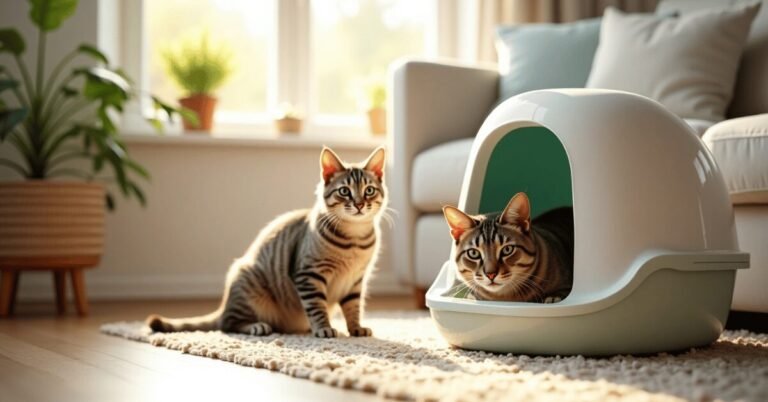
The standard answer to how many litter boxes per cat is one per cat plus one extra. AAHA, the ASPCA and PetMD all give this rule. Placement, size, cleaning and your cats’ relationships matter just as much as the count.
This is a draft that was read through the preview link only. It is general information, not veterinary advice.
Key Takeaways
- AAHA, the ASPCA and PetMD say to provide one box per cat plus one extra.
- Three cats should have four boxes, according to the ASPCA.
- PetMD says to spread boxes around the home rather than grouping them.
- Scoop at least once a day.
- Rule out medical causes first if a cat stops using the box.
The One-Plus-One Rule

AAHA says to provide one box per cat plus one extra. If the social groups are known, it says to use one per group plus one extra. PetMD says a one-cat home needs two boxes and a seven-cat home needs at least eight.
So two cats start with three boxes, three with four and four with five. Our suggestion: treat this as a starting point and watch your cats.
Where to Put the Boxes
The ASPCA says to put boxes somewhere easy to reach, away from busy or noisy areas and not where a cat could feel trapped. It says cats prefer places with more than one exit and a view of approaching people or animals. AAHA says to use several quiet, easily reached spots with an escape route.
PetMD says to spread boxes around the house in a multi-cat home, so no cat can monopolize access. It says to keep them away from food and water, and from furnaces and laundry machines. Avoid basements or little-used areas.
Should Boxes Sit Side by Side?
PetMD says to spread boxes rather than group them. Our suggestion: three boxes in one corner may work as one resource for a cat that guards the area. If you see chasing or waiting, move them apart.
The sources we opened do not say what to do for a multi-story home. Our suggestion is a box on each level your cats use.
Choosing Size and Style
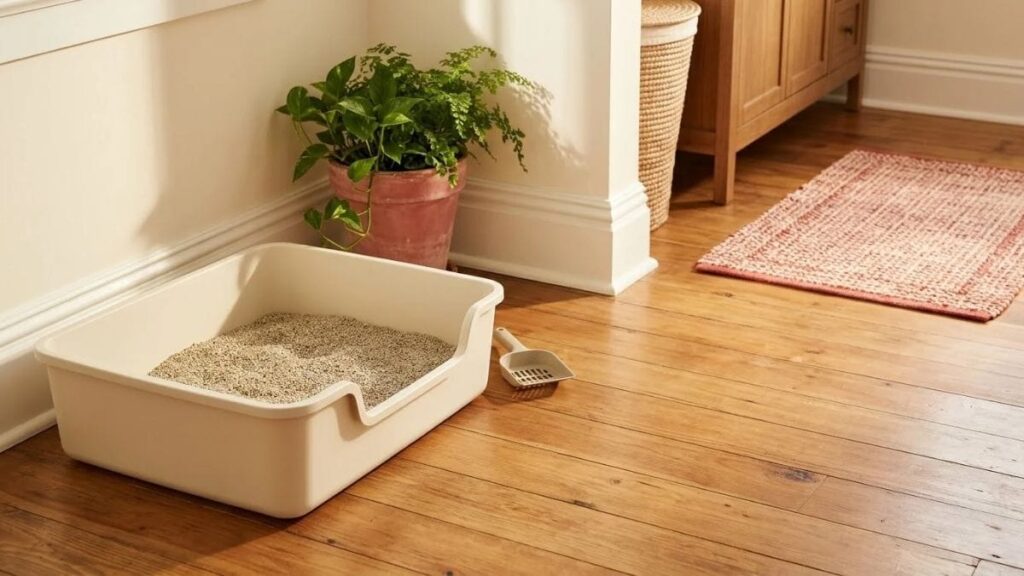
AAHA says boxes should be at least 1.5 times the cat’s nose-to-tail-tip length and that most manufactured boxes are too small. Large storage containers can work. It says to keep edges low enough for kittens and senior cats.
The ASPCA says to remove lids and liners because most cats dislike them. PetMD also recommends uncovered boxes. The original draft said some cats prefer covers. The sources we opened do not say so.
Choosing Litter
AAHA says individual litter preferences are well documented and suggests offering different litters in separate boxes to find each cat’s choice. The ASPCA suggests unscented, clumping litter of medium to fine texture, 1 to 2 inches deep. It says some cats prefer the litter they used as kittens.
Our suggestion: change one thing at a time.
How Often to Clean
AAHA and the ASPCA both say to scoop daily. The ASPCA says to wash boxes once a week with warm water and unscented soap, baking soda or nothing, then replace all the litter. AAHA says to use hot water and avoid soap and strong chemicals. The sources differ on soap, so avoid scented products.
The ASPCA says to clean accidents with an enzymatic cleanser, not ammonia-based products.
Signs You Need More Boxes
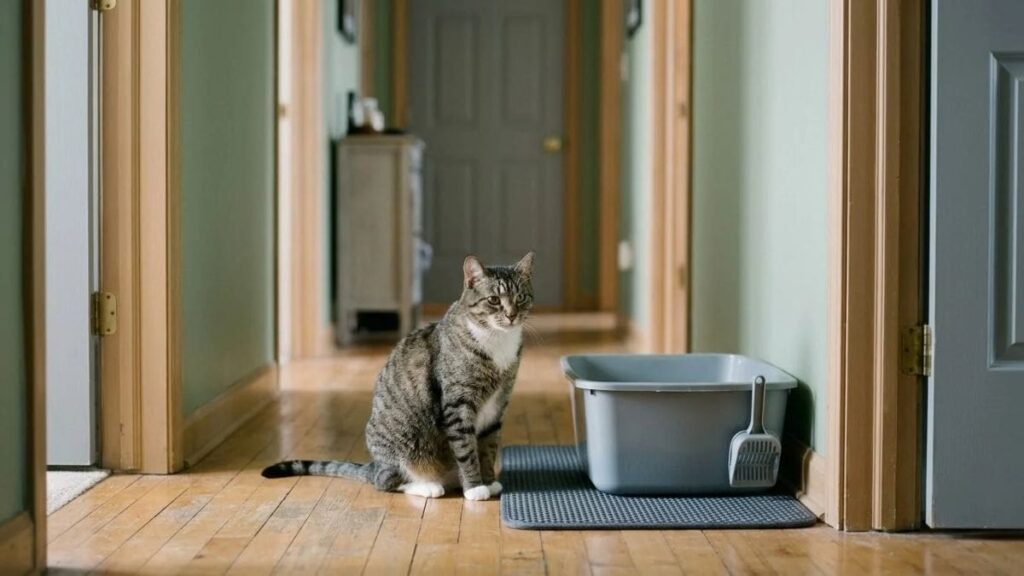
Our suggestions: watch for a cat waiting near a box, avoiding a room, or being chased away. The sources we opened do not list these signs.
The ASPCA says to have a vet examine the cat first to rule out medical problems and urine marking. It lists frequent trips with little urine, straining, blood in the urine, and pain or crying as signs to see a vet.
What to Do If Cats Fight Over Boxes
The ASPCA says not to punish a cat. It says not to rub its nose in waste, scold it, or drag it to the box. It also says not to confine a cat to a small room with the box for long without addressing the cause.
Our suggestion: spread boxes out and add an exit. See a vet or a qualified behavior consultant if conflict continues. See our litter box mastery guide.
Adding a Box
Our suggestion: put the new box in a separate quiet spot, not beside the old one, and let your cats investigate it. The sources we opened do not cover this step.
FAQs
How many litter boxes for two cats?
Three. AAHA says one per cat plus one extra.
Do three cats need four boxes?
Yes, according to the ASPCA’s example.
Can two cats share a box?
The sources we opened do not say. AAHA suggests one per social group plus one if groups are known.
Should boxes be in different rooms?
AAHA and PetMD say to spread boxes around quiet, easy-to-reach spots.
What if my cat suddenly stops using the box?
The ASPCA says to have a vet examine the cat first. See also calm a stressed cat.
Conclusion
Start with one box per cat plus one extra, spread them in quiet spots with escape routes, keep them large, uncovered and clean, and see a vet if habits change suddenly.