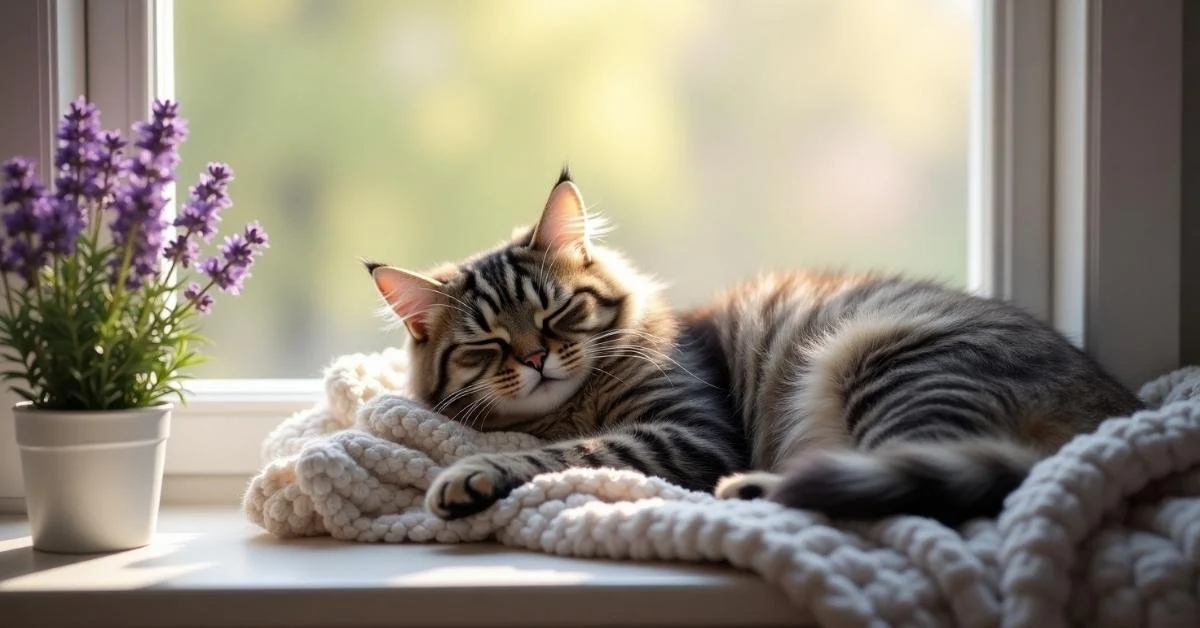
How to naturally calm a stressed cat at home begins with understanding what causes feline stress in the first place. If you’ve noticed your cat acting differently—maybe hiding, growling, or skipping meals—it could be more than just a bad mood. Cats are incredibly sensitive creatures, and even the smallest change in their environment can throw them off balance.
Things like rearranged furniture, unfamiliar visitors, new pets, or loud noises can all cause stress in your cat. Unlike dogs, cats don’t always show their stress in obvious ways, so it’s important to learn the subtle signs.
Table of Contents
Signs of a stressed cat include:
- Hiding more than usual
- Growling or hissing
- Excessive grooming or fur loss
- Loss of appetite
- Litter box avoidance
- Aggressive behavior
According to the American Association of Feline Practitioners (AAFP), stress is a leading cause of behavioral and health issues in domestic cats (AAFP Guidelines).
Why Natural Methods Matter
How to calm a stressed cat at home naturally is not just about avoiding medications—it’s about providing long-term comfort in a safe, gentle way. Unlike pharmaceutical options that may come with side effects, natural methods encourage physical and emotional healing without sedation or dependency.
Natural calming techniques also empower cat parents to respond intuitively, building trust and comfort between human and pet.
Create a Safe and Predictable Environment

How to calm a stressed cat at home naturally begins with setting up a predictable space. Cats love familiarity. Moving their bed, food, or litter box can throw them off balance.
Quiet Zones Work Wonders
Designate a peaceful retreat in your home. Add:
- A soft bed or blanket
- Familiar toys
- Low lighting
- Access to fresh water
Avoid high-traffic areas and provide vertical space like shelves or cat trees so your cat feels in control.
Reduce Noise and Sudden Movement
Loud TVs, sudden door slams, and noisy appliances can spike anxiety. Try:
- Soft classical music or cat-specific playlists
- White noise machines to mask outside disturbances
- Curtains to block visual stressors like traffic or neighborhood pets
Soothe Through Scent
How to calm a stressed cat at home naturally also involves appealing to your cat’s sense of smell. Cats navigate their world through scent, so comforting odors can bring peace.
Pheromone Diffusers
Products like Feliway mimic feline facial pheromones, signaling safety and calm. Plug one into the room your cat uses most often.
Lavender and Chamomile (Cat-Safe Versions Only)
Light scents of lavender or chamomile (formulated specifically for pets) can offer gentle relaxation. Never use human-grade essential oils, which are toxic to cats.
Familiar Fabrics
Place an unwashed shirt of yours in their sleeping area. The scent of their favorite human offers reassurance.
Gentle Physical Interaction

How to calm a stressed cat at home naturally often requires touch, but only on their terms. Respect your cat’s boundaries. Over-petting or handling during stress may worsen the situation.
Pet with Purpose
Focus on:
- Chin
- Cheeks
- Base of the tail
Avoid the belly or paws, especially when your cat is anxious. Speak softly, blink slowly (a cat’s version of a hug), and let them come to you.
Calming Through Routine
Cats thrive on consistency. Feed, groom, and play with your cat at the same time each day. Predictability builds trust.
Stick to a Simple Daily Rhythm
Your daily schedule should include:
- Meal times
- Litter box cleaning
- Grooming (if your cat enjoys it)
- Play sessions
Cats feel safer when they know what’s coming next.
Healing Power of Play

How to calm a stressed cat at home naturally is easier when your cat is physically and mentally engaged.
Interactive Toys
Use wand toys, feather chasers, or puzzle feeders. A 15-minute play session twice daily helps reduce tension by mimicking hunting behaviors.
Safe Outdoor Access
If possible, use a catio or supervised leash walk. Exposure to nature, fresh air, and birdsong reduces cortisol and increases happy hormones.
Hydration and Nutrition Impact Mood
How to calm a stressed cat at home naturally also ties back to what they eat and drink. Dehydration and poor nutrition can increase irritability.
Encourage Hydration
Use:
- Ceramic water bowls
- Cat fountains
- Wet food for moisture content
Cats have a low thirst drive, so hydration often needs encouragement.
Add Natural Calming Foods
Try food blends enriched with:
- Tryptophan (found in turkey and poultry)
- Casein (a calming milk protein)
- B vitamins and Omega-3 fatty acids
Brands like Royal Canin Calm and Hill’s Prescription c/d Multicare Stress are formulated for this purpose (VCA Animal Hospitals).
Sound Therapy That Works

How to calm a stressed cat at home naturally is easier with calming audio.
Cat-Calming Music
Spotify and YouTube offer playlists specifically tuned to feline hearing. Look for slow tempos and soft instrumentals.
White Noise or Nature Sounds
Soft ocean waves or gentle rain sounds help block jarring noises and create a tranquil environment.
Behavioral Conditioning
Desensitize your cat to stress triggers over time. Use positive reinforcement to reward calm behavior.
Slow Exposure
For example, if your cat fears the vacuum:
- Turn it on in another room
- Slowly bring it closer each day
- Reward your cat for staying calm
Positive Reinforcement
Always reward relaxed behavior with treats, praise, or petting. This builds new, healthy associations.
How Your Emotions Affect Your Cat
How to calm a stressed cat at home naturally also requires YOU to be calm. Cats are highly attuned to your emotional state. If you’re anxious, your cat feels it.
Mirror Calmness
Practice breathing exercises, lower your voice, and slow your movements. Your cat will pick up on your cues.
Litter Box Anxiety
Avoid dirty, crowded, or relocated litter boxes. Cats are picky about bathroom conditions.
Best Practices
- Scoop twice daily
- One box per cat, plus one extra
- Place in a quiet, accessible location
Stress often shows first in litter box habits.
When to Seek Veterinary Support

Sometimes, despite your best efforts, natural methods aren’t enough. If your cat’s stress:
- Persists for weeks
- Worsens with time
- Affects eating or bathroom habits
…it’s time to consult a vet. They can rule out illness or prescribe temporary medication.
Chronic stress may be a sign of underlying issues like arthritis, hyperthyroidism, or dental pain.
Wrap-Up: What Works?
How to calm a stressed cat at home naturally is about blending awareness, patience, and action. Natural solutions offer a gentle approach, creating long-term well-being for your furry friend.
To recap:
- Create a peaceful, consistent environment
- Use safe herbal aids and pheromones
- Respect your cat’s space and energy
- Encourage play, hydration, and proper nutrition
- Maintain a calm demeanor yourself
Every cat is different, but love, patience, and natural care can do wonders.
FAQs
1. What is the fastest way to calm a stressed cat?
Creating a quiet, familiar space with pheromones and soft music can ease stress quickly.
2. Can cats be calmed with natural oils?
Yes, but only use oils specifically labeled as feline-safe. Never use human essential oils—they’re toxic to cats.
3. Is catnip good for calming cats?
For some, yes. It induces euphoria in certain cats, but can overstimulate others. Use in small doses.
4. Can changing food help reduce stress?
Yes. Diets rich in tryptophan, casein, and B vitamins support mood regulation and lower anxiety.
5. What if nothing works?
If natural methods fail, consult your vet. Persistent stress may need medical intervention or indicate health problems.
Looking for more feline inspiration? Check out our guides on: