Standing in the pet aisle trying to pick a dog collar, harness, and leash out of a dozen near-identical options is enough to make anyone give up and grab the cheapest option.
Here’s the short version: most dogs do best wearing a well-fitted harness for daily walks, a flat collar for ID tags, and a sturdy 4 to 6 foot leash, but the right combination really comes down to your dog’s size, how they pull (if they pull at all), their breed, and where you usually walk.
The rest of this guide walks through why, so you can make a choice that actually fits your dog instead of guessing.
What to think about before you buy anything
A few honest questions will narrow the options faster than scrolling through hundreds of listings:
- Does your dog pull on the leash? This one decision affects almost everything else.
- What’s their size and neck shape? Small dogs, flat-faced breeds, and dogs with narrow heads (like sighthounds) have different needs than a stocky, broad-necked breed.
- Where do you walk? Quiet suburban streets, busy sidewalks, and off-leash trails call for different setups.
- Is this a puppy who’s still learning, or an adult dog with established habits?
- Does your dog have any known neck, back, or breathing sensitivity? If so, a chat with your vet about the right kind of gear is worth the five minutes.
Keep those answers in mind as you read through the options below.
Collar types, and what each one is actually for
A collar isn’t just about walking. It’s usually where your dog’s ID tag and rabies tag live, and it’s something you can grab in an emergency. Here’s how the common types compare.
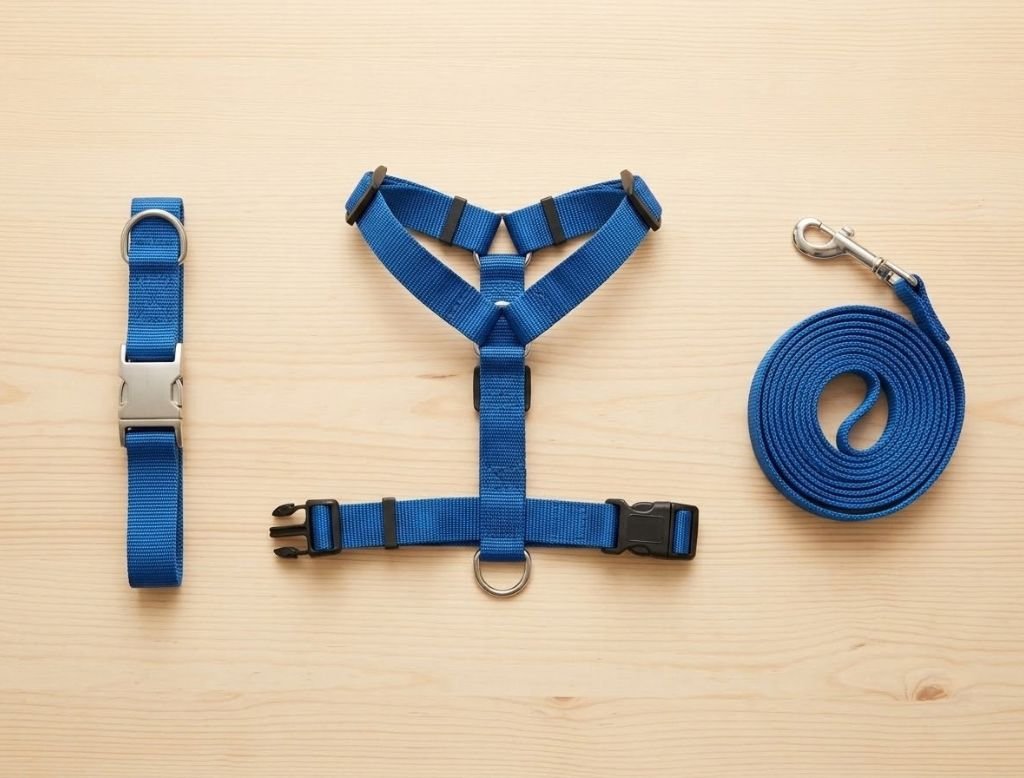
Flat collar
This is the standard buckle or snap collar most dogs wear every day. It’s fine for holding tags and, for dogs who don’t pull much, can work for short walks too. It’s not designed to manage a strong puller and isn’t the safest option for narrow-headed breeds that can back out of it.
Martingale collar
A martingale tightens slightly when a dog pulls back against it, which helps prevent the collar from sliding over the head. It’s a common choice for greyhounds, whippets, and other dogs with necks that are roughly the same width as their heads. It’s meant to prevent escape, not to be used as a correction tool. It shouldn’t be cinched down hard or used for constant tugging.
Collars to be cautious with
Choke chains and prong collars are still sold, but many trainers and veterinary behaviorists advise against them, and veterinary guidance on collar and leash types generally points toward safer alternatives because of the risk of injury to the neck and trachea, especially with dogs who pull hard or are still learning leash manners. If you’re working through a pulling problem, a well-fitted harness paired with training generally gets better, safer results.
Harness types, and how to pick between them
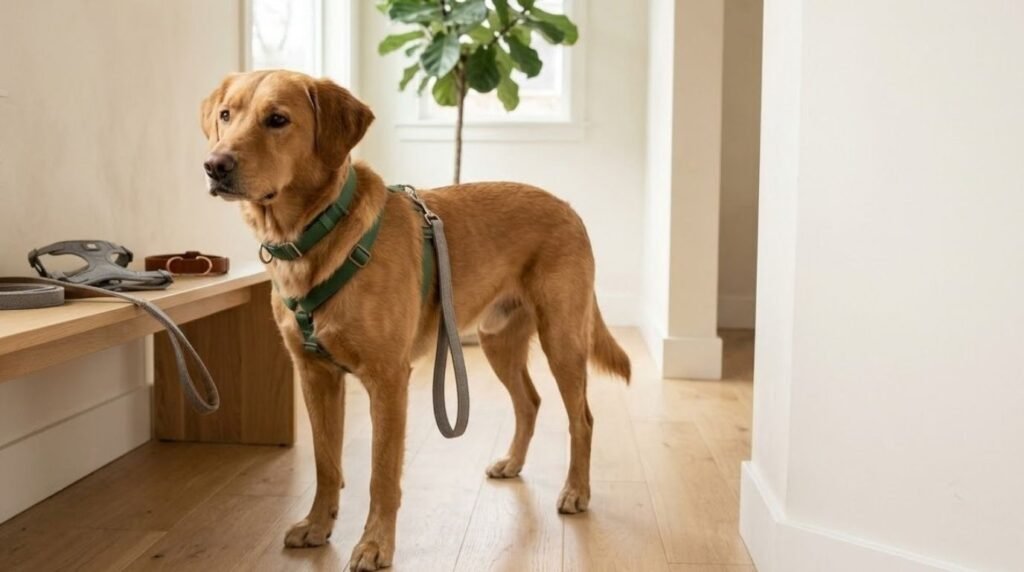
For most dogs, a harness is the safer choice for actual walking, since it spreads pressure across the chest and body instead of concentrating it on the neck.
| Harness type | Leash clip location | Best for |
|---|---|---|
| Back-clip harness | Between the shoulder blades | Dogs who already walk politely on a loose leash; simple, comfortable, easy to put on |
| Front-clip harness | Center of the chest | Dogs who pull or lunge; gives you more steering control by redirecting them toward you |
| Dual-clip harness | Both chest and back | Dogs whose behavior changes by situation, or households that want one harness for training and everyday walks |
A front-clip design tends to work better for dogs actively learning not to pull, since it turns the dog slightly toward you instead of letting them lean into the pressure. A back-clip design is usually the more comfortable, simpler option once a dog has already learned to walk without dragging you down the street. Neither is “wrong.” They’re built for different jobs.
If your dog is a brachycephalic breed (think French Bulldogs, Pugs, or Boston Terriers), a well-fitted harness that keeps pressure off the neck and airway is usually preferable to a collar for walking. The same goes for small dogs, who are more prone to tracheal irritation from neck pressure.
Leash types
The leash matters more than people expect. It’s your main line of communication with your dog on a walk.
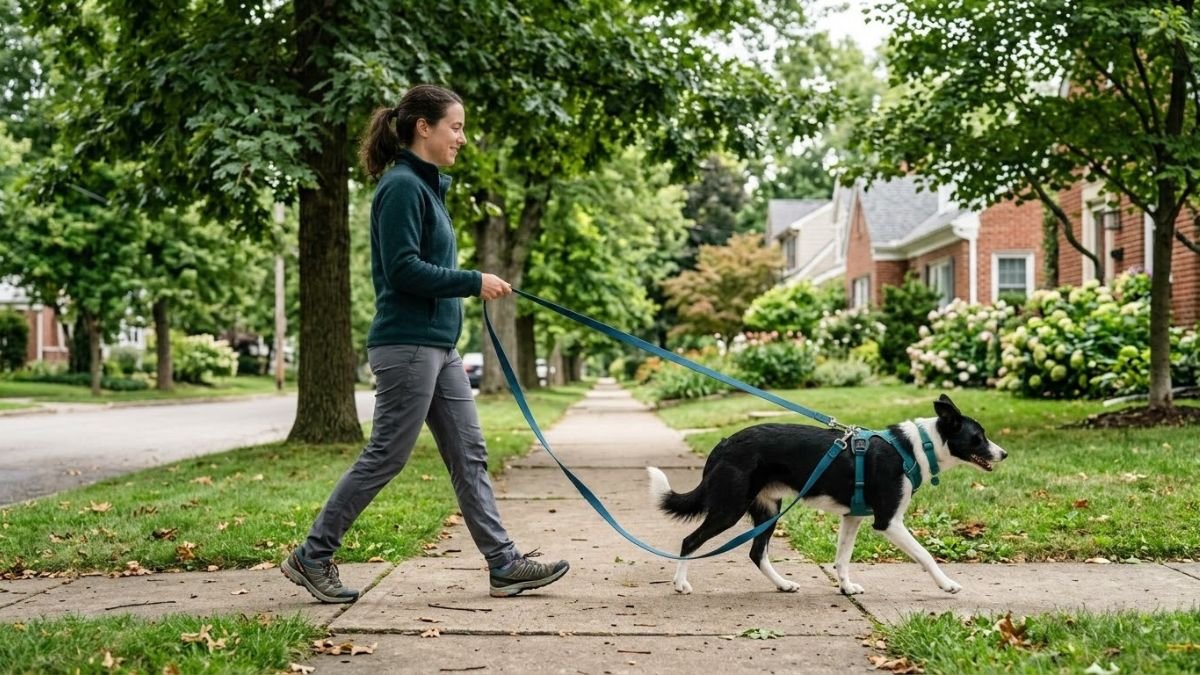
- Standard flat leash (4 to 6 feet): The most practical everyday choice for most dogs and most walking environments, including sidewalks, neighborhoods, and vet visits.
- Training or long line (10 to 30 feet): Useful in open, controlled spaces for recall practice and giving a dog more room to sniff without letting them roam into traffic or other hazards.
- Traffic lead (short, around 1 to 2 feet): Handy for tight city sidewalks or crowded doorways where you need your dog close.
A note on retractable leashes
Retractable leashes are popular, but it’s worth knowing what veterinarians and trainers commonly flag about them: the thin cord can cause rope burns or cuts if it wraps around a hand or leg, the mechanism can be hard to lock quickly in an emergency, and a dog that hits the end of the line at a run can jolt their own neck or pull a handler off balance. They’re generally discouraged for busy areas, training, or dogs who are still learning leash manners. If you like the extra range for open, quiet spaces, a long line on a harness (not a collar) is usually considered the safer way to get it. This matters even more with a puppy who’s still learning what a leash is for. See our guide on how much exercise a puppy actually needs for age-appropriate walk lengths.
Getting the fit right
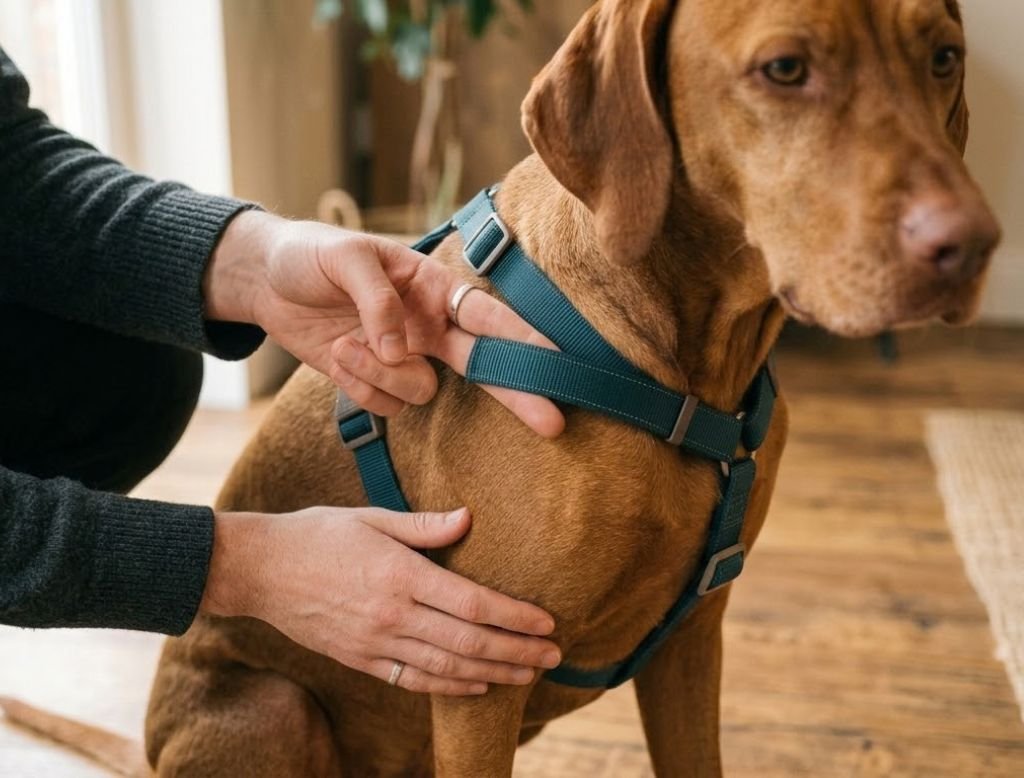
An ill-fitting collar or harness can be uncomfortable at best and unsafe at worst. A simple standard to check against:
- You should be able to comfortably fit two fingers between the collar or harness strap and your dog’s body.
- A harness shouldn’t rub or chafe under the “armpits.” Check after the first few walks.
- Nothing should be loose enough for your dog to back out of, especially during the first few wears.
- Recheck the fit as puppies grow, and after any major weight change in an adult dog.
If it’s your first time fitting a piece of gear on your dog, doing it at home first, rather than in a busy store, gives you room to adjust without rushing. It’s also worth checking your dog’s paws after longer walks, especially on hot pavement or rough trails; our guide to dog paw care covers what to look out for.
Material and everyday comfort
Nylon webbing is the most common material because it’s durable, easy to clean, and holds up in wet weather. Leather ages well and can be gentle on the coat but needs a bit more care. Mesh or padded harnesses tend to be cooler and more comfortable for warm climates or dogs with sensitive skin.
Whatever you choose, look for sturdy stitching at stress points and metal hardware over cheap plastic clips, since those are the parts most likely to fail under pressure.
Common buying mistakes
- Sizing by breed instead of measuring. Chest girth and neck size vary a lot even within a breed. Measure your actual dog.
- Assuming one piece of gear fits every situation. A harness great for calm evening walks might not give you enough control on a crowded trail.
- Ignoring the leash length for the environment. A long line in a crowded space creates more hazards than freedom.
- Ordering the smallest size “to be safe.” Too tight is just as much of a problem as too loose. Go by the measurement, not by guessing down a size.
- Never rechecking fit. Puppies grow fast, and even adult dogs shift weight with the seasons.
Maintenance and replacement
Check collars, harnesses, and leashes every few weeks for fraying, cracked plastic hardware, stretched-out webbing, or stitching that’s starting to pull loose. Nylon gear can usually be hand-washed; leather benefits from an occasional conditioner. Replace anything showing real wear at a stress point. A $15 leash is a lot cheaper than the alternative if it fails on a walk near traffic.
A simple decision guide
| Your situation | Reasonable starting point |
|---|---|
| Calm adult dog who doesn’t pull | Flat collar or back-clip harness, 4 to 6 ft standard leash |
| Dog who pulls or is still learning | Front-clip or dual-clip harness, 4 to 6 ft standard leash |
| Puppy in training | Lightweight harness, short standard leash; save long lines for later |
| Small breed or narrow-headed breed | Well-fitted harness or martingale collar, avoiding neck pressure |
| Flat-faced (brachycephalic) breed | Harness that keeps pressure off the neck and airway |
| Open space, recall practice | Long training line attached to a harness |
Frequently asked questions
Should I use a collar or a harness for walking?
For most dogs, a harness is the more comfortable and safer option for actual walking, since it spreads pressure across the chest instead of the neck. A flat collar is still useful for holding ID tags, and some owners use both: a collar for identification, a harness for the leash.
Do I need both a collar and a harness?
Many dog parents use both: a collar with ID tags for identification, and a harness for the actual leash attachment during walks. It’s not required, but it’s a common and practical setup.
Are retractable leashes safe?
They come with more risk than a standard leash, mainly from the thin cord causing cuts or burns, and from dogs picking up speed before hitting the end of the line. Many trainers and veterinary sources recommend a standard 4 to 6 foot leash for everyday walks and saving longer lines for open, quiet spaces.
How tight should a dog collar or harness be?
You should be able to fit two fingers comfortably between the strap and your dog’s body. Tighter than that can restrict movement or breathing; looser can let your dog slip free.
What’s the best harness for a dog that pulls?
A front-clip or dual-clip harness generally gives more steering control for dogs who pull, since the leash attachment redirects them toward you instead of letting them lean into the pressure. Pairing it with loose-leash training tends to get the best long-term results.
The bottom line
There’s no single “best” collar, harness, or leash. Just the combination that fits your dog’s size, habits, and the walks you actually take together.
Start with an honest look at how your dog behaves on leash today, measure before you buy, and check the fit again once the new gear is on. Everything else is a matter of comfort and preference. For more on the everyday basics of keeping a dog happy and healthy, our complete dog care guide is a good place to start.