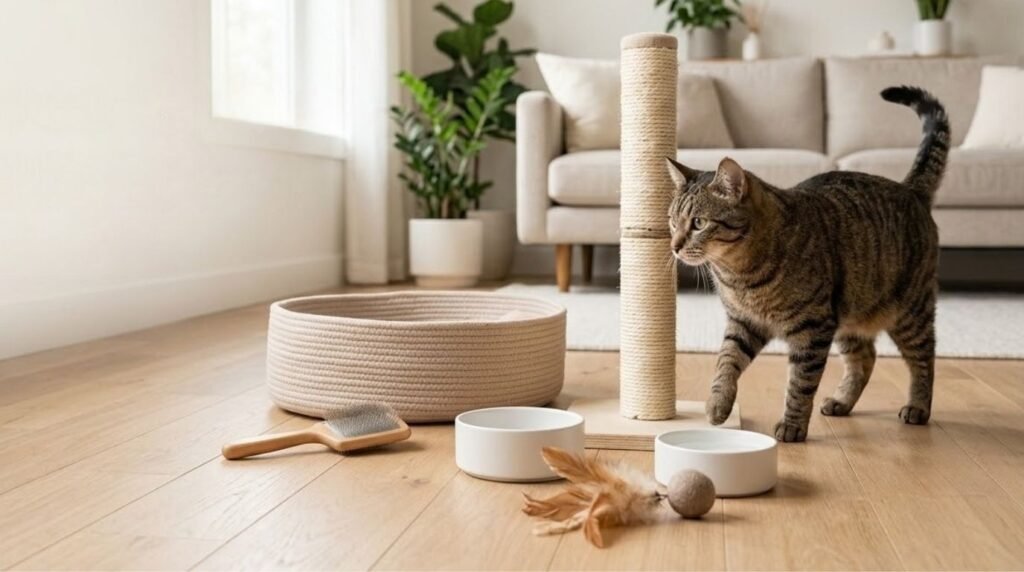
Walk into any pet store and the cat aisle alone can take twenty minutes to get through: a wall of litter bags, a rack of scratching posts, bins of toys, a shelf of carriers, and more food options than seems reasonable for one small animal. Here’s the short version: what a cat actually needs is a lot simpler than the shelf makes it look. This guide walks through the five things most cats need (food, litter, toys, scratchers, and a carrier) and what actually matters when you’re choosing each one.
What to think about before you buy anything
A few honest questions make every choice below faster:
- Is your cat indoor only, or do they go outside? This changes how much toys and scratchers matter for their daily activity.
- What life stage are they in? Kittens, adults, and seniors have different food, litter, and play needs.
- How many cats are in the household? Litter boxes, scratchers, and feeding stations all scale with cat count, not just space.
- How do they already behave? A cat that scratches the couch arm, or one that hides at the sight of a carrier, is telling you something useful before you buy anything.
Food and treats
Cats are obligate carnivores, which means their diet needs to be built around animal protein no matter what else is on the label.
A few things worth checking before anything else:
- Life stage match. Kitten formulas are richer to support growth. Adult maintenance formulas are balanced for steady weight. All life stage foods work across ages but aren’t always the best fit for a growing kitten or a senior with specific needs.
- Named protein sources. Look for a clearly named meat (chicken, salmon, turkey) rather than vague terms like “meat by-products.”
- Wet versus dry. Wet food adds moisture, which matters since cats have a naturally low thirst drive and can end up under-hydrated on a dry-only diet. Dry food is convenient and shelf stable. Many cats do well on a mix of both, and switching foods gradually over a week or two avoids stomach upset.
Treats are worth keeping in perspective. They’re a training and bonding tool, not a meal replacement, and a general guideline many vets use is keeping treats under about ten percent of daily calories.
Litter and litter boxes
The two main litter types are clumping and non-clumping. Clumping litter forms solid clumps around waste that you scoop out daily, which makes odor control easier and stretches the time between full box changes. Non-clumping litter absorbs moisture without clumping, so it needs more frequent full changes but tends to cost less. Kittens under about twelve weeks do better on non-clumping litter, since young kittens explore with their mouths and clumping litter can cause digestive problems if swallowed.
Box setup matters as much as the litter itself. The standard guidance is one litter box per cat, plus one extra, placed in quiet, easily accessible spots rather than clustered together. We’ve covered box types, placement, and cleaning routines in more depth in our litter box guide, which is worth a look if avoidance or accidents are already a problem in your home.
Toys and enrichment
Cat toys generally fall into two categories, and most households end up needing both.
- Interactive toys. Feather wands, string toys, and anything you move by hand fall here. These are the best tool for actual bonding and daily exercise, and most guidance points to ten to fifteen minutes of interactive play once or twice a day.
- Solo toys. Crinkle balls, plush mice, and puzzle feeders your cat can use without you. These fill in the rest of the day, especially for cats home alone for long stretches.
Safety matters more with toys than almost any other category here. Avoid anything with loose strings, small detachable parts, or easily chewed-off pieces, and supervise battery-powered toys rather than leaving them out unattended. Rotating which toys are out week to week keeps a cat from tuning them out entirely. If play sessions seem to wind a cat up rather than settle them, our clicker training guide covers a structured way to channel that energy.
Scratchers and cat furniture
Scratching is a normal, necessary behavior, not a habit to train away entirely. The goal is giving a cat a scratcher they actually prefer over the couch.
Watching how your cat already scratches tells you what to buy:
| What your cat does | What to get |
|---|---|
| Rears up on furniture or door frames | A tall, sturdy vertical post (sisal is the most durable material for this) |
| Claws at carpet or rugs | A flat or inclined horizontal cardboard scratcher |
| Both, depending on mood | One of each; many cats genuinely use both styles |
For a vertical post, height matters more than most buyers expect: a cat needs to be able to stretch fully upward, which generally means a post at least two and a half feet tall for an adult cat. A wobbly post will get rejected fast, so a stable, weighted base is worth paying attention to before checking the material.
Carriers and travel gear
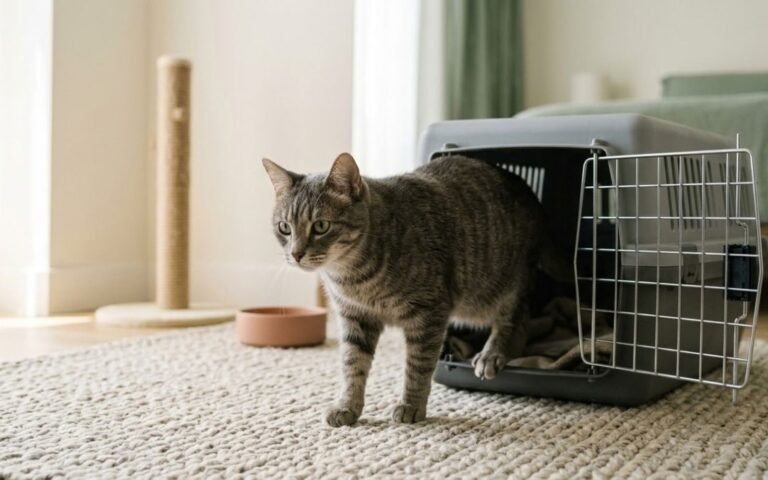
A carrier is safety equipment, not an occasional box pulled out once a year. Even a short car ride is safer with a cat secured in one, and a DIY option like a laundry basket or tote bag isn’t a substitute.
The two main styles are hard sided and soft sided. Hard carriers hold their shape, clean up easily after accidents, and often open from both the top and front, which matters more than it sounds: a top opening lets you lift a frightened cat out instead of dragging them through a narrow front door. Soft carriers are lighter and easier to store, and work well for calm cats and cabin air travel, but they can collapse inward under a panicking cat and are harder to clean.
Whichever style you choose, check that there’s ventilation on more than one side, that the door latch is genuinely secure, and that your cat can stand and turn around inside without it being so oversized that they slide around during a car ride. Introducing the carrier at home, well before it’s needed for a trip, makes a real difference in how stressful travel days end up being. If your cat gets visibly anxious around the carrier or during travel, our guide on calming a stressed cat at home has some useful groundwork.
Common buying mistakes
- Buying one litter box for a multi-cat home. Even friendly cats often prefer not to share, and this alone can cause a cat to stop using the box entirely.
- Switching food or litter overnight. Both usually go better with a gradual transition over a week or so.
- Assuming a cat will just adapt to a small or unstable scratching post. If the post can’t be fully stretched on or it wobbles, most cats go back to the furniture.
- Waiting until travel day to introduce the carrier. A cat’s first experience with a carrier being their first vet trip sets a bad association early.
- Treating toys as a one-time purchase. Novelty matters to cats; the same toys left out permanently tend to get ignored within a few weeks.
A simple starter checklist
| Category | Reasonable starting point |
|---|---|
| Food | Life stage appropriate formula, named protein source, a mix of wet and dry |
| Litter | Clumping litter for adult cats, non-clumping for kittens under twelve weeks |
| Litter boxes | One per cat plus one extra, placed in separate quiet spots |
| Toys | One interactive wand toy plus a small rotation of solo toys |
| Scratcher | A tall sisal post if your cat scratches upward, a cardboard pad if they scratch low |
| Carrier | A hard sided, two door carrier for most households; soft sided for calm cats and air travel |
Frequently asked questions
How many litter boxes do I actually need?
The standard guidance is one box per cat, plus one additional box, placed in separate locations rather than side by side.
Is clumping litter safe for kittens?
It’s generally better to use non-clumping litter for kittens under about twelve weeks, since kittens explore with their mouths and swallowed clumping litter can cause digestive problems.
Do cats need both vertical and horizontal scratchers?
Many do. Watching how your cat already scratches (upright on furniture versus flat on the carpet) is the fastest way to know which style to prioritize first.
Is a soft sided or hard sided carrier better?
Hard sided carriers are generally considered safer and easier to clean, especially for car travel and vet visits. Soft sided carriers work well for calm cats and are often required for in cabin air travel.
How much should I spend on cat toys?
Very little, if you’re strategic about it. A single interactive wand toy and a small rotating set of inexpensive solo toys covers most of what a cat actually needs; expensive doesn’t reliably mean more engaging.
The bottom line
None of these five categories need to be perfect on the first try. Start with a reasonable, life stage appropriate choice in each, watch how your cat actually responds, and adjust from there. For more on the everyday side of cat care beyond products, our cat care guide for beginners is a good next stop.