
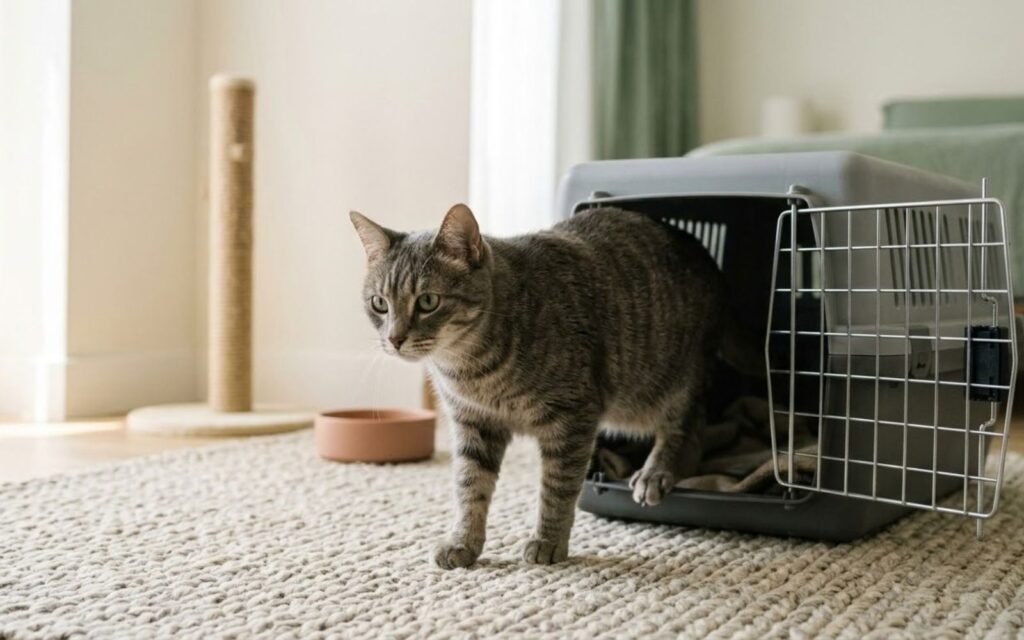
A new cat needs a short list on the first day, and most of it comes down to three things: somewhere to use the toilet, somewhere to hide and settle, and a safe way to reach the vet. Everything else can be bought once you have seen how your cat behaves at home.
The short answer: The essential cat products for a new owner are a litter box with litter and a scoop, a hard carrier, food and water bowls, the food your cat was already eating, a scratching post, a bed or blanket in a hiding spot, and identification (a microchip, plus a tag if your cat wears a collar). Toys, trees, fountains and gadgets matter less on day one.
[AFFILIATE DISCLOSURE: INSERT PAWSNPUP APPROVED WORDING]
This guide sorts cat supplies into what to have ready on arrival, what to add in the first weeks, and what can wait. It also explains what to look for in each essential item.
The cat supplies checklist at a glance
| Tier | What it includes | Why it sits here |
| Need now | Litter box, litter and scoop, hard carrier, food and water bowls, the cat’s current food, a scratching post, a bed or blanket and a hiding spot, a microchip, a quiet room to start in | Toileting, travel, feeding and a place to feel safe |
| Need soon | Interactive toys, brush and nail trimmer, a cat tree or perch, a second litter box if you have more than one cat, a vet appointment | Depends on coat, age and household |
| Can wait | Water fountain, automatic litter box, heated bed, window perch or catio, harness | Useful for some cats, unnecessary for many |

If you can only sort out one row before the cat arrives, make it the first one.
Start with a quiet room, not a shopping trip
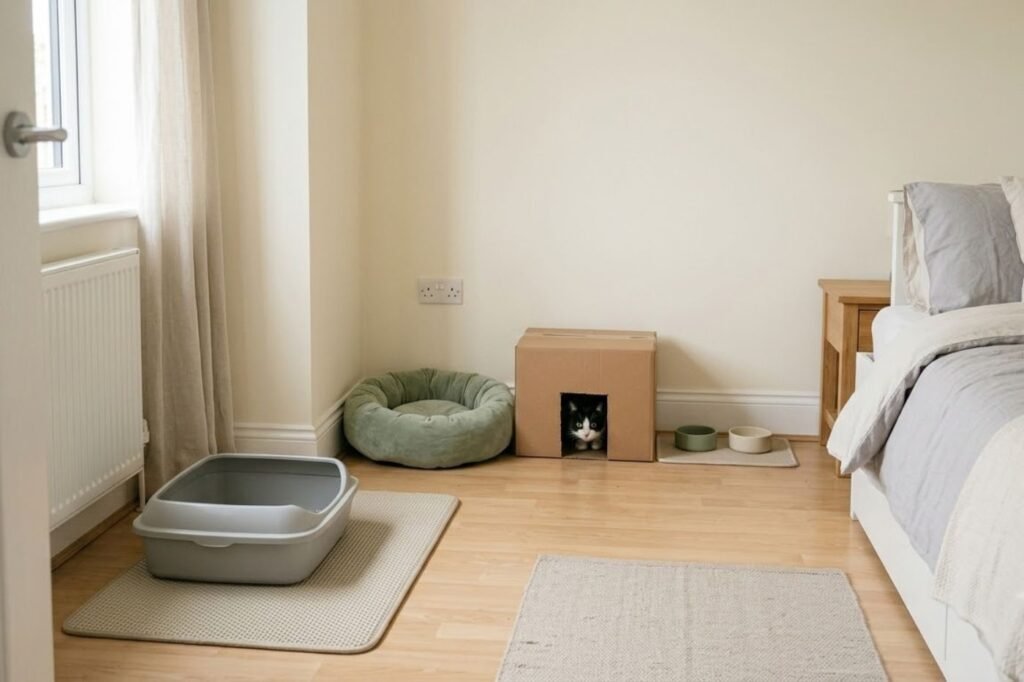
Many shelters suggest keeping a new cat in one small room at first, such as a spare bedroom or a bathroom. The Hinsdale Humane Society advises putting the litter box at one end of the room and the food, water and bed at the other, and keeping the cat there for the first several days. Closing the toilet lid is sensible if the room is a bathroom.
Before the cat arrives, walk through the home at cat height. The ASPCA advises securing medications, removing poisonous plants, tying up dangling cords and curtain pulls, covering garbage and making sure openable windows have screens and locks. None of that costs much, and it matters more than any product.
The litter box
How many litter boxes does a cat need? One per cat, plus one extra, according to the Wisconsin Humane Society. For one cat that means at least one box, and a second is worth considering if the space allows.
The same guide suggests a box of at least 22 by 16 inches for an adult cat, placed in a quiet, private and easy to reach spot away from noise, other animals, food and water. It recommends scooping daily and washing the box when soiled or at least once a month. Once the box is placed, try not to move it.
Open or covered is a real question, because the same guide prefers open boxes while some cats and owners prefer hoods. That decision, along with entry height for kittens and older cats, is covered in [INTERNAL LINK: INSERT RELEVANT PAWSNPUP URL] choosing a litter box. If your cat suddenly stops using the box, see your veterinarian rather than buying another product.
The carrier
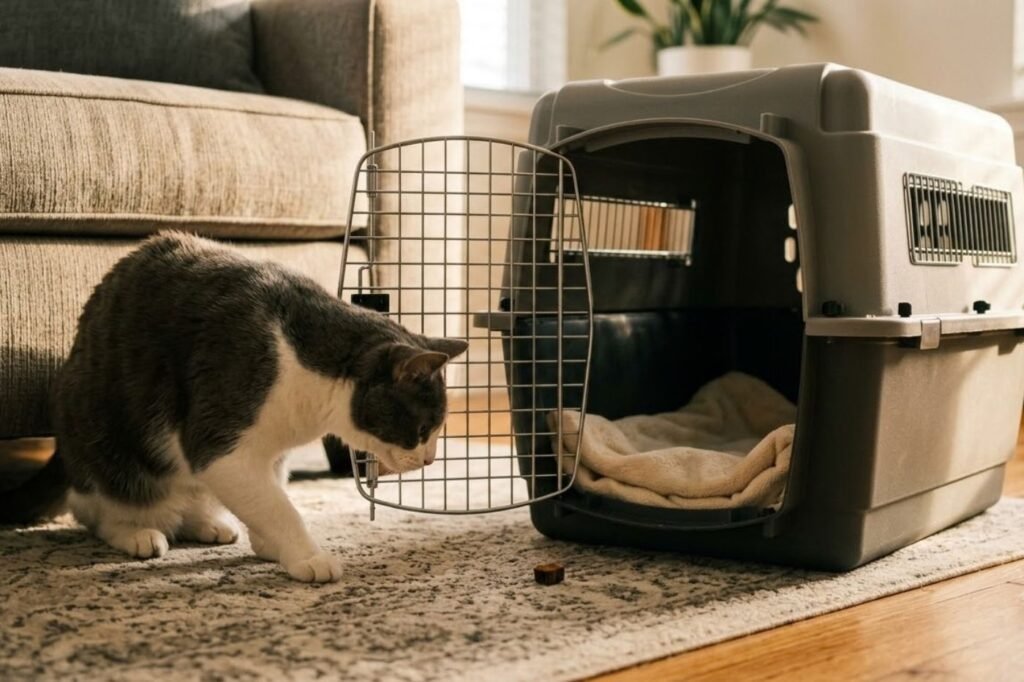
Does a new cat need a carrier? Yes. A cat should never travel loose, and a carrier is how you get to the vet, to a new home or out of the house in an emergency.
The American Association of Feline Practitioners recommends a hard plastic carrier with a removable top, because the vet can examine the cat while it stays in the bottom half. If you choose a soft carrier, the AAFP says it should have a large top opening and doors that will not collapse. It also advises one carrier per cat, and keeping the carrier out in a common room with a familiar blanket and a few treats, rather than in a garage or closet, so it becomes part of the furniture.
Travel and airline questions are covered in [INTERNAL LINK: INSERT RELEVANT PAWSNPUP URL] the cat carrier guide.
Product category example: A hard carrier with a removable top suits a cat that will visit the vet, even once a year. A soft carrier may be easier to store, but it is harder to examine a cat in. Check the manufacturer’s listed dimensions against your cat’s size and any airline rules before buying. [AMAZON AFFILIATE LINK: INSERT VERIFIED URL] Check the current Amazon listing.
Food, water and bowls
Feed the food your cat was already eating for the first days, and ask the shelter, breeder or your veterinarian what it was. A sudden food change can upset digestion in many cats, and the right long term diet depends on age and health, which is a conversation for your vet.
For bowls, the Hinsdale Humane Society advises keeping food and water dishes away from the litter box and suggests dishes that are not plastic. Ceramic and stainless steel are the usual alternatives. Bowl shape, placement and the whisker questions are in [INTERNAL LINK: INSERT RELEVANT PAWSNPUP URL] food and water bowls.
The scratching post
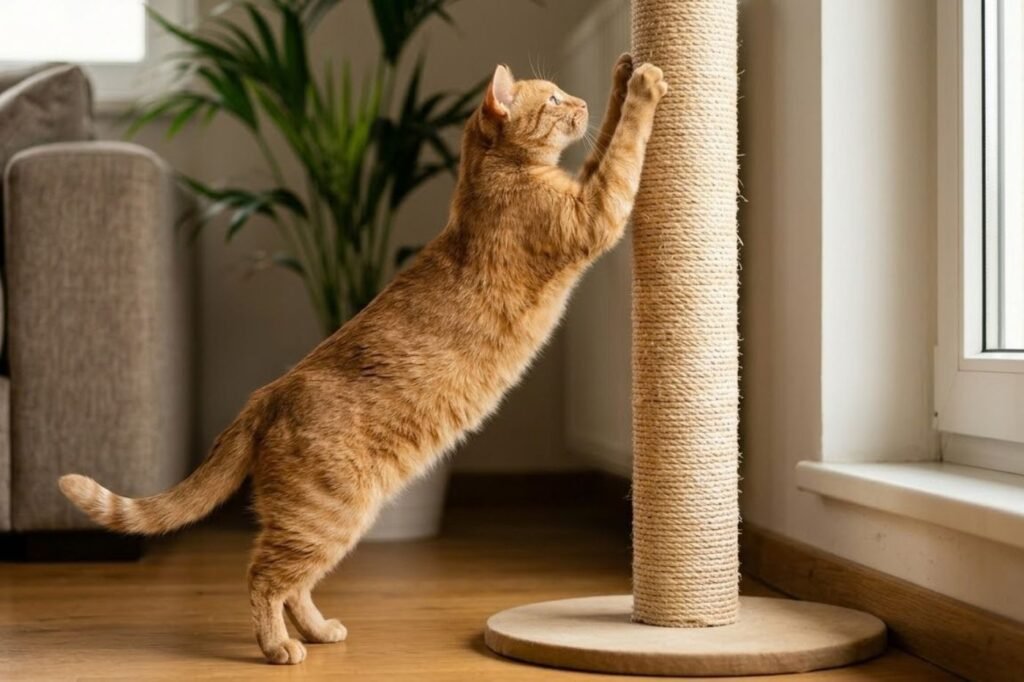
Does a cat need a scratching post? Cats scratch because it is natural behavior, not bad manners. Cornell University’s Feline Health Center says cats scratch mainly to mark territory with scent glands on their paws and to shed the outer sheath of their claws. Because the behavior is innate, the realistic goal is to give it somewhere to go.
Cornell’s advice is to match the post to the cat. A tall post suits a cat that scratches vertically, and it should be at least as tall as the cat standing on its hind legs with front legs stretched. It must be sturdy enough not to tip. Carpet suits cats that scratch carpet, while rope like sisal suits cats that favor nubby surfaces such as couches. Cats that scratch horizontally may prefer a flat cardboard scratcher. Place the post next to a spot the cat already scratches, and keep it in use even when it looks worn, because wear means it works.
Surfaces, heights and how to match them to your cat are in [INTERNAL LINK: INSERT RELEVANT PAWSNPUP URL] choosing a scratching surface.
Product category example: A tall, stable post suits a cat that stretches up to scratch. It is less useful for a cat that scratches flat surfaces, which may use a horizontal scratcher instead. Check the listed height and base size on the product page. [AMAZON AFFILIATE LINK: INSERT VERIFIED URL] See the current product details on Amazon.
A bed, a hiding spot and a place to settle
A new cat needs somewhere it can retreat. In the first days that can be a soft blanket in a box or a covered bed in the quiet room, placed away from foot traffic. You do not need to buy a special bed first. Which bed a cat actually uses depends on warmth, location and security more than price, and it is covered in [INTERNAL LINK: INSERT RELEVANT PAWSNPUP URL] picking a cat bed.
Identification
The American Veterinary Medical Association recommends microchips for pets, and county animal services guidance, such as that from Wake County, North Carolina, says cats should be microchipped. A chip only helps when it is registered with current contact details, so update the record if your phone number or address changes. If your cat wears a collar, add an ID tag as well.
What can wait
Once the essentials are in place, add things in response to what your cat does:
- Toys, once you know how your cat likes to play, covered in [INTERNAL LINK: INSERT RELEVANT PAWSNPUP URL] interactive toys and enrichment.
- A cat tree or wall perches, if your cat wants height, covered in [INTERNAL LINK: INSERT RELEVANT PAWSNPUP URL] choosing a cat tree.
- A water fountain, which some cats prefer and many do not need, covered in [INTERNAL LINK: INSERT RELEVANT PAWSNPUP URL] fountains versus bowls.
- Grooming tools matched to coat length, covered in [INTERNAL LINK: INSERT RELEVANT PAWSNPUP URL] cat grooming tools.
- Extra resources for several cats, covered in [INTERNAL LINK: INSERT RELEVANT PAWSNPUP URL] multi cat household products.
- A richer environment for an indoor only cat, covered in [INTERNAL LINK: INSERT RELEVANT PAWSNPUP URL] indoor cat products.
Life stage changes the list too. Kittens need different sizes and more supervision, covered in [INTERNAL LINK: INSERT RELEVANT PAWSNPUP URL] kitten supplies. Older cats may need easier access to boxes and resting spots, covered in [INTERNAL LINK: INSERT RELEVANT PAWSNPUP URL] senior cat products.
Where to spend and where to save
This is a judgment call rather than a rule. Spend on items that affect safety or that a cat uses every day: the carrier, the litter box and a scratching post that does not wobble. Save on toys, spare bowls and accessories, because a cat may ignore the expensive one. Inspect gear regularly and replace worn items, as set out in [INTERNAL LINK: INSERT RELEVANT PAWSNPUP URL] the cat product safety checklist.
Common mistakes
- Buying a large starter kit before learning what the cat actually uses.
- Putting the litter box next to the food and water.
- Choosing a scratching post that is short or wobbly, then blaming the cat.
- Keeping the carrier in a closet, so it only appears on vet days.
- Moving the litter box once the cat has accepted its location.
- Treating every optional gadget as a necessity.
Conclusion
Set up one quiet room with a litter box at one end and food, water and a bed at the other, put the carrier somewhere the cat can see it, and add a scratching post near where the cat will want to stretch. Then watch. Where your cat sleeps, how it plays and what it scratches will show you which of the later purchases are worth making.
FAQ’S
What do I need before bringing a cat home?
A litter box with litter and a scoop, a hard carrier, food and water bowls, the cat’s current food, a scratching post, a bed or blanket, a hiding spot and a quiet room to start in. Arrange a microchip and a vet visit as well.
Do cats need toys?
Toys are not an essential on the first day, but play is a normal part of a cat’s life. Add a few once you see how your cat likes to move, and rotate them rather than buying many at once.
Which cat items are essential and which are optional?
Items that cover toileting, travel, feeding, scratching and resting are essential. Fountains, automatic litter boxes, heated beds and window perches are optional for most cats.
How many litter boxes do I need?
The Wisconsin Humane Society recommends one per cat plus one extra, kept in quiet, private spots away from food and water.
How much should I spend on cat supplies?
Spend more on the carrier, litter box and a stable scratching post, and less on toys and accessories. Prices vary by brand and region, so compare current listings rather than trusting a fixed budget.
Does a cat need a microchip if it wears a collar?
The AVMA recommends microchips, because collars can come off. If your cat wears a collar, add an ID tag too.