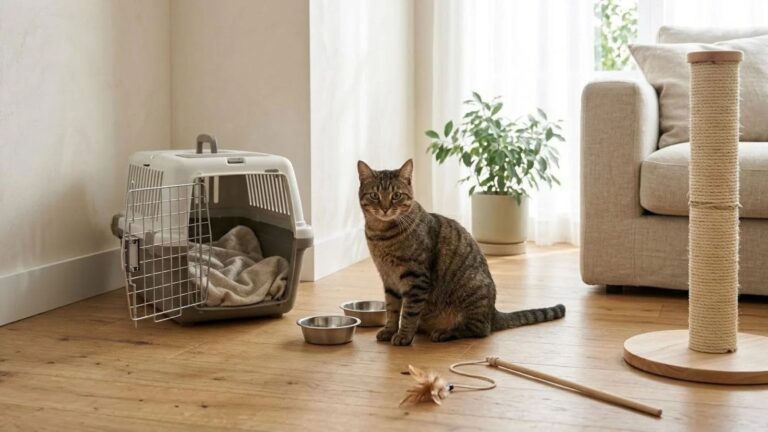
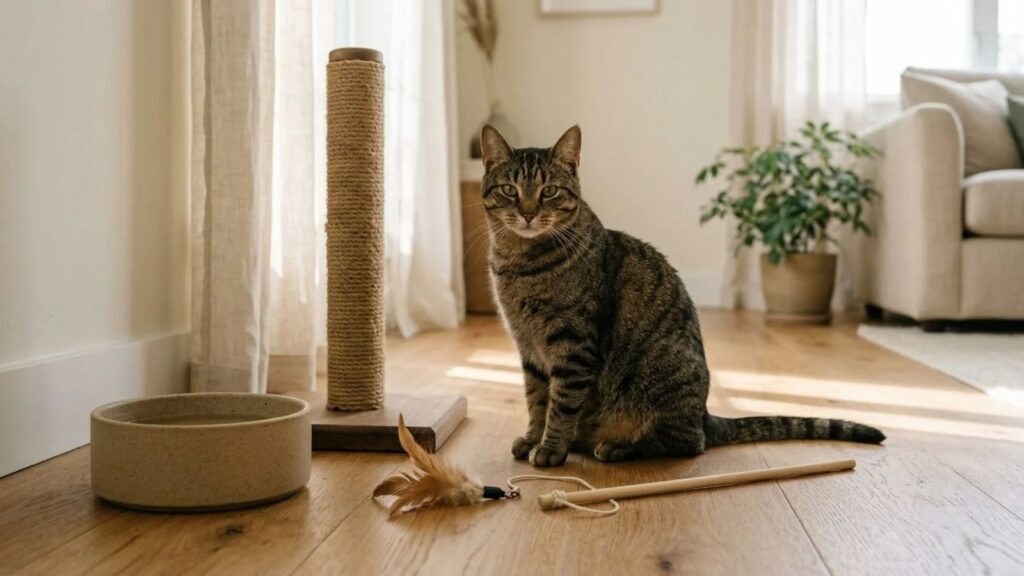
Learning how to choose the right cat products starts with evaluating the individual cat rather than trusting store displays or marketing claims. Life stage, body size, coat type, daily behavior, and household layout determine whether an item supports comfort and safety or gathers dust in a closet.
Thoughtful evaluation saves money and reduces stress for kittens, adult cats, and seniors alike. Focusing on nutritional adequacy, easy cleaning, structural stability, and feline instincts turns every purchase into a reliable everyday tool.
Key Takeaways
- Check an AAFCO nutritional adequacy statement in the United States, or a complete pet food label aligned with FEDIAF guidance in Europe, rather than judging diets by ingredient order alone.
- Keep training treats and extras to no more than 10 percent of daily calories, and consult a veterinarian before changing diets for cats with medical conditions.
- Choose wide, stable, easy-to-clean food and water bowls; treat water fountains as optional accessories requiring adherence to the manufacturer’s cleaning and filter-replacement schedule.
- Match litter texture, box accessibility, scratcher orientation, and grooming tools to the individual cat’s size, age, coat, and preferences rather than buying by price or trend.
- Prioritize safety across every category by supervising string or battery toys, securing carriers in vehicles, checking specific airline carrier rules, and rejecting declawing.
How to Choose the Right Cat Products for Your Cat’s Needs
Effective product selection starts with four practical questions: life stage, indoor versus outdoor lifestyle, number of cats in the home, and existing habits. A growing kitten, an active adult, and an arthritic senior have very different physical needs.
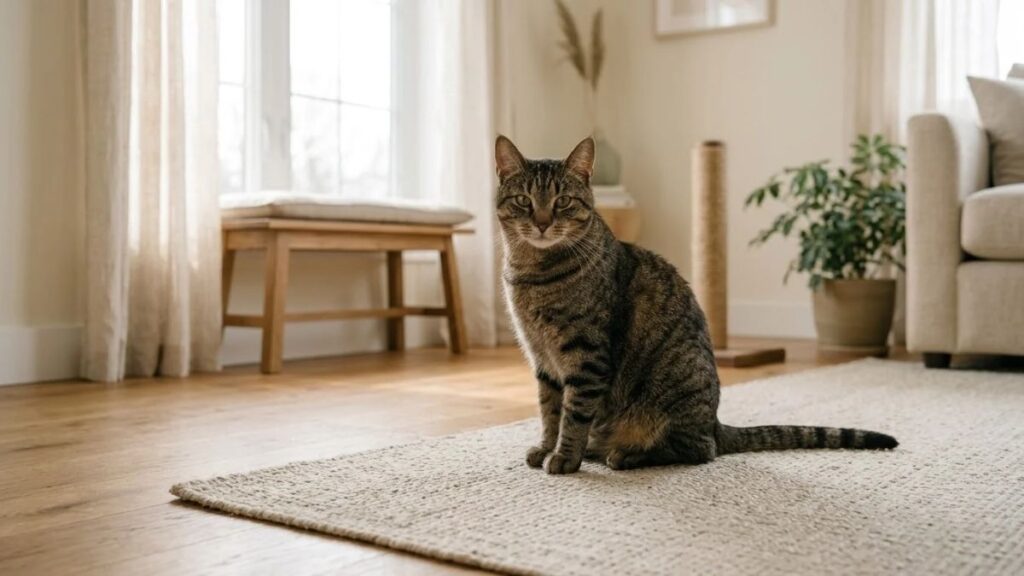
Existing behavior offers the clearest buying clue. A cat that stretches upright against sofa corners needs a tall vertical scratcher, while a nervous traveler needs a rigid top-loading carrier rather than a flexible bag. For foundational daily routines alongside gear decisions, review cat care tips for beginners.
| Product Category | Primary Evaluation Criteria | Key Limitation to Watch For |
| Food and treats | Complete life-stage adequacy statement, calorie transparency | Ingredient order alone does not confirm balanced nutrition |
| Bowls and fountains | Wide, shallow, non-slip, non-porous cleanable materials | Fountains require manufacturer cleaning and filter schedules |
| Litter and boxes | Unscented fine texture, low dust, spacious easy-access tray | No single substrate or hooded design suits every feline |
| Toys and puzzles | Safe sturdy build, rotation variety, matched hunting style | Loose strings, tiny parts, and battery toys need supervision |
| Scratchers | Full-stretch height, weighted stability, preferred texture | Wobbly or short posts often drive cats back to furniture |
| Carriers | Multi-side ventilation, secure latches, easy cleaning | No carrier is universally approved by every airline |
| Grooming tools | Coat-appropriate teeth or pins, gentle skin safety | Tight mats or high distress require professional care |
Food and Treats: Reading Beyond Marketing Labels
When learning how to choose the right cat products, start with food that meets the cat’s nutritional needs and life stage. In the United States, per the Cornell Feline Health Center feeding guide, check for an AAFCO nutritional adequacy statement matching the cat’s life stage. European labels differ, using a complete pet food designation (rather than complementary) aligned with EU rules and FEDIAF guidance.
Ingredient-list order or a named meat first does not prove overall nutritional quality on its own. Formulas rely on total nutrient balance, digestibility, and manufacturer quality control, and named organ meats or animal by-products can supply essential amino acids and vitamins when formulated properly.
Both wet and dry diets offer practical trade-offs without either being universally superior. Canned wet food adds moisture helpful for cats with a low thirst drive, while dry kibble works easily in puzzle feeders. Many homes feed a mix of both.
Transition gradually over about seven to ten days when appropriate, adjusting the pace for the cat’s tolerance and following veterinary advice for medical or special diets.
Consistent with WSAVA treat guidance for cats, keep treats, chews, and extras to no more than 10 percent of daily calories so snacks do not unbalance the main diet or promote weight gain.
Avoid raw animal treats, cooked or raw bones, and toxic human foods. Milk and other dairy products are generally unnecessary treats, as many adult cats have difficulty digesting lactose.
Food and Water Bowls Versus Optional Fountains
Select stable, wide, shallow bowls that allow cats to eat without their whiskers repeatedly pressing against the sides. Stainless steel, glazed ceramic, and glass clean easily, whereas soft plastic holds odor. Dishwasher-safe Wellbro Stainless Steel Wide Shallow Cat Bowls pair low rims with a non-slip silicone base for meals.

Wash food and water dishes daily with hot water and mild unscented soap, rinsing thoroughly. Guided by the 2013 AAFP and ISFM Feline Environmental Needs Guidelines, placing key resources such as food, water, and litter stations in separate locations gives cats easy access and helps minimize competition and stress.
Optional fountains suit cats preferring moving water, though none guarantee higher hydration or prevent urinary disease. The Catit PIXI Stainless Steel Cat Drinking Fountain offers a 2.5-liter reservoir and triple filter, provided owners follow the manufacturer’s cleaning and filter schedule.
Litter and Litter Boxes: Comfort and Practical Access
Evaluate cat litter by texture, dust level, scent, clumping performance, and individual acceptance. As noted by International Cat Care on soiling indoors, many cats prefer fine, sandy, unscented, low-dust granules over heavily perfumed or coarse pellet products, though individual preferences vary.
Watch young kittens closely for mouthing or eating litter. Many shelters and foster programs start young kittens on unscented non-clumping paper or clay litter as a precaution against ingestion, and a veterinarian can advise on the safest choice for a kitten’s age.
Introduce a new litter gradually when the cat accepts the transition, and monitor for avoidance or changes in toileting habits. Some cats may prefer access to their familiar litter during the change.
Box ergonomics matter as much as substrate. As a commonly used sizing guideline, spacious open trays roughly one and a half times a cat’s body length help cats turn, dig, and watch their surroundings freely. Covered hoods can trap odor or make cautious cats feel cornered, while low-entry, easily washed pans help kittens and arthritic seniors.
A helpful starting guideline is one litter box per cat plus one extra in separate quiet spots. For detailed multi-cat counts, room layouts, and distribution plans, consult litter boxes per cat; for training and avoidance fixes, see the litter box mastery guide.
Toys, Enrichment, and Safe Play Gear
When deciding how to choose the right cat products for enrichment, prioritize toys that satisfy indoor stalking, chasing, and pouncing instincts. Pair supervised interactive wands, like the Fringe Studio Going with the Tide Teaser Cat Toy, with solo mice, balls, and food puzzles.
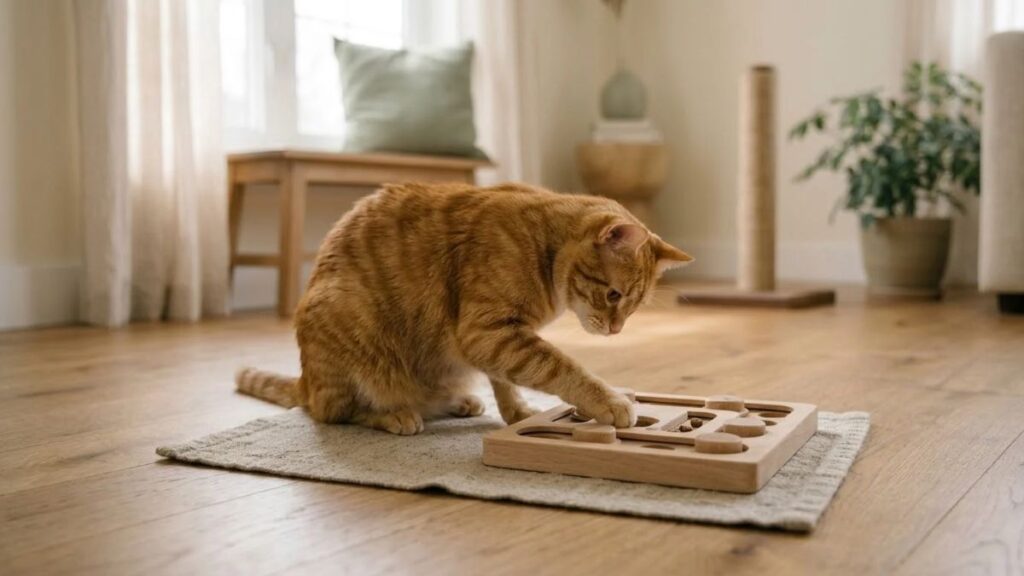
Higher prices do not guarantee stronger engagement. Rotating small groups of simple toys weekly preserves novelty far better than leaving a crowded bin out permanently. Matching prey styles, such as aerial feathers versus ground skittering toys, also keeps individual cats interested.
Prioritize safety over novelty. Store wand strings and ribbons away after supervised play to prevent swallowing injuries, discard toys with loose parts, and supervise battery or automated toys. For structured play routines, see clicker training cats.
Scratching Products and Cat Furniture
Scratching is a normal, necessary feline behavior that maintains claws, stretches muscles, and deposits visual and scent markers. Providing suitable outlets protects furniture humanely; declawing is never an acceptable or humane product-related solution.
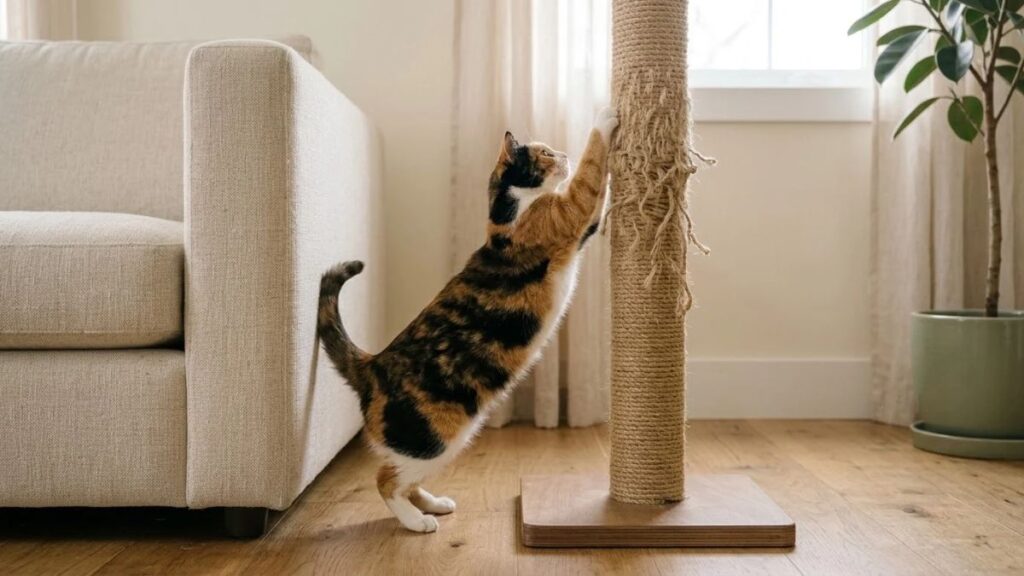
Match vertical, horizontal, or inclined scratchers to existing habits. Vertical posts need full-stretch height, heavy stability, and durable sisal, while dense cardboard suits floor scratchers. The 32-inch SmartCat Ultimate Scratching Post pairs sisal fiber with a 16-by-16-inch base for upward-stretching adults.
Placement decides whether a scratcher gets used. Put posts near sleeping spots, entryways, or targeted sofa arms rather than hidden corners, and pair scratching outlets with elevated resting spots in smaller homes.
Carriers and Safe Travel Equipment
Treat a carrier as essential travel safety equipment. Hard-sided plastic shells offer rigid construction and wash easily after spills, while front and top doors ease lifting nervous cats, as with the 22.8-inch Amazon Basics Two-Door Top-Load Hard-Sided Pet Travel Carrier.
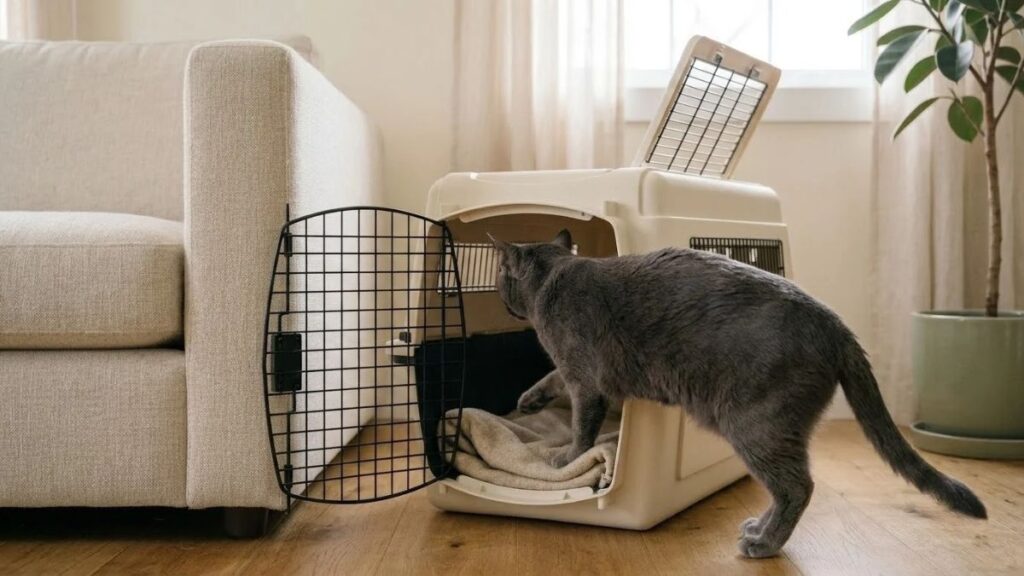
Soft-sided carriers are lighter to carry and fold neatly for storage, suiting calm cats on gentle trips, though flexible sides can collapse under panicked claws and absorb spills. Whichever style fits best, verify multi-side ventilation, genuinely secure door latches, and room to stand and turn without excessive sliding.
Never assume a carrier fits every flight; cabin acceptance depends on the specific airline’s rules and exact under-seat dimensions. Buckle carriers securely in vehicles, and leave the open carrier out at home with bedding and treats as a safe haven, reflecting free-access crate practices described by Herron and Buffington (2010).
Grooming and Routine-Care Tools
Choosing the right cat products for grooming depends on coat length, undercoat density, and skin sensitivity rather than buying oversized kits. Short-haired cats often need a soft rubber brush or fine comb, while long-haired cats typically benefit from a wide-toothed stainless-steel comb and a gentle brush, as explained in the RSPCA cat grooming guidance.
Choose sharp, cat-sized scissor-style or guillotine nail clippers that cut cleanly without crushing the claw, and introduce tools briefly with calm rewards. For detailed long-coat routines and mat safety, review grooming long-haired cats. When tight skin-level mats, severe distress, or painful skin appear, have an experienced feline groomer or veterinarian handle the session safely.
FAQs
How can owners tell if a cat food is nutritionally complete?
In the United States, check for an AAFCO nutritional adequacy statement matching the cat’s life stage; in Europe, look for a complete pet food designation aligned with FEDIAF guidance rather than relying on ingredient order alone. Consult a veterinarian for medical diets.
Does every cat need a circulating water fountain?
No, fountains are optional. Many cats drink readily from wide, clean ceramic or stainless-steel bowls refreshed daily, while fountains require following the manufacturer’s disassembly, cleaning, and filter-replacement schedule and never guarantee disease prevention.
Is hard-sided or soft-sided better for a cat carrier?
Hard-sided carriers with secure top and front openings provide a rigid enclosure, simplify cleaning, and can make veterinary handling easier. Soft-sided models suit some calm cats and offer easier storage, although airline acceptance depends on the specific carrier dimensions and airline requirements.
Are expensive or automated cat toys worth buying?
Not automatically. Many cats engage just as enthusiastically with an inexpensive wand toy and a small rotated set of solo toys or puzzle feeders, and automated or string toys still require supervision to prevent chewing or entanglement injuries.
When should grooming tools be left to a professional instead of home care?
Seek an experienced feline groomer or veterinarian whenever tight mats sit close to the skin, the cat shows pain or intense distress during handling, or sores, redness, or sudden coat changes appear.
Conclusion
Mastering how to choose the right cat products comes down to matching safety, cleanability, and feline instincts to the individual cat rather than chasing trends or high price tags. Checking life-stage nutritional adequacy, offering stable scratching and toileting setups, and introducing carriers and tools calmly solve the most common everyday frustrations.
Product choices complement attentive care but never replace veterinary diagnosis or treatment. Whenever appetite, thirst, elimination, coat condition, or behavior changes unexpectedly, consult a veterinarian first and adjust home equipment to support comfort and long-term wellbeing.
Affiliate Disclosure: Some product links on PawsNPup may be affiliate links that earn a small commission on qualifying purchases at no extra cost to the reader, and affiliate relationships never influence independent editorial criteria.