
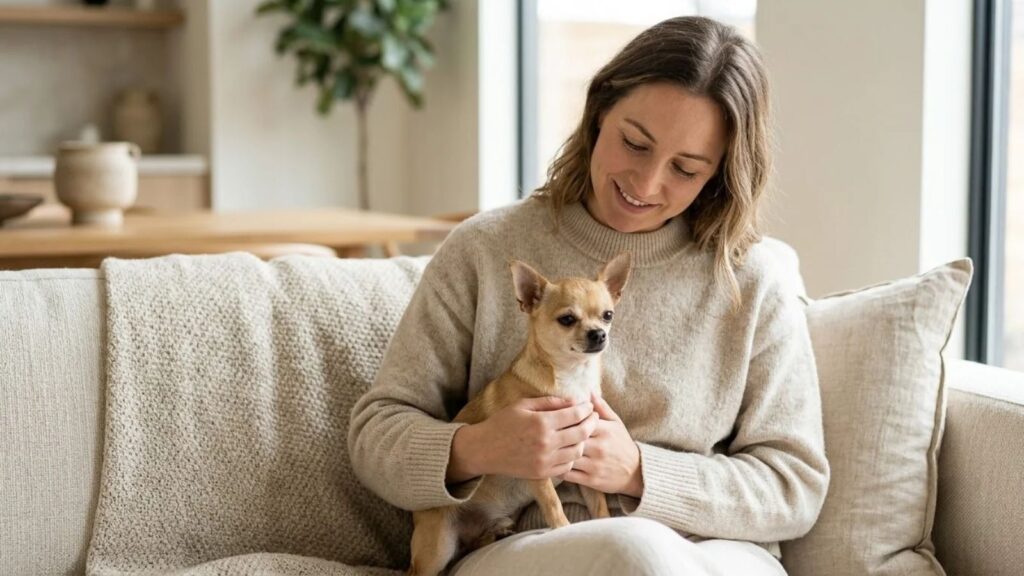
A Chihuahua dog may be small enough to carry, but this breed has a confident personality and needs more than a warm lap. Chihuahuas often form close bonds with their families, stay alert to unfamiliar people and sounds, and can be surprisingly energetic. Their tiny size also calls for careful handling, dental attention and protection from cold weather.
The breed can live for many years, so choosing one means planning for its long-term needs. This guide explains Chihuahua temperament, everyday care, common health concerns and what to consider before bringing one home.
This is general educational information, not a substitute for veterinary advice. If you are comparing smaller companions, explore our guides to cuddly small dog breeds and French Bulldog care.
Key Takeaways
- The Chihuahua dog is a small, alert and affectionate companion, but its personality varies with genetics, socialisation and training.
- Chihuahuas need regular exercise, positive training and consistent daily routines, despite their small size.
- Their small bodies make them sensitive to cold, so warm clothing and comfortable indoor shelter may be important.
- Dental disease, kneecap problems and collapsing trachea are among the health concerns owners should understand.
- Responsible breeding, routine veterinary care and gentle handling help support a Chihuahua’s long-term health and well-being.
Chihuahua Temperament: What to Expect
The Chihuahua is a lively companion with a personality that can range from bold and curious to shy and cautious. PetMD describes the breed as loyal, loving, playful and energetic. The American Kennel Club also highlights its confident, graceful and sometimes sassy character.

Many Chihuahuas develop a strong attachment to their familiar people. Some are comfortable meeting visitors, while others need time and patient introductions. Barking at unfamiliar people or dogs can occur, particularly when a dog feels uncertain or protective.
A Chihuahua’s small size does not mean it should be carried everywhere. Dogs need opportunities to explore safely, walk, play and learn to feel comfortable in different environments. Constantly carrying a nervous puppy may limit those experiences rather than build confidence.
Early socialization and reward-based training can help. Introduce new people, friendly dogs, sounds and everyday situations gradually. Do not force a frightened dog to approach something it wants to avoid.
The breed can also be vocal. Teach a reliable response to familiar cues and reward calm behavior instead of shouting when the dog barks. Our dog training basics guide explains how consistent, positive training can help build good habits.
Are Chihuahuas Good With Children and Other Pets?
There is no single answer for every Chihuahua. PetMD says they can live successfully with children and other pets when introductions are controlled and interactions are supervised. The AKC is more cautious about placing the breed in homes with young children.
Their small size explains the concern. A Chihuahua can be injured if a child drops the dog, handles it roughly or allows it to jump from someone’s arms. Even friendly play with a much larger dog can become unsafe.
If children live in the home, teach them to let the dog approach voluntarily, avoid picking it up without an adult’s help and leave it alone while eating or sleeping. An adult should supervise every interaction.
With other pets, use gradual introductions and provide separate resting and feeding areas. Do not assume a Chihuahua will feel safe around every dog simply because it is confident.
Chihuahua Size, Lifespan and Coat Types
The American Kennel Club lists the Chihuahua at 5 to 8 inches tall and no more than 6 pounds. These are breed-standard figures, not a reason to seek the smallest puppy available.
The breed has two coat varieties:
- Smooth coat: Short, close-lying hair that usually needs occasional brushing.
- Long coat: Longer hair that benefits from regular brushing to prevent tangles and mats, particularly around the ears, neck, legs and tail.
The AKC and PetMD give an average lifespan of around 14 to 16 years. Individual dogs may live shorter or longer depending on genetics, health, weight and the care they receive.
Chihuahuas are often described as low-maintenance because they are small, but their dental care, training, exercise and health monitoring still need consistent attention.
Feeding and Exercise for a Chihuahua Dog
A Chihuahua needs a complete, balanced diet suited to its age and condition. Choose a food designed for the appropriate life stage, and use the feeding guidance as a starting point rather than a fixed prescription. Your veterinarian can help determine daily calories and an appropriate body condition.
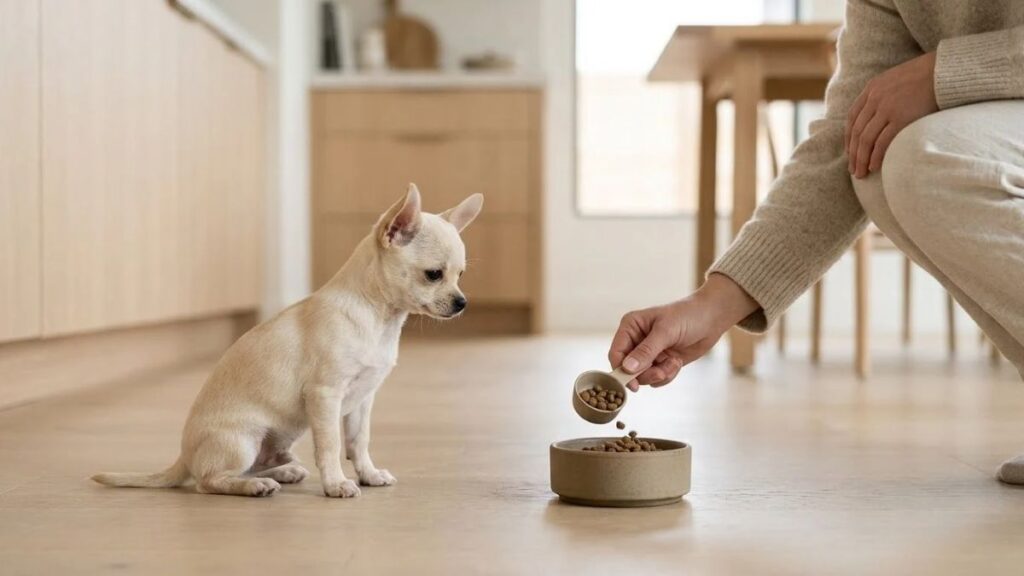
Adult Chihuahuas commonly do well with two measured meals a day. Puppies need more frequent meals. PetMD recommends three or four small meals daily for Chihuahua puppies, with the exact schedule adjusted to the puppy and veterinary advice.
Very young or exceptionally small puppies can be vulnerable to hypoglycemia, or low blood sugar. Warning signs include unusual lethargy, weakness, poor appetite, collapse or seizures. These signs need urgent veterinary attention. Do not try to manage a seriously unwell puppy with food or home remedies instead of getting veterinary help.
Weight control matters throughout adulthood. Even a small amount of excess weight can be significant for a tiny dog. Measure meals, account for treats and check body condition regularly. Long hair can make weight gain harder to notice, so use your hands as well as your eyes when assessing body shape.
Exercise needs vary. PetMD describes Chihuahuas as energetic and recommends daily walks and play, while the AKC notes that many can get adequate activity through indoor play and short walks. A practical routine combines gentle walks, supervised play and short training sessions. Adjust activity to age, fitness, health and weather.
Stop if your dog seems exhausted, struggles to keep up or shows unusual breathing. Small does not mean inactive, but strenuous exercise is rarely necessary.
Cold-Weather Care and House Training
Chihuahuas have little body mass and can lose body heat quickly. Cold weather may be uncomfortable, particularly for smooth-coated dogs, puppies, seniors and dogs with health problems.
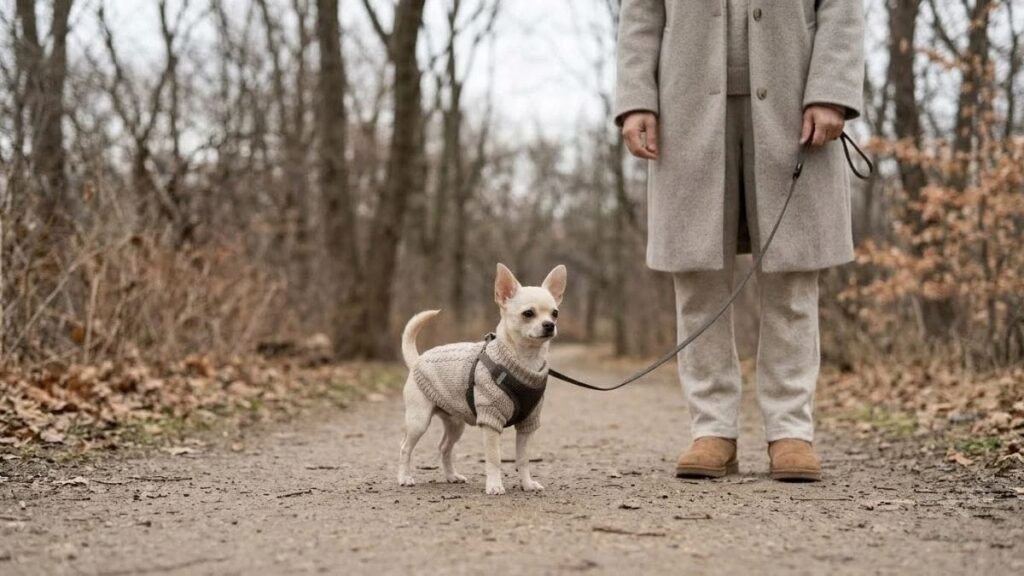
Use a well-fitting sweater or coat if your dog seems cold, and keep walks shorter during chilly or wet weather. Watch for shivering, reluctance to walk, lifting the paws or trying to return indoors. Provide a warm, dry resting place away from drafts.
PetMD’s cold-weather guidance for dogs explains why small dogs may need extra protection. There is no single safe outdoor temperature for every Chihuahua; wind, rain, coat, age and health all matter.
Chihuahuas are intelligent and can learn quickly, but house training may take patience. Take puppies outside after waking, eating, drinking and playing. Use a predictable schedule and reward toileting in the right place. Clean indoor accidents thoroughly without punishment.
For more help with early routines and learning, see our dog training basics guide.
Dental Care for a Chihuahua’s Small Mouth
Dental care deserves special attention in this breed. Chihuahuas can have crowded teeth because their mouths are small, and some retain puppy teeth after adult teeth begin to appear. These problems can make plaque and tartar buildup more likely.
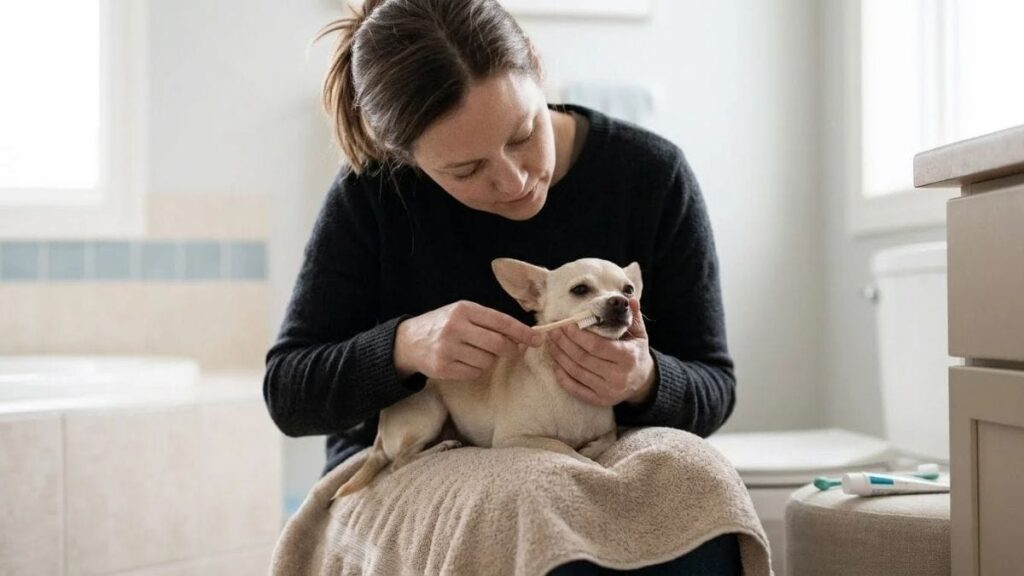
Brush your dog’s teeth daily if possible, using a soft dog toothbrush and toothpaste made for dogs. Start slowly, allow your Chihuahua to become comfortable with the process and reward calm cooperation.
Ask your veterinarian to check the mouth during routine examinations. Retained puppy teeth may need professional removal, and some dogs require dental cleaning under veterinary supervision.
Dry kibble should not be treated as a replacement for tooth brushing. Although some diets are specifically designed to support dental health, ordinary dry food does not remove the need for a proper dental-care routine.
Home Setup and Everyday Safety
A Chihuahua needs a home where it can move around safely without being stepped on, knocked over or encouraged to jump from high furniture.
Use a properly fitted harness for walks. PetMD recommends harnesses rather than attaching a lead directly to the collar for dogs with collapsing trachea, because pressure on the neck can aggravate airway problems. A harness does not treat the condition, but it avoids putting leash pressure directly on the throat.
Provide a warm bed, fresh water, safe toys and a quiet resting area. If your dog struggles when left alone, build up time apart gradually and seek professional advice if distress continues. A crate can be useful when introduced positively, but it should never be used as punishment or as a substitute for companionship and exercise.
Before bringing a dog home, prepare the essentials with our dog supplies checklist.
Common Chihuahua Health Problems
Chihuahuas can live long lives, but the breed has several health conditions that owners should understand. Recognizing early signs does not replace a veterinary diagnosis, but it can help you know when to seek care.
| Health concern | Signs owners may notice |
|---|---|
| Dental disease | Bad breath, tartar, red gums, discomfort while eating or loose teeth |
| Patellar luxation | Skipping steps, briefly holding up a hind leg or intermittent limping |
| Collapsing trachea | A persistent dry, honking cough, wheezing or breathing difficulty |
| Heart disease | Coughing, reduced exercise tolerance, weakness or collapse |
| Hydrocephalus | Seizures, abnormal movement, weakness, confusion or a visibly unusual head shape |
| Eye disease | Redness, squinting, discharge, cloudiness or rubbing at the eyes |
| Legg-Calvé-Perthes disease | Hip or hind-leg pain, limping and reluctance to use the affected leg |
| Hypoglycemia | Marked weakness, lethargy, poor appetite, collapse or seizures, particularly in young puppies |
Patellar luxation occurs when the kneecap moves out of its normal position. Cornell University notes that it is more common in small breeds, including Chihuahuas. A skipping gait or a dog suddenly lifting one hind leg should be checked by a veterinarian.
Collapsing trachea involves weakening of the cartilage that helps keep the windpipe open. A dry, honking cough is a common sign. A veterinarian can assess the cause and recommend management. Avoid putting leash pressure on the neck.
Heart disease can include mitral valve disease and congenital conditions. A veterinarian may detect a heart murmur during an examination before obvious signs develop. Coughing, weakness, fainting or reduced exercise tolerance should be assessed.
Legg-Calvé-Perthes disease affects the developing hip joint and can occur in small-breed puppies, including Chihuahuas. Limping or hip pain in a young dog deserves an examination.
PetMD’s Chihuahua health and care profile covers these and other breed-associated conditions. The AKC recommends patella, cardiac and ophthalmologist evaluations as health checks for the breed.
Arrange regular veterinary examinations and ask which screening tests are appropriate for your dog’s age, family history and symptoms. Seek urgent help for collapse, seizures, severe breathing difficulty or sudden inability to walk.
Choosing a Chihuahua Responsibly
A responsible breeder should be willing to discuss the health and temperament of the puppy’s parents, provide veterinary records and explain the care the puppies have received. Ask what health screening has been completed and whether you can meet the mother and see where the puppies are raised.
Be cautious of sellers advertising unusually tiny or “teacup” Chihuahuas. “Teacup” is not a separate official Chihuahua variety. Marketing dogs primarily for extremely small size can encourage breeding choices that put appearance ahead of health.
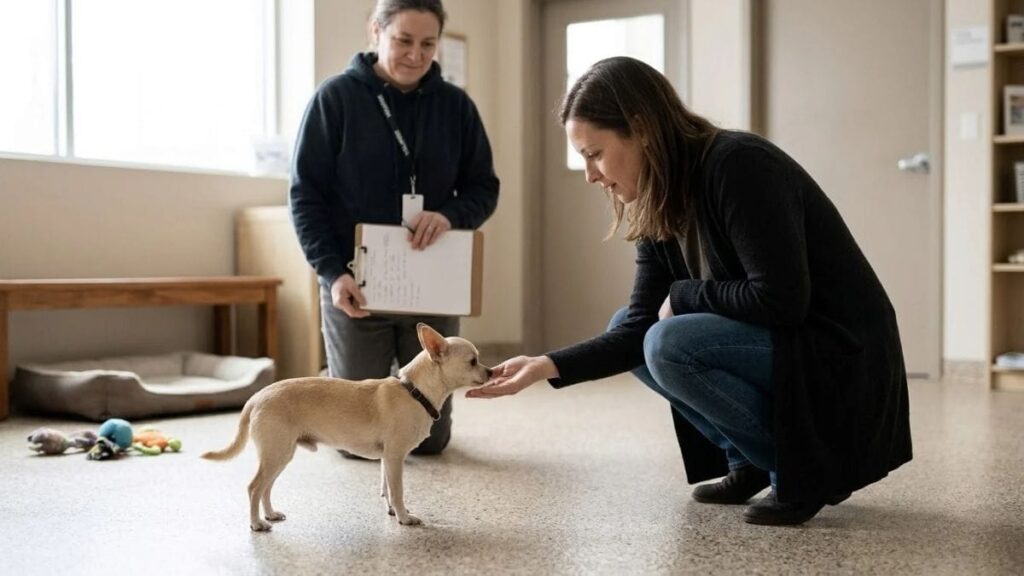
Adoption is another option. Shelters and rescue organizations may have adult Chihuahuas whose size, personality and health needs are already easier to assess. Ask for available medical and behavioral history, and arrange a veterinary check after adoption.
The breed can have difficult births because of the puppies’ head size and the mother’s small pelvis. Anyone considering breeding should discuss the risks and appropriate veterinary care with a veterinarian rather than treating breeding as a casual decision.
A Brief History of the Chihuahua
The Chihuahua takes its name from the Mexican state of Chihuahua. Its precise ancestry is debated, although the AKC discusses a possible connection with the Techichi, a small dog associated with ancient civilizations in the region.
The American Kennel Club recognized the breed in 1904. Today, Chihuahuas are known internationally as small companion dogs, with both smooth-coat and long-coat varieties.
Is a Chihuahua Dog Right for You?
A Chihuahua may suit someone looking for a small, alert companion who can provide daily attention, patient training and careful handling. The breed can adapt to different homes, but it is not a maintenance-free pet.
Think carefully about the dog’s long lifespan, dental needs, possible health expenses, barking and sensitivity to cold. A home with very young children or large, excitable pets may require extra supervision and careful management.
Meet the individual dog before deciding. Temperament varies, and a puppy’s adult behavior cannot be guaranteed by breed reputation alone. Compare other options in our Dog Breeds guide and our overview of short dog breeds for small homes.
How long does a chihuahua dog live?
A Chihuahua typically lives around 14–16 years, although individual lifespan varies with genetics, healthcare and lifestyle.
Are Chihuahuas good family dogs?
They can be affectionate family companions. However, young children need supervision because a Chihuahua’s small body can be injured by rough handling.
Do Chihuahua dogs get cold easily?
Yes. Their small size and relatively low body mass can make them sensitive to cold, particularly short-coated Chihuahuas. Warm clothing and a comfortable indoor environment can help.
What health problems are common in Chihuahuas?
Common concerns include dental disease, patellar luxation, collapsing trachea, heart conditions and eye problems. Regular veterinary examinations help identify issues early.
Are Chihuahuas easy to train?
They are intelligent and can learn well with consistent, reward-based training. Early socialisation and patient house-training are especially important.
Conclusion
A Chihuahua dog offers a close bond, a lively personality and the companionship of a small dog that can share many parts of daily life. Its size, however, makes careful handling, dental care and protection from cold especially important.
Before choosing the breed, consider its long lifespan and potential health needs. Look for responsible breeding or adoption, establish a consistent routine and arrange regular veterinary care. With patient training and thoughtful daily attention, a Chihuahua can be a rewarding companion for many years.