Clicker training essentials are the key to unlocking your cat’s full potential. Think your cat’s too stubborn or independent to learn new tricks or change its behavior? Think again. Whether you’re trying to stop scratching, biting, or teach cute tricks like “high five,” clicker training is a proven, positive method that works.
This guide is packed with practical advice for real-life results. We’ll explore how to train your cat from scratch, how to stop bad behavior, how long it takes to clicker train a cat, and how to create a bond that lasts.
Table of Contents
Understanding Clicker Training Basics

What Is Clicker Training?
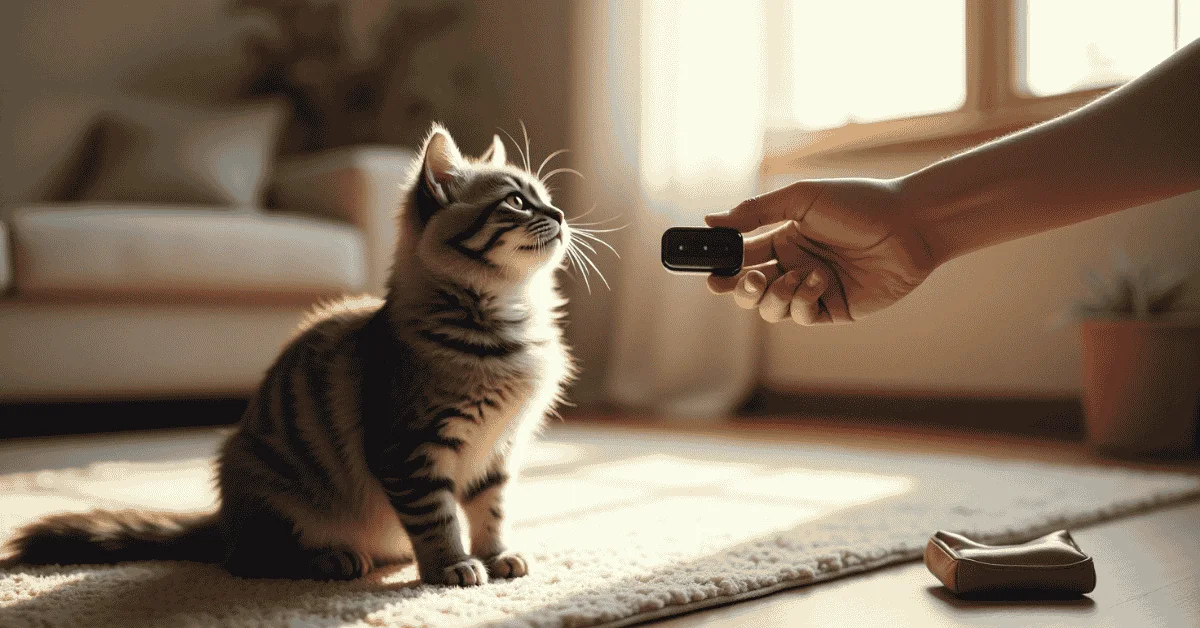
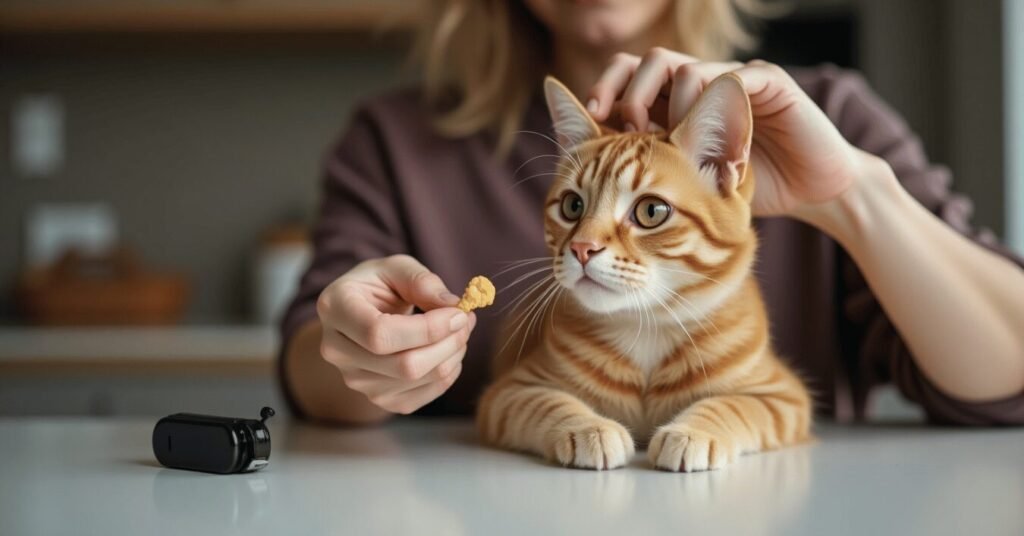
Clicker training essentials start with one simple principle: positive reinforcement. You use a small device—a clicker—that makes a consistent sound. When your cat does something good, you click, then give them a treat. Over time, they associate the click with the reward and begin repeating the good behavior.
This isn’t just fluff. It’s based on behavioral psychology. Your cat begins to associate the click with a reward and will work to earn that click.
It’s fast. It’s fun. And best of all? It’s stress-free—for you and your cat.
Why It Works for Cats
Clicker training essentials work so well because cats are independent thinkers. They don’t respond well to punishment, but they do respond to rewards. With a click and treat system, your cat stays motivated, happy, and mentally stimulated.
This method gives them a sense of control and engagement—something all cats crave.
Over time, your cat becomes more responsive, less reactive, and far easier to handle, even in stressful situations like car rides or vet visits.
Tools You Need for Clicker Training

Choosing the Right Clicker
Clicker training essentials start with the right tool: the clicker. This is a small plastic device that makes a quick, distinct clicking sound when pressed. You want one that’s easy to use and not too loud. A soft-button clicker is often perfect for cats.
There are even apps that simulate clickers if you’re in a pinch, but nothing beats the reliability of a physical one.
Don’t forget to pair your clicker with a treat pouch or container for easy access during training sessions.
Treats and Rewards That Motivate Cats
Treats are everything in clicker training essentials. You need high-value rewards that your cat doesn’t get regularly. Try:
- Freeze-dried chicken
- Tiny bits of cooked fish
- Soft, smelly commercial treats
- Small spoons of wet food
Use small portions to prevent overfeeding. Rotate treats to keep things interesting. If your cat is more toy-motivated, use playtime or their favorite toy as a reward instead.
Getting Started: Tools & Environment
Choosing Your Clicker and Treats
Clicker training essentials wouldn’t be complete without the right tools. Choose a quiet, soft-click button clicker. Avoid ones that are too loud or harsh, especially for shy cats.
As for treats, choose something your cat absolutely loves:
- Freeze-dried chicken
- Bits of tuna or soft treats
- Lickable snacks or small portions of wet food
Use tiny bits to avoid overfeeding. And keep the treats nearby—timing is everything!
Creating a Training Environment
Clicker training essentials also involve setting the right mood. Use a quiet room without distractions—no TV, barking dogs, or kids running around.
Choose a consistent spot for training—like a mat or blanket. This helps your cat associate that location with rewards and learning.
Keep sessions short: 5–7 minutes, two to three times a day.
Clicker Training Essentials: Step-by-Step

Charging the Clicker
Clicker training essentials begin with “charging” the clicker—teaching your cat that the click sound equals a treat.
Here’s how:
- Click once.
- Immediately toss a treat in front of your cat.
- Repeat 10–15 times in a row.
Do this for a few sessions until your cat perks up every time they hear the click. That’s when the magic starts.
Shaping Behavior Step by Step
Now that your cat associates the click with a reward, it’s time to shape behavior.
Start with something simple—like eye contact, or sitting calmly near you. The moment it happens, click and treat. You’re reinforcing what you want to see.
Then move on to more complex behaviors like:
- Sitting on command
- Coming when called
- Target training (following a stick or finger)
Use consistent verbal cues. Always say the cue before the action, click during, and reward after.
Clicker Training Cat to Stop Bad Behaviour

Understanding the Root Cause
Clicker training cat to stop bad behaviour isn’t about punishment—it’s about redirection. Is your cat scratching your couch? Meowing at 3 a.m.? Jumping on counters?
Bad behavior often means boredom, anxiety, or confusion. Before anything else, rule out medical issues. Then observe when and why the behavior happens.
Using Clicker Training to Replace Bad Habits
Let’s break it down:
- For scratching furniture, introduce a scratching post nearby. When your cat uses it—click and treat.
- If your cat bites during play, stop the game, wait for calm behavior, then resume and reward gentle interaction.
- For counter jumping, create an alternative perch. When your cat chooses the perch over the counter—click and treat.
Repetition and consistency are key. Over time, your cat will make better choices on their own because they know what earns rewards.
Setting Up Daily Training Rituals
Clicker training essentials thrive on routine. Train at the same time each day, in the same spot, with the same gear.
Your cat will start to look forward to training. Consistency builds trust—and trust builds results.
How Long Does It Take to Clicker Train a Cat?

Every Cat is Unique
How long does it take to clicker train a cat? It depends on several things:
- Kittens learn fast—often within a week
- Adult cats take 2–4 weeks with daily training
- Fearful or rescued cats may need 1–2 months or more
Factors like environment, distractions, and your consistency can speed up—or slow down—progress.
Realistic Training Milestones
Here’s a basic timeline for most cats:
- Day 1–3: Cat associates click with treat
- Week 1: Responds to basic cues like “sit”
- Week 2–3: Consistently performs on command
- Week 4+: Stops unwanted behavior and learns new tricks
Be patient. Don’t rush. Celebrate small wins.
Mistakes to Avoid With Clicker Training
Overusing the Clicker
Clicker training essentials rely on clarity. Don’t spam the clicker. Click only once for each desired behavior, followed by a reward.
Clicking without rewarding breaks trust. Your cat will lose interest fast.
Being Inconsistent
Always reward the same behavior every time in the beginning. Once the behavior becomes solid, you can treat randomly to keep your cat engaged.
Everyone in the house should use the same cues, rewards, and rules. Mixed messages slow learning.
Advanced Applications of Clicker Training Essentials
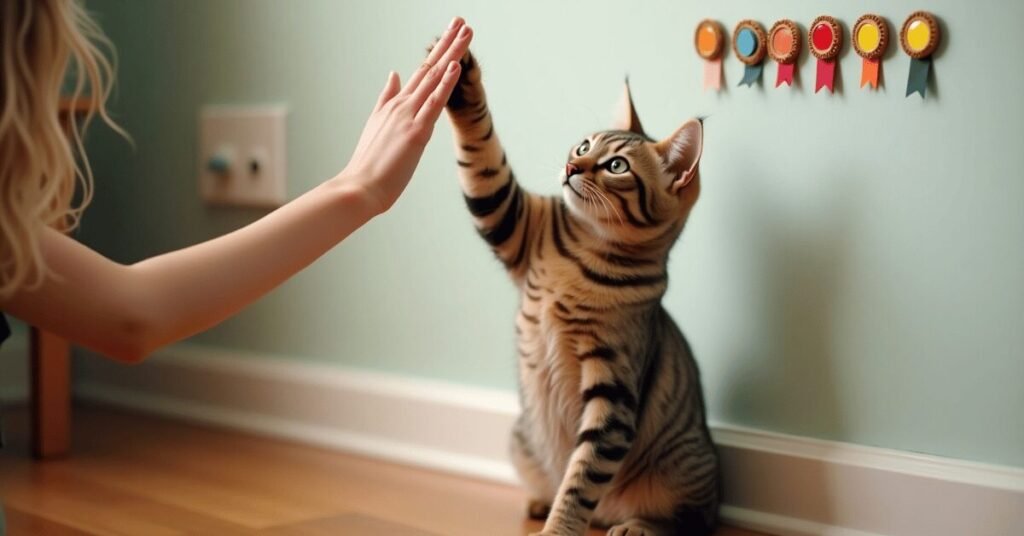
Teaching Tricks Beyond Basics
Once your cat knows “sit” and “come,” you can teach:
- High five
- Spin in a circle
- Go to bed
- Open a cabinet
Break each trick into micro-steps. Click and treat progress toward the final goal.
Training Multiple Cats
Clicker training cat to stop bad behaviour in a multi-cat home takes extra patience. Train each cat separately at first. Use different cues or different-sounding clickers.
Once they get the hang of it, you can run short group sessions. Always treat each cat individually so they don’t compete or become jealous.
Expert Backing: What Science Says

Veterinarians and animal behaviorists agree that clicker training is one of the most effective, low-stress methods for behavior shaping.
A 2022 study published in Veterinary Evidence found that clicker-trained shelter cats displayed significantly less stress and were adopted faster.
Experts love it. Your cat will, too.
Conclusion: The Final Click
Clicker training essentials offer more than just obedience—they create a lasting bond between you and your cat. With patience, the right tools, and consistency, even the most independent feline can become a focused, cooperative companion.
This method puts you and your cat on the same page—without stress, punishment, or confusion. Whether you’re stopping bad behavior or just having fun, the clicker is your secret weapon.
FAQs
1. Can I use clicker training for anxiety?
Yes. Start with calm behavior like lying down or blinking slowly. Click and treat. Gradually desensitize your cat to triggers.
2. How long should each session be?
Keep it short—5 to 7 minutes. End on a positive note.
3. What if my cat ignores the clicker?
Try higher-value treats, quieter environments, or recharging the clicker with more repetition.
4. Is clicker training safe for older cats?
Yes! It’s gentle and works well for senior cats when adapted for slower movement and focus.
5. Do I need to use treats forever?
Not always. Once behaviors are solid, you can phase out treats and switch to praise or occasional rewards.
Looking for more feline inspiration? Check out our guides on: