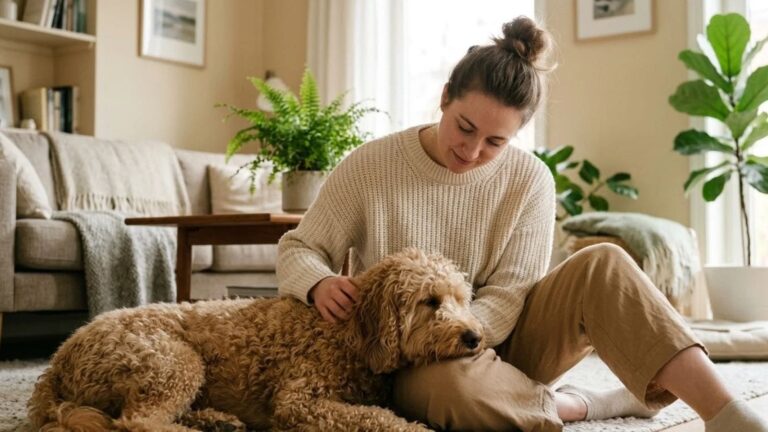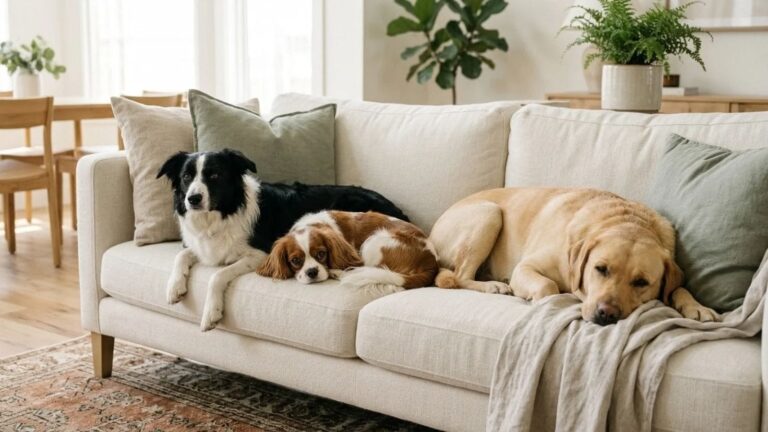
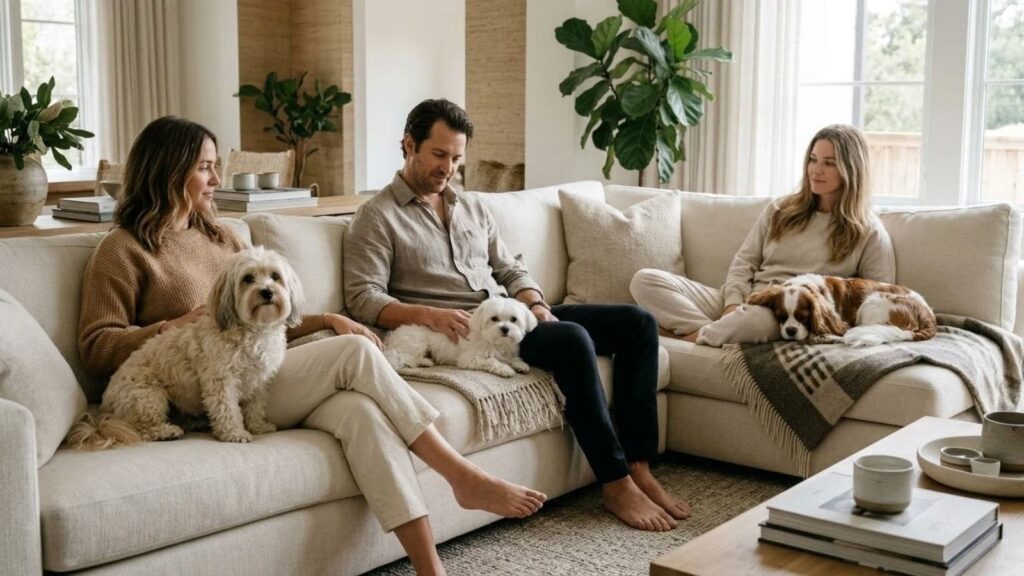
Some dogs seem happiest curled up beside their favourite person. Many small companion breeds enjoy close contact, follow family members around the home or settle comfortably on a lap. However, affection is not the same as enjoying constant handling. A dog’s personality, past experiences and comfort with touch all matter.
The best cuddly small dog breeds are not necessarily the ones that need the least care. Some require frequent brushing and professional grooming, while others need regular company, patient training or extra protection from heat and rough handling. Their small size does not mean they are maintenance-free.
This guide compares 10 affectionate small breeds and explains what daily life with each one can involve. Use the breed descriptions as a starting point, then consider the individual dog’s temperament, health and needs. If you are comparing different sizes, our guide to short dog breeds for small homes offers more compact companions to consider.
Key Takeaways
- Affectionate breeds can enjoy being close to people without necessarily liking being carried or held.
- Havanese, Maltese, Toy Poodles and several other companion breeds may find long periods alone difficult.
- Long or curly coats need consistent brushing and, in some cases, regular professional grooming.
- Very small dogs need gentle handling and careful supervision around young children.
- Low-shedding does not mean allergy-free. Every dog produces allergens.
What Makes a Dog Cuddly?
A cuddly dog generally enjoys spending time close to familiar people. It may choose to sit beside someone, rest on a lap or follow its family from room to room. Some dogs actively seek physical contact, while others show affection by staying nearby.
Breed history can offer clues. Many toy and companion breeds were developed to live closely with people, which helps explain their social nature. But breed tendencies cannot predict exactly how an individual dog will behave. A puppy’s early experiences, socialisation, health and personality also influence how comfortable it feels with touch.
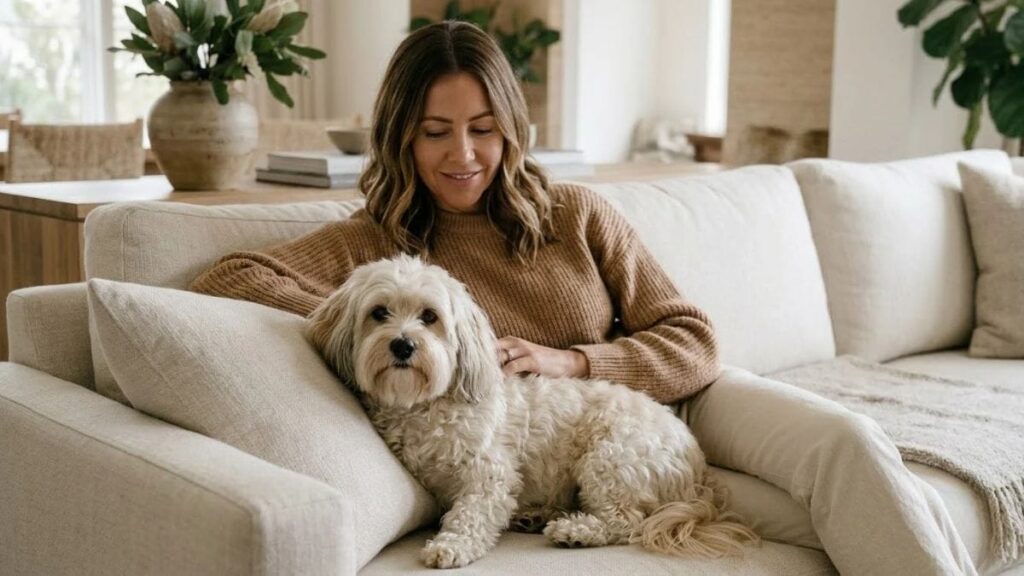
A dog should always be allowed to move away from cuddling. Avoid holding it in place, squeezing it or repeatedly picking it up when it tries to leave. Children should learn to invite a dog over rather than chase or grab it.
The following breed descriptions focus on three practical questions: how each dog tends to interact with people, what care it needs and what potential owners should consider before bringing one home.
10 Cuddly Small Dog Breeds to Consider
Fluffy and People-Oriented Companions
1. Bichon Frise
The Bichon Frise is a cheerful, sociable companion that often enjoys playing with its family before settling down nearby. Its friendly nature can make it a good match for households that want an interactive small dog rather than a quiet lap companion all day.
The breed’s curly double coat needs regular attention. Daily brushing helps prevent tangles and mats, while professional grooming is usually part of its routine. Bichons also need walks, play and opportunities to learn. Without enough activity or attention, some may bark or develop unwanted behaviours.
The breed can be prone to problems including dental disease, bladder stones and certain eye conditions. Its low-shedding coat may suit some allergy-sensitive households, but it does not make the dog allergen-free.
For more detail, see the PetMD Bichon Frise breed and care profile and the VCA Bichon Frise breed guide.
A good fit for: People who want a playful, sociable dog and can keep up with regular coat care.
2. Havanese
The Havanese is known for its affectionate, outgoing personality. Many form close bonds with their families and enjoy being involved in everyday activities. A Havanese may follow its owner around the home and settle nearby when the household becomes quiet.
That strong attachment also means long periods alone can be difficult for some individuals. PetMD notes that Havanese dogs may develop separation anxiety. Gradual alone-time training, enrichment toys and a predictable routine can help, although severe distress may need professional guidance.
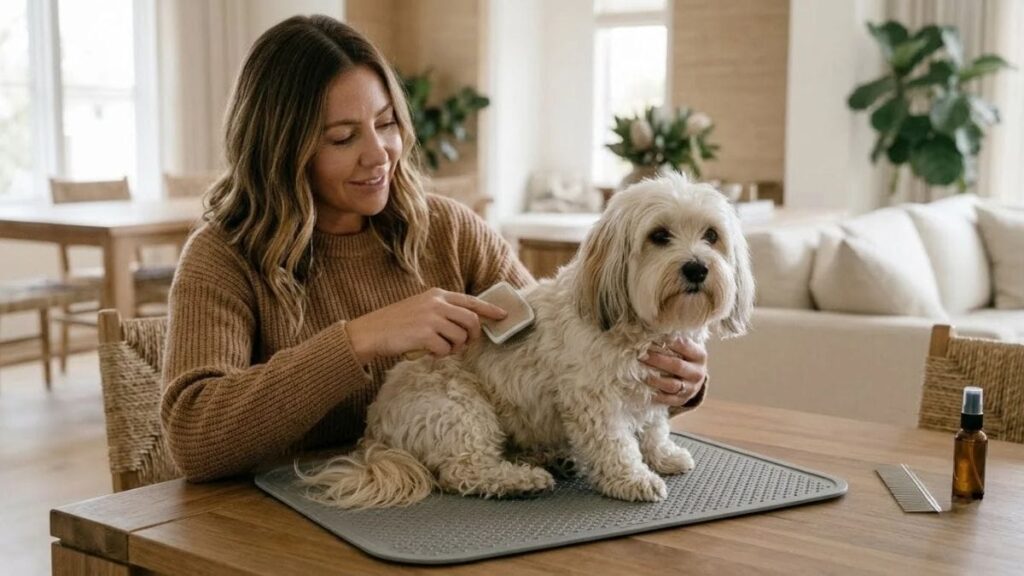
Its long coat needs frequent brushing to prevent tangles. Owners can also choose a shorter pet trim, but this still requires routine maintenance. Daily walks, play and positive-reinforcement training help keep this intelligent breed occupied.
Read the PetMD Havanese care profile for more on its temperament and needs.
A good fit for: A household where someone can provide regular companionship, grooming and daily interaction.
3. Maltese
The Maltese is a tiny companion dog with a long history of living closely with people. It often forms a strong bond with its family and may enjoy resting beside or on a trusted person. Despite its delicate appearance, it still needs play, training and daily activity.
Its silky coat can grow long and requires frequent brushing to prevent knots. Some owners choose a shorter trim to make everyday maintenance easier. Dental care deserves particular attention because small dogs can be vulnerable to dental problems.
The Maltese’s small frame also calls for careful handling. It is not a dog that young children should carry around or pick up without adult guidance. Some individuals may bark when bored or left without enough company.
See the PetMD Maltese breed profile and VCA Maltese care guide for further information.
A good fit for: Adults or families with older, gentle children who can provide companionship and consistent coat care.
4. Toy Poodle
Toy Poodles combine a small size with a bright, active personality. They often enjoy learning, playing games and spending time with their owners. Many are affectionate, but they also need mental stimulation rather than being treated as decorative lap dogs.
Their curly coat needs regular brushing and professional clipping. If the coat is neglected, it can become tangled or matted close to the skin. Toy Poodles are intelligent and generally respond well to reward-based training, but boredom can contribute to barking or other unwanted behaviour.
Their small size requires sensible supervision around larger dogs and young children. Ask a veterinarian about dental care and other breed-related health checks. Very small puppies can also be vulnerable to low blood sugar, so feeding routines should follow veterinary guidance.
The PetMD Toy Poodle profile and VCA Toy Poodle guide provide additional breed information.
A good fit for: Owners who enjoy training and interactive play and can budget for regular grooming.
5. Pomeranian
The Pomeranian is a lively, alert little dog that often develops a close relationship with its family. It may enjoy sitting beside its owner, but it is not always a quiet lap dog. Many Pomeranians are confident, vocal and quick to react to unfamiliar sounds.
Its thick double coat needs regular brushing, with extra attention during shedding periods. Short walks and indoor games can provide activity, but training is important too. Without consistent guidance, barking can become a persistent habit.
A Pomeranian’s small frame is vulnerable to accidental injury. Supervise interactions with young children and avoid letting larger dogs play roughly with it. Owners should also discuss concerns such as dental disease, kneecap problems and collapsing trachea with their veterinarian.
For further details, read the PetMD Pomeranian breed profile and VCA Pomeranian guide.
A good fit for: People who enjoy an alert, energetic companion and can provide patient training and careful handling.
6. Shih Tzu
The Shih Tzu was developed as a companion dog and often enjoys relaxing close to its family. It can be playful indoors and usually does not need the same level of exercise as a high-energy working breed. However, short daily walks and play remain important.
Its long coat needs frequent brushing to prevent mats. Many owners choose a shorter puppy cut, which can make maintenance easier. Regular checks around the eyes and face are also useful because facial hair and skin folds can collect dirt.
The Shih Tzu’s short muzzle is an important health consideration. Brachycephalic dogs can have difficulty breathing and regulating body temperature, especially in hot or humid weather. Avoid strenuous activity in heat, never leave the dog in a parked car and speak to a veterinarian about noisy or laboured breathing.
Explore the PetMD Shih Tzu health and care profile and VCA Shih Tzu breed guide.
A good fit for: People looking for a companion with moderate exercise needs who can manage grooming and take heat precautions.
Gentle and Close-Bonded Companions
7. Cavalier King Charles Spaniel
The Cavalier King Charles Spaniel is a gentle companion breed that often enjoys close contact with its family. Many are comfortable relaxing on a lap after a walk, but they still need daily exercise, play and opportunities to explore.
Cavaliers generally benefit from regular brushing, particularly around their ears, chest and feathered coat. Their long ears should be checked routinely for irritation or signs of infection.
Health deserves particular attention with this breed. Mitral valve disease and syringomyelia are among the conditions associated with Cavaliers. Anyone considering a puppy should ask about appropriate health screening and the health history of the parents. Routine veterinary examinations remain important throughout the dog’s life.
The PetMD Cavalier King Charles Spaniel profile explains its companion temperament and health concerns. The VCA Cavalier breed guide offers additional breed information.
A good fit for: People who want a sociable companion and can provide daily interaction, exercise and attentive health care.
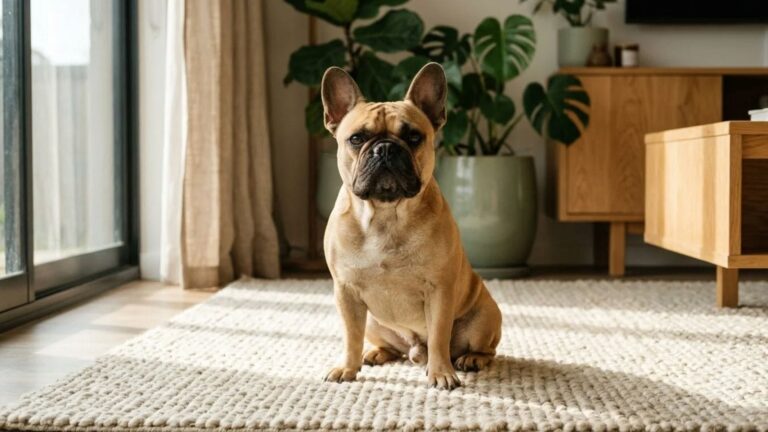
8. French Bulldog
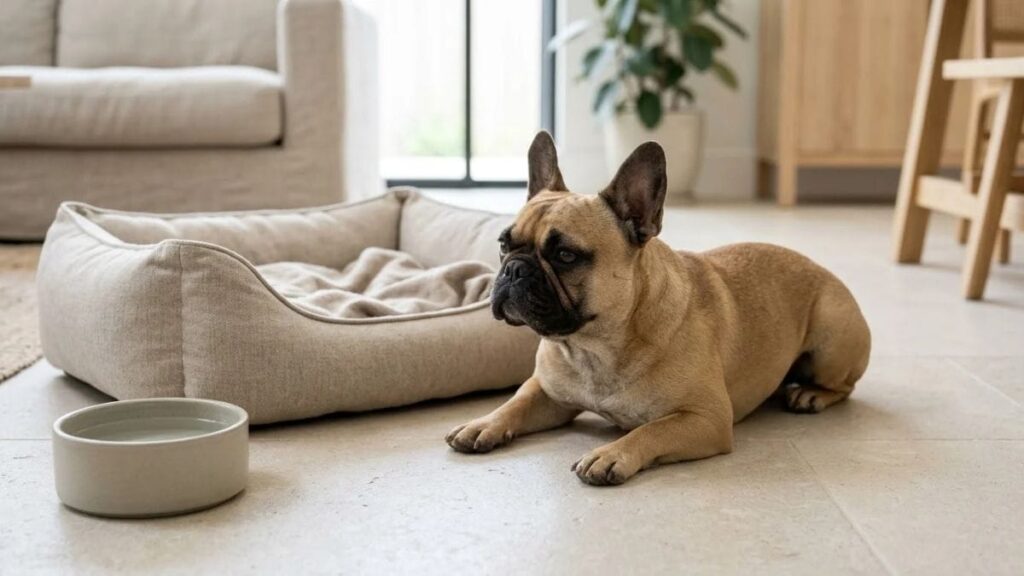
French Bulldogs are often affectionate, people-oriented dogs that enjoy being near their families. Many are happy to relax indoors after short walks and play sessions. Their compact build, however, should not be mistaken for a lack of care requirements.
The breed’s short muzzle can contribute to brachycephalic obstructive airway problems. French Bulldogs may struggle more in heat and humidity, and some have difficulty exercising comfortably. Keep activity gentle in warm weather and seek veterinary advice if breathing seems noisy, laboured or unusually difficult.
French Bulldogs are also poor swimmers compared with many other breeds. Keep them away from unsupervised water and use a properly fitted life jacket when appropriate. Skin folds need regular gentle cleaning and drying, and back problems are another concern to discuss with a veterinarian.
Read the PetMD French Bulldog health and care profile and the VCA French Bulldog breed guide. Our French Bulldog breed guide covers the breed in more detail.
A good fit for: People who want a close indoor companion and are prepared to manage breathing, heat, skin and exercise considerations.
9. Brussels Griffon
The Brussels Griffon is a small, expressive companion dog that often forms a strong attachment to its favourite people. It is sometimes described as a Velcro dog because some individuals prefer to stay close to their owners. That closeness can be appealing, but it may make long periods alone challenging.
The breed comes in different coat types, and grooming needs depend on whether the dog has a smooth or rough coat. Rough-coated dogs generally need more coat maintenance and may require professional grooming. Regular tooth care and routine veterinary checks are also important.
Its short muzzle can make it more vulnerable to overheating. Keep exercise sensible in warm weather and watch for signs of breathing difficulty. Some Brussels Griffons are reserved around unfamiliar people, so early, positive socialisation can help build confidence.
Learn more from the PetMD Brussels Griffon profile and VCA Brussels Griffon guide.
A good fit for: Someone who wants a devoted small companion and can provide company, gentle socialisation and appropriate grooming.
10. Japanese Chin
The Japanese Chin is a small companion breed with a calm, sometimes cat-like manner. It may enjoy resting on furniture near its family and can be affectionate without constantly demanding attention. Some are playful, while others prefer a quieter household.
Its silky coat is generally less demanding than the long coats of some other toy breeds, although regular brushing helps prevent tangles. Short walks and indoor play can provide suitable activity for many individuals.
The Japanese Chin has a short muzzle, so heat management matters. Avoid strenuous activity during hot or humid weather and watch for unusual breathing effort. The breed can also be vulnerable to inherited health conditions, making responsible breeding and veterinary guidance important.
The PetMD Japanese Chin profile explains its care and health considerations. You can also consult the VCA Japanese Chin breed guide.
A good fit for: People who prefer a small indoor companion and can provide gentle handling and careful warm-weather care.
Which Small Dogs May Find Time Alone Difficult?
A close bond with people can be one of the appealing qualities of companion breeds. It can also mean that some dogs struggle when their owners are away for long periods.
PetMD describes the Havanese as a breed that may develop separation anxiety. Its profiles also discuss separation-related concerns in breeds such as the Maltese, Toy Poodle and Japanese Chin. Individual dogs vary, so these tendencies should not be treated as a guarantee.
| Breed | Practical consideration |
|---|---|
| Havanese | May become distressed when left alone for long periods |
| Maltese | Can develop separation-related problems |
| Toy Poodle | May struggle with extended isolation |
| Cavalier King Charles Spaniel | Generally thrives with regular human company |
| Japanese Chin | Can become anxious when separated from family |
| Brussels Griffon | Some individuals have a low tolerance for being alone |
If you work outside the home, plan for your dog’s needs before adopting. Build up alone time gradually, provide suitable enrichment and consider whether a trusted visitor or dog-care arrangement is realistic. Do not assume that leaving a dog in a crate for the entire workday will solve separation anxiety.
Persistent distress, destructive behaviour, excessive vocalising or attempts to escape deserve attention. A veterinarian can help rule out medical causes and recommend a qualified behaviour professional when needed.
Grooming, Health and Allergy Considerations
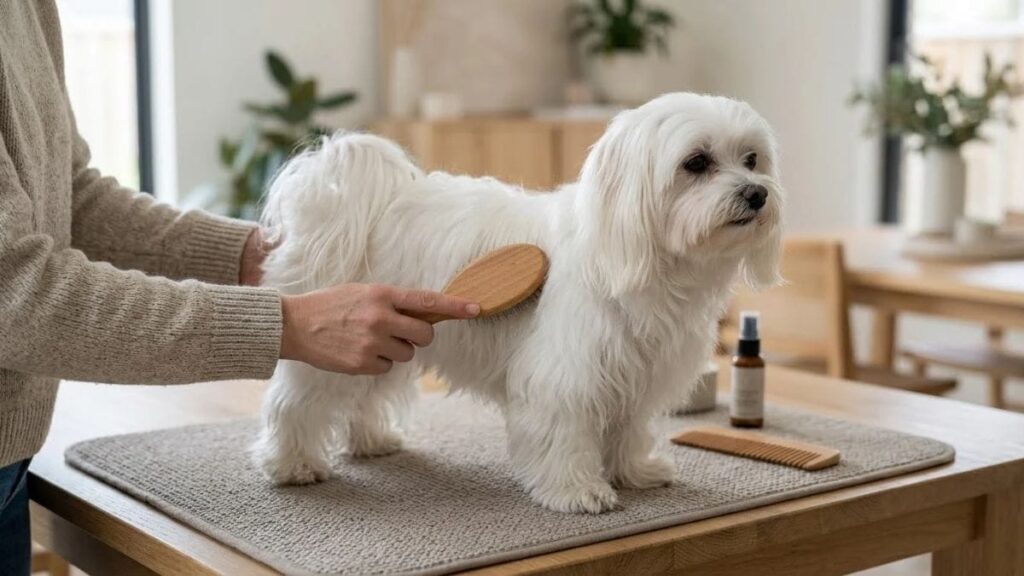
A small dog can still have substantial grooming needs. The Maltese and Shih Tzu have coats that can tangle without regular brushing. Bichons and Toy Poodles also need consistent coat care, often including professional grooming appointments.
Before choosing a breed, ask a local groomer about the likely frequency and cost of brushing, bathing, trimming and coat maintenance. A shorter haircut may reduce daily brushing, but it does not remove the need for routine grooming.
Dental care is another important part of small-dog ownership. Small breeds can be prone to dental problems, so establish a tooth-brushing routine with dog-safe products and ask your veterinarian how often dental examinations are appropriate.
Some breeds also have health concerns that deserve particular attention:
- Cavalier King Charles Spaniel: Ask about screening and family history for mitral valve disease and syringomyelia.
- French Bulldog, Shih Tzu and Japanese Chin: Discuss brachycephalic airway health and safe exercise in warm weather.
- Pomeranian and Toy Poodle: Ask your veterinarian about dental health, kneecap problems and other breed-relevant concerns.
- Maltese: Pay attention to dental care and discuss any concerns about kneecap or liver conditions with your veterinarian.
Low-shedding breeds are sometimes marketed as hypoallergenic, but no dog is completely allergen-free. Allergens can be present in skin flakes, saliva and urine, not only in loose hair. If someone in your household has allergies, spend time around the individual dog before making a decision and seek medical advice when needed.
Safe Cuddling and Handling
Small dogs need the same respect and consideration as larger dogs. Their size can make them easier to lift, but it also means that falls, rough play and accidental pressure can cause injuries.
If a dog is comfortable being lifted, support its chest and hindquarters rather than allowing its body to hang. Avoid picking it up by the front legs or squeezing its abdomen. If the dog moves away, stiffens or struggles, put it down safely and give it space.
Children should learn a few simple rules:
- Sit on the floor when inviting a small dog to interact.
- Let the dog approach rather than chasing it.
- Never pull its ears, tail or fur.
- Do not disturb it while eating or sleeping.
- Ask an adult before picking it up.
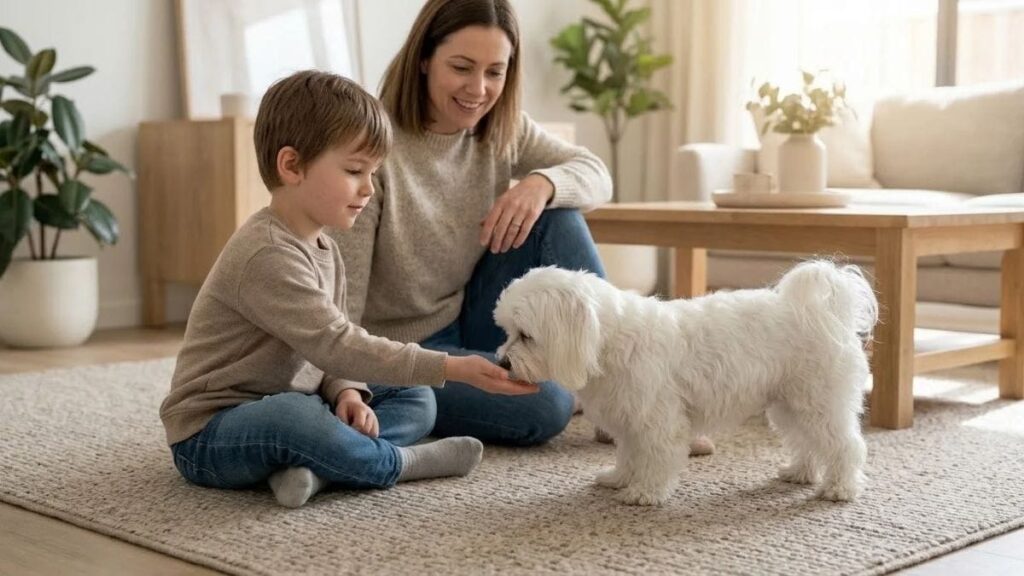
Watch the dog’s body language. Turning away, repeatedly licking the lips, freezing, hiding or trying to leave can indicate discomfort. Give the dog a quiet place where it can rest without being disturbed.
Affection works best when the dog has a choice. Let it approach for attention and stop when it wants to move away.
How to Choose the Right Cuddly Small Dog
The right choice depends on your daily routine, not just how affectionate a breed looks in photographs. Think about how many hours the dog would spend alone, whether you can afford regular grooming, how active your household is and whether children understand gentle handling.
A Havanese or Cavalier may appeal to someone who wants a close companion and can provide regular company. A Toy Poodle may suit an owner who enjoys training and interactive games. A Shih Tzu may fit a quieter home, provided its coat and breathing needs are managed. A Pomeranian may suit someone comfortable with an alert, vocal dog.
Before choosing, consider these questions:
- How much time can you spend with the dog? Some companion breeds may find long periods alone difficult.
- Can you manage the coat? Include brushing time and professional grooming costs in your budget.
- Is your home suitable for a tiny dog? Consider stairs, open balconies, larger pets and young children.
- Can you manage breed-related health needs? Flat-faced breeds need extra care in hot weather, while other breeds have their own screening considerations.
- Have you met the individual dog? Spend time with the puppy or adult dog and ask about its temperament, health history and behaviour.
Our dog supplies checklist can help you prepare your home. You can also explore our friendly dog breeds guide and dog training basics guide before bringing a new companion home.
FAQs
What is the most cuddly small dog breed?
There is no single answer because dogs have individual personalities. Cavalier King Charles Spaniels, Havanese and Maltese are examples of companion breeds known for close relationships with people. Meet the individual dog to see whether its temperament suits your expectations.
Which small dog breeds enjoy sitting on laps?
Cavalier King Charles Spaniels, Maltese, Japanese Chin and some Toy Poodles may enjoy sitting on a familiar person’s lap. However, not every dog likes being held, and a dog should always be free to move away.
Are cuddly small dogs suitable for families with children?
Some can be good family companions, but very small dogs are vulnerable to accidental injury. Adult supervision and teaching children how to interact gently are essential. Consider the dog’s individual temperament and the ages of the children before choosing.
Can a cuddly small dog be left alone?
Some adult dogs can learn to manage reasonable periods alone, but others become distressed. Havanese, Maltese, Toy Poodles and Japanese Chin may be prone to separation-related difficulties. Plan gradual training and suitable care rather than assuming every dog will adapt.
Are low-shedding small dogs hypoallergenic?
No. Low-shedding breeds may be easier for some allergy-sensitive people to live with, but all dogs produce allergens. Spend time with the individual dog before adoption and seek medical advice if allergies are a concern.
Conclusion
Cuddly small dog breeds can bring plenty of companionship into a home, but affection is only one part of choosing a suitable dog. Grooming, time alone, exercise, health concerns and safe handling all deserve equal attention.
Make a shortlist based on the care you can realistically provide, then meet adult dogs as well as puppies where possible. Ask about health screening, observe how each dog responds to people and choose a companion whose needs fit your household. The best match is a dog that feels comfortable with you and whose needs you can meet throughout its life.