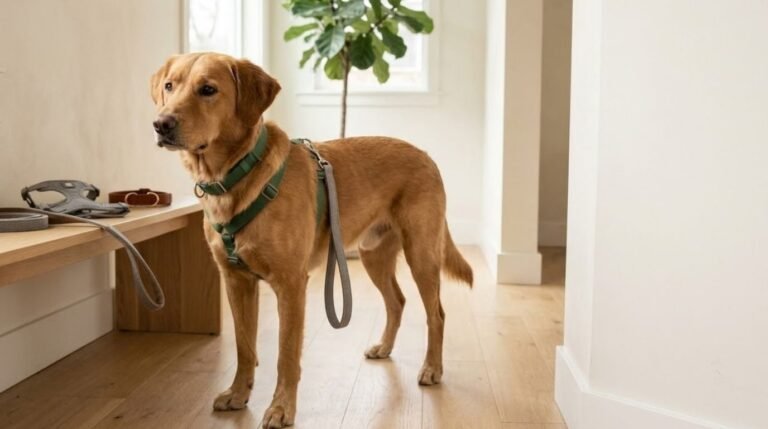

The short answer: not every dog needs one, but a dog that’s stiff after naps, slow to get up, or getting older probably benefits from more support than a standard bed gives. Here’s how to tell, and what actually matters once you’ve decided to get one.
What actually makes a bed “orthopedic”
The word gets used loosely. A bed described as orthopedic should have a dense supportive core, usually memory foam or high density egg crate foam, thick enough that your dog’s weight doesn’t press straight through to the floor.
A simple check: press down firmly on the bed with your hand. If you can feel the floor beneath it, the padding is too thin to count as real support, regardless of what the label says.
Regular beds are typically filled with loose polyfill or cotton batting. That’s fine for a young, healthy dog. It doesn’t do much for a dog carrying extra pressure on their joints.
Signs your dog might benefit from one
According to Cornell University’s Richard P. Riney Canine Health Center, common signs of joint pain in dogs include stiffness, a change in gait, reluctance to walk or exercise, difficulty getting up from lying down, and trouble with stairs or jumping onto furniture.
Worth watching for at home:
- Stiffness in the first few minutes after waking up or resting
- Hesitating or struggling before lying down or standing
- Shifting position often during rest, as if unable to get comfortable
- Slowing down on walks or losing interest in activities they used to enjoy
None of this is a diagnosis. Cornell notes that osteoarthritis can develop at any age, not only in senior dogs, and that a vet visit is the only way to confirm what’s actually going on and rule out other causes.
Which dogs tend to benefit most
Senior dogs are the most obvious group, since joint wear adds up over the years. But age isn’t the only factor.
Large and giant breeds carry more weight on their joints from the start, which raises the risk of hip and elbow issues earlier in life. Dogs recovering from surgery or an injury often need more support during healing too.
Even a healthy young dog with a lean, bony build, like a greyhound, can benefit simply because they have less natural padding over their hips and shoulders.
What to actually look for when choosing one
A few things matter more than the marketing copy on the package:
- Real foam, not loose fill. Memory foam or high density egg crate foam holds its shape under weight. Loose polyfill flattens out within weeks.
- Enough thickness. For a medium to large dog, look for at least three to four inches of supportive foam, more for bigger breeds.
- Full stretch-out room. The bed should be large enough for your dog to lie fully on their side without hanging off the edge.
- A washable, removable cover. Orthopedic beds get used constantly by dogs who rest more, so easy cleaning matters.
- A non-slip base. A bed that slides on hard flooring can actually discourage a stiff dog from using it at all.
Bolstered, flat, or temperature-controlled
Beyond the core support, the shape comes down to your dog’s habits. A flat, low profile bed is easiest for a stiff or older dog to step into, without a raised edge to climb over.
A bolstered bed adds raised sides for dogs who like resting their head on something. Heated options help dogs who get cold and stiff in winter, while cooling designs suit dogs in hot climates or heavier breeds prone to overheating.
A note on the word “orthopedic” itself
There’s no formal regulation over who can call a bed orthopedic. It gets used as a marketing term almost as often as it describes real support. That’s not a reason to ignore the category, just a reason to check the actual foam and thickness rather than trusting the label alone.
The organization Canine Arthritis Management, which focuses specifically on supporting dogs with joint disease, recommends supportive bedding such as memory foam for dogs with arthritis, placed in a warm area with non-slip flooring nearby so the dog isn’t sliding as they get up.
Common mistakes
- Buying based on the word “orthopedic” alone. Check the foam type and thickness, not just the label.
- Sizing too small. A dog who can’t fully stretch out won’t get the support the bed is supposed to provide.
- Ignoring floor grip. A supportive bed that slides on tile can make a stiff dog reluctant to use it.
- Assuming a bed replaces a vet visit. A better bed can ease pressure and improve rest. It doesn’t diagnose or treat joint disease.
A couple of widely bought options
PawsNPup hasn’t tested these ourselves. What follows is current marketplace information, not our own pick or review, and ratings can shift over time.
As of this writing, two memory foam options carry a large number of Amazon ratings:
- JOYELF XLarge Memory Foam Dog Bed, rated 4.6 out of 5 from roughly 29,000 Amazon reviews at the time of writing.
- Bedsure Memory Foam Dog Bed, Orthopedic Crate Pad, rated 4.4 out of 5 from roughly 9,000 Amazon reviews at the time of writing.
Both use a memory foam core rather than loose fill. Check the current size options and cover material against what your own dog needs before buying either one.
A simple decision guide
| Your dog’s situation | Reasonable starting point |
|---|---|
| Senior dog, some stiffness | Memory foam bed, at least 3 to 4 inches thick, low profile for easy access |
| Large or giant breed, any age | Thicker foam (4 inches or more), extra large sizing for full stretch |
| Recovering from surgery or injury | Supportive foam bed, placed on non-slip flooring, per your vet’s guidance |
| Lean or bony breed (like a greyhound) | Well-padded foam bed even without diagnosed joint issues |
| Young, healthy dog, no signs of stiffness | A regular supportive bed is usually enough |
Frequently asked questions
How do I know if my dog needs an orthopedic bed?
Watch for stiffness after resting, hesitation before lying down or standing, and a general slowdown in activity. These are worth mentioning to a vet, who can check for underlying joint issues and confirm whether extra support would help.
Are orthopedic dog beds only for senior dogs?
No. Large and giant breeds, dogs recovering from injury, and lean breeds with less natural padding can all benefit at any age.
What’s the difference between a regular dog bed and an orthopedic one?
A regular bed usually relies on loose polyfill or cotton batting, which flattens over time. An orthopedic bed uses a denser foam core, typically memory foam or egg crate foam, that holds its shape and spreads weight more evenly.
Does an orthopedic bed treat arthritis?
No. It supports comfort and reduces pressure during rest, but it doesn’t treat the underlying condition. A vet should evaluate any dog showing signs of joint pain.
How thick should an orthopedic dog bed be?
For most medium to large dogs, three to four inches of real supportive foam is a reasonable minimum, with thicker options for larger breeds.
The bottom line
An orthopedic bed is worth considering for senior dogs, large breeds, lean breeds, and dogs recovering from injury, and it’s a reasonable comfort upgrade for almost any dog.
Check the foam itself rather than trusting the label, size it for a full stretch, and talk to a vet if your dog is showing real signs of joint pain rather than relying on a bed alone.