
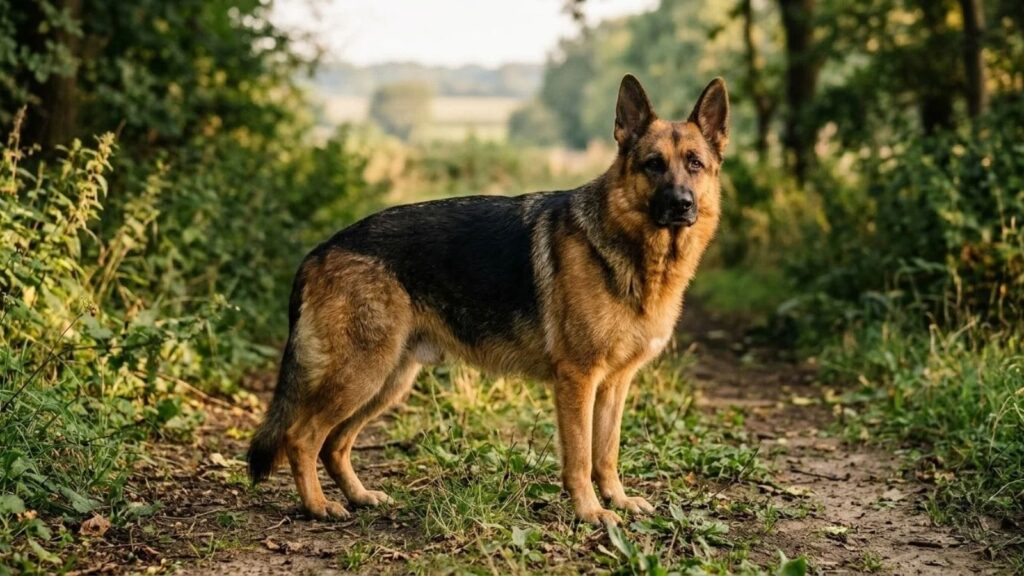
The German Shepherd dog breed is recognised for its intelligence, loyalty and ability to learn demanding tasks. Originally developed in Germany as a herding and working dog, it has become a familiar companion in active households and continues to work in roles such as search and rescue, service work and law enforcement.
That versatility comes with responsibilities. German Shepherds need regular exercise, consistent training, early socialisation and attention to certain inherited health risks. Their size, energy and working instincts can make them rewarding companions, but they are not an effortless choice for every household.
This guide explains what to expect from the breed, including its temperament, physical characteristics, exercise requirements, feeding, grooming and common health concerns. It draws on veterinary universities and recognised breed-health organisations. The information is general guidance, not a substitute for advice from your veterinarian.
Key Takeaways
- German Shepherds are intelligent working dogs that need consistent training, early socialisation and regular mental stimulation.
- Healthy adult dogs generally need substantial daily activity, with the routine adjusted to their age, fitness and health.
- Hip and elbow dysplasia, degenerative myelopathy and gastric dilatation-volvulus are important health concerns.
- Their dense double coat sheds throughout the year, with heavier seasonal shedding that calls for more frequent brushing.
- Responsible breeders should provide documented health-screening results and information about the temperament and health of their dogs.
German Shepherd Temperament: What to Expect
The German Shepherd temperament is commonly associated with confidence, alertness, intelligence and loyalty. These dogs often form strong relationships with their families and enjoy having a purpose or activity to focus on.
The German Shepherd Dog Club of America describes the ideal dog as a capable working animal with a sound character. The breed’s working background helps explain why many German Shepherds are attentive to their surroundings and responsive to structured training.
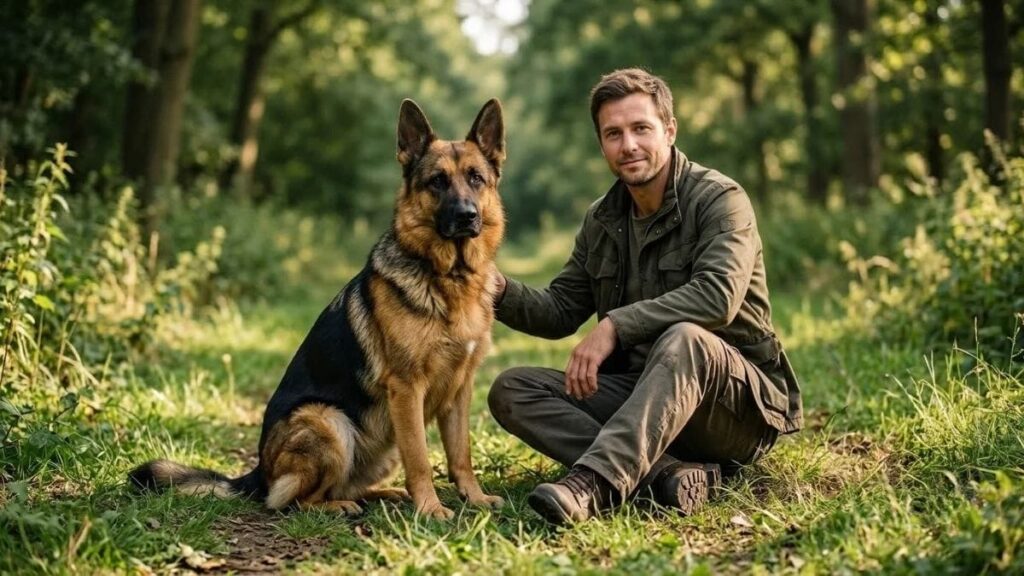
A German Shepherd may be reserved around unfamiliar people, but alertness should not be confused with automatic aggression. Behaviour is influenced by genetics, early experiences, socialisation, training and the dog’s environment. A well-supported dog should learn to handle ordinary people, places and situations without being encouraged to respond defensively.
German Shepherds can become affectionate family companions. However, their size and strength mean that responsible supervision is important around children. Teach children to respect the dog’s space, avoid disturbing it while eating or sleeping, and interact gently. An adult should supervise interactions, particularly with younger children.
Relationships with other dogs and household animals also vary. Early, positive introductions can help, but owners should continue to supervise interactions and manage situations according to each animal’s behaviour.
Are German Shepherds Protective?
Many German Shepherds are naturally attentive to their surroundings and may alert their owners when someone approaches. Their working history and confidence can contribute to this behaviour.
However, a protective temperament does not mean a dog should be encouraged to threaten or intimidate people. Uncontrolled guarding, fear-based reactions and aggression are not desirable substitutes for stable behaviour.
Focus on socialisation, reward-based training and calm responses to everyday situations. If your dog shows persistent guarding, fear or reactivity, seek help from a qualified trainer or veterinary behaviour professional.
German Shepherd Size, Coat and Lifespan
German Shepherds are large, athletic dogs with a strong body, upright ears and a distinctive double coat. Their appearance reflects their history as working and herding animals.
| Measurement | Male | Female |
|---|---|---|
| Height at the shoulder | 24–26 inches | 22–24 inches |
| Typical weight | 65–90 pounds | 50–70 pounds |
These are commonly published breed-standard ranges. Individual dogs may fall outside them, so body condition and overall health matter more than reaching a particular number on the scale.
Coat and Colours
The German Shepherd has a dense undercoat beneath a coarser outer coat. This double coat provides insulation and protection, but it also means the breed sheds throughout the year.
Black and tan is a familiar colour combination. Other colours and patterns include sable, black and cream, black and red, and solid black. Coat length and appearance can vary, but regular grooming remains important.
German Shepherds are not hypoallergenic. Their shedding can be considerable, particularly during seasonal coat changes.
How Long Does a German Shepherd Live?
Lifespan estimates vary between sources and individual dogs. A University of California, Davis Veterinary Genetics Laboratory preliminary breed report gives an average range of approximately 7–12 years.
This is a population estimate, not a prediction for an individual dog. Genetics, body condition, preventive healthcare, nutrition, activity and living conditions can all influence longevity.
Maintaining a healthy weight, arranging routine veterinary examinations and responding promptly to changes in mobility or behaviour can help support a dog’s long-term wellbeing.
Exercise and Mental Stimulation
The German Shepherd dog breed was developed for active work, so regular movement and purposeful activities are important. A healthy adult German Shepherd generally needs a substantial amount of daily exercise, although the appropriate routine depends on age, fitness and health.

A balanced routine can include:
- Daily walks with opportunities to explore.
- Controlled running or hiking for suitably conditioned adults.
- Retrieving games in a safe, enclosed area.
- Scent activities and food puzzles.
- Obedience practice and learning new cues.
- Supervised play and structured activities.
The aim is not simply to tire the dog out. Activities should develop coordination, confidence and good behaviour while providing appropriate physical and mental stimulation.
Mental work is particularly useful for an intelligent working dog. Short training sessions, scent games and puzzle feeders give the dog constructive ways to use its abilities. Without sufficient activity and interaction, some German Shepherds may become restless, anxious or destructive.
Keep outdoor activities controlled. German Shepherds can have a strong chase drive, so use a leash in unsecured areas. Off-leash exercise should take place only where it is safe and permitted, with a reliable recall and appropriate supervision.
Exercise During Puppyhood
German Shepherd puppies need opportunities to explore, play and develop coordination. However, their growing joints should not be subjected to excessive or repetitive high-impact activity.
Avoid forcing a young puppy to run long distances, jump repeatedly or keep up with an adult dog’s exercise routine. Allow play and exploration at a comfortable pace, with plenty of rest.
Ask your veterinarian how to increase activity as your puppy grows. The appropriate amount depends on development, body condition and individual health.
Training and Socialisation
German Shepherds are highly trainable, but intelligence does not mean they automatically know how to behave. They need clear guidance, consistent boundaries and regular practice.
Start training when your puppy arrives home. Use reward-based methods, including food, toys, praise and play. Keep sessions short and positive so that learning remains engaging.

Useful foundations include:
- Responding to their name and coming when called.
- Walking calmly on a leash.
- Settling on a mat or in a designated resting area.
- Waiting politely before meals and going through doors.
- Accepting gentle handling and routine grooming.
- Meeting unfamiliar people and dogs in controlled, positive situations.
- Remaining calm around everyday sounds and household activity.
Socialisation means gradually introducing a puppy to different experiences in a way that feels safe and positive. It does not mean forcing the dog to approach every person or animal. Allow the puppy to observe, investigate and move away when it needs space.
Good leash manners and reliable recall are especially useful because an adult German Shepherd is a strong dog. Consistent practice makes everyday walks and public outings easier to manage.
If your dog shows persistent fear, reactivity or guarding behaviour, seek help from a qualified, reward-based trainer or veterinary behaviour professional.
For more detailed guidance, read our German Shepherd training tips and dog training basics guide..
Feeding and Bloat Prevention
A German Shepherd needs a complete, balanced diet appropriate for its age, size, activity and health. Choose a food that meets recognised nutritional standards, and ask your veterinarian whether a large-breed puppy formula or a particular adult diet is appropriate.
Puppies usually need more frequent meals than adults. Many owners divide a puppy’s daily food allowance into three or four meals, while adult dogs commonly receive two meals. The correct portion depends on the food’s calorie content, the dog’s body condition and its activity level.
Use feeding guidelines as a starting point rather than a fixed prescription. Monitor your dog’s weight and body condition, and adjust portions with veterinary advice.
Puppies commonly transition to adult food as they approach physical maturity. The timing depends on growth and individual development, so discuss the change with your veterinarian. Avoid adding calcium or other supplements to a complete puppy diet unless specifically recommended.
Understanding Bloat and GDV
Gastric dilatation-volvulus, commonly called GDV or bloat, is a life-threatening emergency. The stomach fills with gas or fluid and may twist, restricting blood flow and causing rapid deterioration.
Large, deep-chested dogs are at greater risk. German Shepherds are among the large breeds whose owners should understand the warning signs.
The symptoms can include:
- A swollen or visibly enlarged abdomen.
- Restlessness, pacing or an inability to get comfortable.
- Repeated attempts to vomit without bringing anything up.
- Excessive drooling or panting.
- Abdominal pain or obvious distress.
- Weakness, pale gums or collapse.
If you suspect GDV, contact an emergency veterinary clinic and go immediately. Do not wait to see whether the symptoms improve. Cornell University’s veterinary guidance on gastric dilatation-volvulus (GDV) confirms that this condition requires immediate medical attention and often emergency surgery. It also identifies factors such as large meals, eating quickly, exercising soon after eating and family history as relevant risk considerations.
Some feeding adjustments may help reduce risk, but no routine can guarantee prevention. Discuss meal size, feeding frequency and your dog’s individual risk with your veterinarian.
Preventive gastropexy is a surgical procedure that attaches the stomach to the abdominal wall to reduce the risk of twisting. It does not prevent the stomach from becoming distended, but it can substantially reduce the risk of the life-threatening volvulus. Ask your veterinarian whether it is appropriate for your dog.
Gastric Dilatation-Volvulus
GDV is a sudden, life-threatening emergency in which the stomach expands and twists. A swollen abdomen, repeated unproductive retching, restlessness, abdominal pain or collapse require immediate veterinary attention.
See the feeding section above for warning signs and a discussion of risk reduction. If you suspect GDV, seek emergency veterinary care immediately.
Exocrine Pancreatic Insufficiency
Exocrine pancreatic insufficiency, or EPI, occurs when the pancreas does not produce enough digestive enzymes to break down food properly. German Shepherds have a recognised predisposition to this condition.
Possible signs include weight loss despite a good appetite, frequent or abnormal stools, digestive problems and poor coat condition. Affected dogs may struggle to absorb nutrients even when they eat sufficient food.
Diagnosis requires veterinary testing. Treatment commonly involves pancreatic enzyme replacement with meals and nutritional management. Dogs diagnosed with EPI generally need ongoing care and monitoring.
The Auburn University College of Veterinary Medicine conference resource on EPI explains the condition and its association with German Shepherds.
Other Health Concerns
German Shepherds may also experience other medical conditions. These should be assessed individually rather than assumed to be present because of breed membership.
- Allergies and skin disease: Persistent itching, recurring ear infections, skin irritation and digestive symptoms may need veterinary investigation.
- Eye conditions: Pannus is an inflammatory condition affecting the cornea. Changes in eye appearance, redness or vision should be checked by a veterinarian.
- Heart conditions: Some heart diseases can affect dogs without obvious early symptoms. Routine examinations help a veterinarian assess heart health and decide whether further testing is needed.
- Cancer: As with other large breeds, German Shepherds can develop different forms of cancer. New lumps, unexplained weight loss, persistent lameness or changes in energy should be investigated.
This is not a complete list of possible health problems. Your veterinarian can recommend examinations and tests based on your dog’s age, symptoms, family history and individual risk.
Grooming and Everyday Care
German Shepherds shed throughout the year and often lose more undercoat during seasonal changes. Regular brushing helps remove loose hair, reduce tangles and keep the coat manageable.
Brush several times a week, increasing the frequency during heavier shedding periods. A suitable pin brush or undercoat grooming tool can help remove loose hair. Work gently and avoid scraping or irritating the skin.
Bathing is usually needed occasionally, depending on the dog’s activity and coat condition. Too-frequent bathing can dry the skin. Use a dog-safe shampoo and seek veterinary advice if your dog develops persistent skin irritation.
Include these tasks in the regular care routine:
- Ears: Check for redness, odour, discharge or irritation. Clean only when needed, using a veterinarian-recommended product.
- Nails: Trim regularly if normal activity does not keep them short.
- Teeth: Brush with dog-safe toothpaste and arrange routine dental checks.
- Eyes: Watch for redness, cloudiness, discharge or changes in vision.
- Skin and coat: Look for persistent itching, sores, hair loss or recurring infections.
A change in appearance or behaviour can be an early sign of discomfort. Discuss persistent symptoms with your veterinarian rather than assuming they are ordinary breed traits.
German Shepherd Health Problems
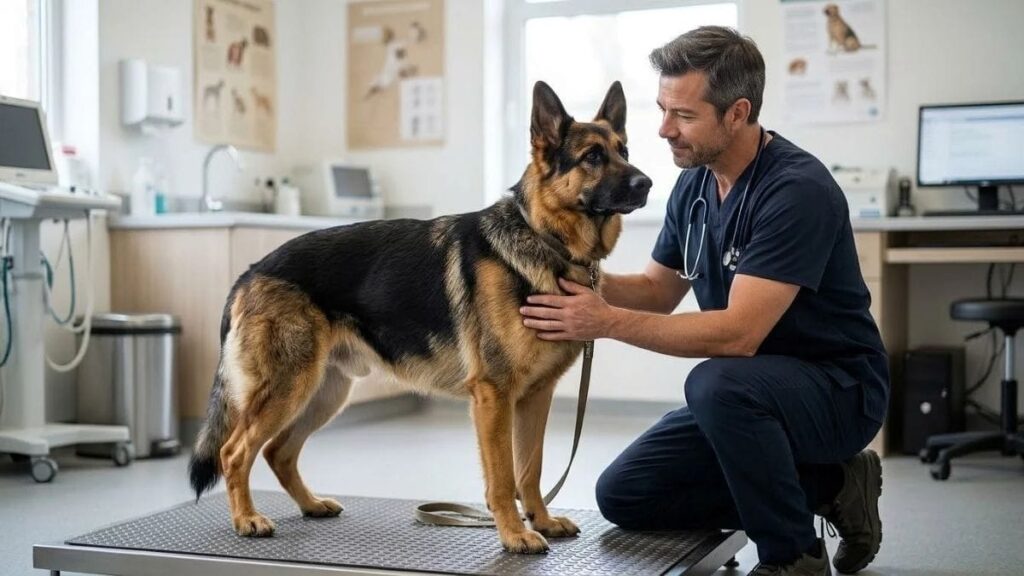
The German Shepherd dog breed has several recognised health risks. Understanding these conditions can help owners recognise changes and seek veterinary attention sooner. However, not every German Shepherd will develop these problems.
Hip Dysplasia
Hip dysplasia occurs when the hip joint develops abnormally, causing looseness, joint damage and potentially painful arthritis. German Shepherds are predisposed to this condition.
Signs may include stiffness, limping, difficulty standing and reluctance to jump. Diagnosis usually involves a veterinary examination and imaging. Cornell University’s guidance on canine hip dysplasia explains how abnormal joint development can lead to pain and progressive arthritis.
Maintaining a healthy weight and following your veterinarian’s advice on puppy growth, exercise and screening can help protect joint health.
Elbow Dysplasia
Elbow dysplasia refers to developmental problems in the elbow joint. It can cause front-leg lameness, pain and progressive joint damage. German Shepherds are among the breeds with a higher prevalence of this condition.
Persistent limping, stiffness after rest or reluctance to exercise should be assessed by a veterinarian. Diagnosis may involve an examination and imaging. Treatment depends on the dog’s age and the severity of the joint changes.
Degenerative Myelopathy
Degenerative myelopathy (DM) is a progressive spinal cord disease that can affect older German Shepherds. Early signs include hind-leg weakness, stumbling, difficulty standing and scuffed rear toenails.
There is no cure, but supportive care such as physical therapy, a healthy weight, non-slip flooring and mobility aids can help maintain comfort. Cornell University’s veterinary guidance on degenerative myelopathy outlines these management approaches.
Genetic testing can identify risk-associated SOD1 variants, but a positive result does not guarantee that a dog will develop the disease. Veterinary assessment is essential to distinguish DM from other conditions that affect movement.
Gastric Dilatation-Volvulus
GDV is a sudden, life-threatening emergency in which the stomach expands and twists. A swollen abdomen, repeated unproductive retching, restlessness, pain or collapse require immediate veterinary attention. See the feeding section above for warning signs and prevention discussions.
Other Health Concerns
Veterinary sources also identify several other conditions that may affect German Shepherds:
- Exocrine pancreatic insufficiency (EPI): The pancreas does not produce enough digestive enzymes. Weight loss despite a strong appetite, digestive changes and poor coat condition can occur. Dogs diagnosed with EPI generally need lifelong enzyme replacement.
- Allergies and skin disease: Persistent itching, recurrent ear infections, skin irritation and digestive symptoms may need veterinary investigation.
- Heart disease: Conditions such as dilated cardiomyopathy and valve disease are among the concerns PetMD identifies. Routine examinations allow the veterinarian to assess heart health.
- Pannus: This inflammatory eye condition can affect the cornea and may threaten vision if not managed. Changes in the eyes should be checked promptly.
- Cancer: PetMD lists cancers including hemangiosarcoma and bone cancer among possible health concerns.
This is not a complete list, and these conditions should not be assumed to be present simply because a dog belongs to the breed. Your veterinarian can recommend examinations and tests based on the dog’s age, symptoms, family history and risk.
Puppy and Senior German Shepherd Care
German Shepherd puppies need a diet formulated for appropriate growth, regular veterinary checks and carefully managed activity. Rapid growth and excess body weight can place additional strain on developing joints.
Avoid overfeeding and do not add supplements unless your veterinarian recommends them. Puppy appointments are also an opportunity to discuss vaccination, parasite prevention, dental development, socialisation and training.
As a German Shepherd gets older, changes in mobility, sleep, appetite, hearing, vision or behaviour may become more noticeable. Keep exercise comfortable, provide easy access to resting areas and consider non-slip flooring where needed.
New stiffness, weakness or confusion should not automatically be dismissed as normal ageing. A veterinary examination can help identify treatable conditions and improve comfort.
Choosing a German Shepherd Breeder or Rescue
If you are considering a puppy, look for a breeder who prioritises health, stable temperament and responsible placement rather than appearance alone.
Ask to see documented health-screening results for the parents, including hip and elbow evaluations. The German Shepherd Dog Club of America lists hip evaluation, elbow evaluation and a temperament test among the breed-specific requirements for its CHIC programme.
A CHIC number is useful because it indicates that the required tests have been completed and results made publicly available. It does not automatically mean that every result is normal. Review the actual records and ask the breeder to explain them.
You should also ask:
- What health conditions have occurred in the family line?
- Have the parents undergone the recommended health evaluations?
- How are puppies introduced to people, household sounds and everyday experiences?
- What support does the breeder provide after adoption?
- Will the breeder take the dog back if the owner can no longer care for it?
A genetic test for degenerative myelopathy can provide information about risk-associated variants, but it cannot predict with certainty whether an individual dog will become ill.
Adoption is another option. German Shepherd rescues and shelters may have puppies, adults and senior dogs looking for homes. Request available veterinary records and ask about the dog’s behaviour around people, children, dogs and other animals. Spend time with the dog before making a decision.
Useful health-screening information is available from the German Shepherd Dog Club of America and the Orthopedic Foundation for Animals.
Our dog care tips guide can help you plan for the responsibilities that continue after adoption.
Costs and Long-Term Commitment
The cost of living with a German Shepherd extends beyond the initial adoption or purchase fee. Food, routine veterinary care, parasite prevention, training, grooming supplies and emergency treatment all need to be included in the budget.
Large dogs can also have higher boarding and medication costs because of their size. Training classes, suitable equipment and ongoing enrichment activities may add to the household budget.
If you are considering pet insurance, compare coverage limits, exclusions, waiting periods and how pre-existing conditions are handled. Insurance does not replace an emergency savings plan, and policies differ in what they cover.
Before bringing a German Shepherd home, consider whether you can consistently provide daily activity, training, companionship and veterinary care throughout the dog’s life.
Is a German Shepherd Dog Breed Right for You?
The German Shepherd dog breed may suit an active household that has time for exercise, training and regular interaction. It can become a devoted companion, but its energy, size and need for guidance require a genuine commitment.

This breed may be a challenging choice if you are away for long periods, cannot provide regular activity or want a dog that needs very little training. A large garden alone will not meet its exercise and mental stimulation needs.
Before choosing a German Shepherd, consider these questions:
- Can you provide daily exercise and purposeful activities?
- Are you prepared to train and socialise a large, intelligent dog consistently?
- Can you manage regular grooming and year-round shedding?
- Can you afford routine veterinary care and unexpected medical expenses?
- Does your household have enough time to provide companionship and supervision?
If you are comparing different sizes and working backgrounds, explore our guides to big dog breeds, farm dog breeds and the complete Dog Breeds hub.
FAQ’S
How much exercise does a German Shepherd need?
A healthy adult German Shepherd generally needs substantial daily exercise, often around one to two hours when its fitness and health allow. This can include walks, structured play and mental activities. Puppies, seniors and dogs with medical conditions need routines suited to their stage of life.
How long does a German Shepherd live?
A University of California, Davis Veterinary Genetics Laboratory preliminary report gives an average lifespan range of approximately 7–12 years. Individual dogs may live shorter or longer depending on genetics, health, weight, preventive care and living conditions.
Are German Shepherds good family dogs?
They can be affectionate and loyal family companions when appropriately socialised and trained. Their size and strength mean that children should be taught how to interact respectfully, and an adult should supervise interactions.
Do German Shepherds shed a lot?
Yes. Their double coat sheds throughout the year, with heavier seasonal shedding. Frequent brushing helps manage loose hair and maintain coat condition.
What are common German Shepherd health problems?
Important concerns include hip dysplasia, elbow dysplasia, degenerative myelopathy and gastric dilatation-volvulus. German Shepherds also have a recognised predisposition to exocrine pancreatic insufficiency. Regular veterinary care helps monitor health and identify problems.
Conclusion
The German Shepherd is an intelligent, loyal and capable working breed, but those qualities come with daily responsibilities. Exercise, positive training, socialisation, coat care and preventive veterinary attention all contribute to a healthier and more manageable life.
Before choosing a puppy or adult dog, consider the time, space and budget you can provide. Ask for health records, learn about the breed’s potential medical concerns and choose a dog whose needs fit your household.
For an owner prepared to make that commitment, a well-supported German Shepherd can become a devoted companion and an active part of everyday life.